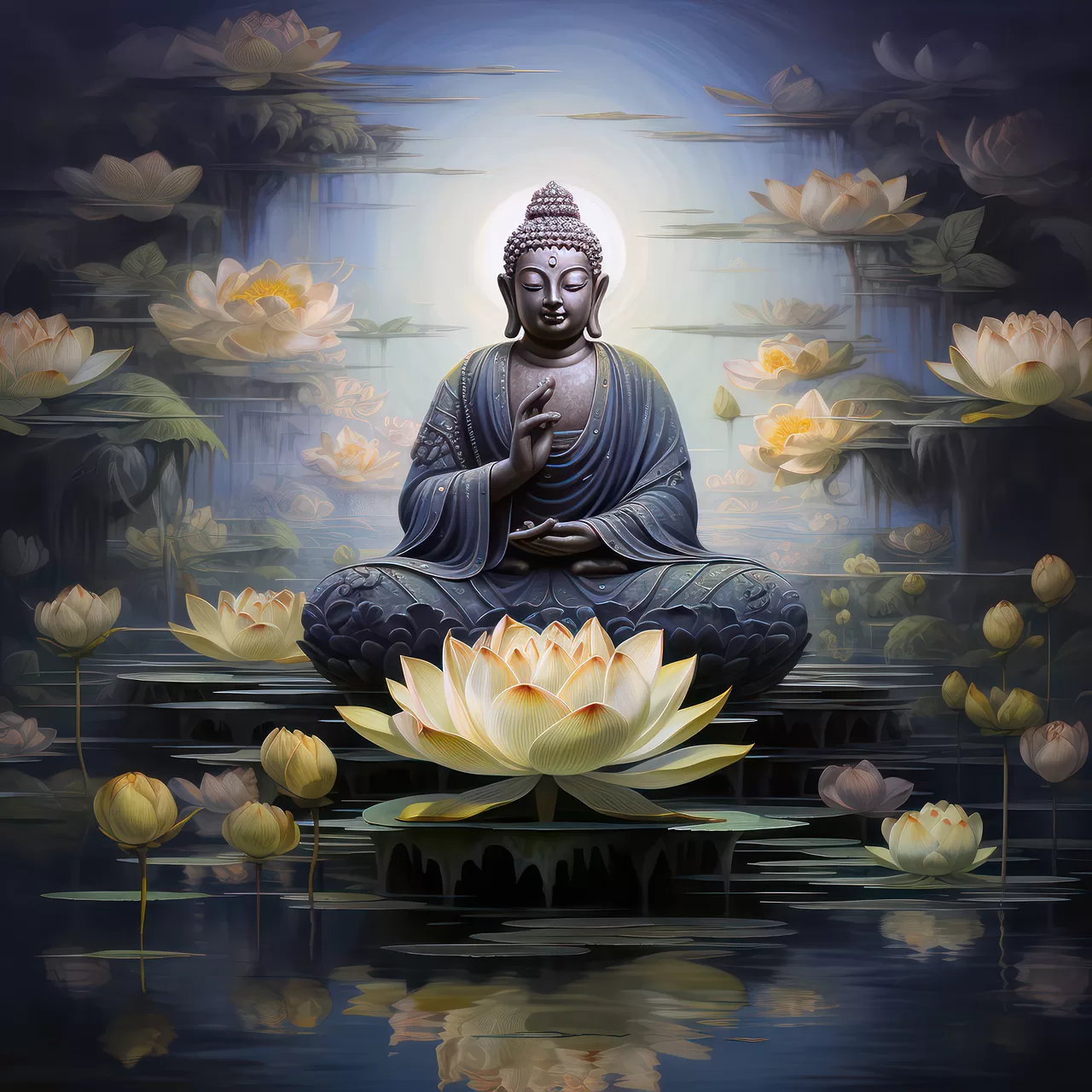
Counterpoint: Reconciling Buddha’s Shunyata and Adi Shankara’s Brahman
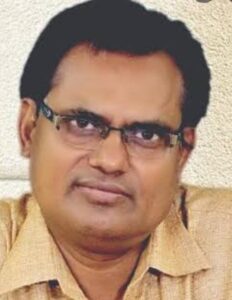 By Vivekanand Jha*
Buddha-Shankara Harmony: Eternal Truth
My decades of research, seeking reconciliation between Void or Shunyata, the ultimate reality as expounded by the Tathagata Buddha, and Brahman, the Consciousness as encapsulated in the Upanishads and interpreted by Adi Shankaracharya, have resulted in my own deductions and decipherings. The ultimate reality, on which the greatest of human beings in their highly evolved intellectual minds, and those standing at the bottom of the intellectual pyramid, everyone at some point in time, enamoured as they are to dissect the significance of this eternal mystery.
Thus, being a metaphysical researcher for decades, I have been seeking the synergetic affinity between both the great philosophies, finally found their reconciliation.
I have worshipful adoration for both Tathagata Buddha and Adi Shankaracharya, and the two purportedly asymmetric historic figures juxtapose as my heroes, sans any discrepancy or being paradoxical, and my worshipful adoration for them subsists without any contradiction.
Vivekananda’s Insight: Void Meets Brahman

While sitting in meditation at Swami Vivekananda Rock Memorial in Kanyakumari, Swami Vivekananda had the unique and spectacular visions of only two of India’s greatest figures who dominated the geographical landscape of Bharatvarsha at two different points of time: Tathagata Buddha and Adi Shankaracharya.
The fascinating glimpse of all-filling Lord Buddha appeared in his wondrously uplifting glimpse, wherein he could see the colossus Buddha walking on the earth, with tens of thousands of followers following him in silence, with the divine mantra of ‘Buddham sharnam gachhami, Sangham sharnam gachhami, Dhammam Sharnam gachhami‘, the stanzas playing in the background, in its melodious tune.
Swami Vivekananda was intoxicated by the glimpse of Lord Buddha consecrating Bharatvarsha with his divine birth. The exhilarating glimpse of Tathagata Buddha, in all His resplendence, sent Vivekananda into the feast of frenzy. Presently, great Adi Shankaracharya appeared in his vision, where the great monist was walking through the narrow alleys of Banaras, where he had conceptualised the sunlit vision of Bhaju Govindam, to usher in the finest aspects of human life, bordering upon this earthly journey as only a precursor to the final destination of transcendentalism, assuming the Himalayan proportion. The great monist, who emphatically propagated the Vision of Vidya, strictly opposed to the prevailing Avidya all along, had underscored the significance of the same through his stanzas in Bhaju Govindam, ‘ Sanprapte, sannahite kale nahi nahi rakshati dakurin karne, Bhaju Govindam, bhaju Govindam, Govindam Bhaju mudh mate‘( when your final moments on earth come, all grammar will inevitably fail to get you through the transcendental shore, only the name of Govinda will ensure your salvation).
The next Vision, Swami Vivekananda had an insight into was: the historic debate on Brahman, the Consciousness, with a dualist, Mandan Mishra, in Mithila, wherein the great monist, who was pooh-poohed by Mandan for his esoteric conceptualisation of monism, which outright repudiated, the dual existence of Creator and His Creation, finally stood transfixed, when Adi Shankaracharya pontificated the grand vision of ‘Aham Brahmashmi‘– I am He, I am He, the blessed spirit I am He.
Void and Brahman: Unified Reality
Unequivocally, Swami Vivekananda was uplifted by the visions of two greats walking on earth, at two different times and eras, he was enlightened about the fact that this great sacred land which witnessed the two colossus figures, consecrating it, cannot perish; in fact, it was the karma of the grographical landscape which sought to engulf the vast stretch of land in its ghoulish tentacles. Bharatvarsha had its bright future; its temporary emasculation was an aberration which needed to be discarded sooner rather than later.
Significantly, if Buddha is to be viewed from the prism of Swami Vivekananda’s vision, he was the grestest figure born over millennia, to eradicate the vices which had crept into the society, with caste prejudices having been institutionalised as the social norm, those languishing at the bottom of society, had the purgatory existence on earth: those purportedly from upper castes, unleashed their fangs of profound contempt for the purported lower strata of society.
Just imagine, the brutal nature of barbarity of Brahminical tyrrany: whereas cows and other animals were considered auspicious for Brahmins, even the shadow of human beings was considered as blasphemous; the bare touch of so- called untouchables, purportedly sullied them; to obliterate such an act of blatant impurity, the custom prescribed their immediate ablution, to get whitewashed the debilitating impacts of such a demonic touch.
Thus, the society was in desperate need of a liberator from this institutionalised curse. Tathagata Buddha was born to exterminate this gory prejudice of men treating other classes of men as untouchables, as the ones to be despicably treated as a sort of flies, who were born as slaves of Brahmins and other upper castes.
The perpetuation of this diabolical caste system needed to be given a decent burial, and sooner it was done, the better for humanity. Buddha, despite facing fierce resistance from Brahminical hegemony, sought to usher in a new dawn: The rolling out of Sangha, meant for one and all, where Brahmins marched shoulder to shoulder with Dalits, where the motto was to reach the stage of Arhatship, the state of Nirvana, which meant liberation from the cycle of birth and death, inevitably was the new innovation, which took Jamboodweep by storm.
From Bimbisara to Ajatshatru, all took recourse to Buddha for their spiritual edification. However, with centuries gone by, when Tathagata Buddha attained Nirvana, His followers created a separate religion of Buddhism– Tathagata Buddha had always claimed to be a Sanatani. But then, when Buddhism degenerated to the level of unleashing tyranny upon society, by perpetrating the evil of destroying the Vedas and Upanishads, such great men like Kumaril Bhatt and Adi Shankaracharya resisted its vehemence, and restored the gravity of the Vedas and Upanishads.
From Void to Consciousness: One Path
Significantly, my years of extensive research into the differences between Buddha’s vision of Nirvana and Adi Shankaracharya’s postulate of ‘ extinction in Brahman’ had set me on the path of seeking reconciliation between the two sunlit philosophies. In fact, much like Buddha, who believed and preached Void as the ultimate truth– Swami Vivekananda had underscored the fact that, when Ramkrishna Paramhans had touched his foot with his body, he had the glimpse of the universe merging into Void. This irreversibly corroborates the sunlit belief system of Buddha’s realisation, as well as the pontification of Void as the ultimate truth, which was very close to Adi Shankaracharya’s interpretations of Brahman of Upanishads as the final reality.
Indubitably, the reference of Adi Shankaracharya as a crypto Buddha stands irreversibly vindicated, for Brahman, the Consciousness, the pivot of Upanishads, is akin to the vision of the Void of Buddha. If Swami Vivekananda too realised that the entire universe merging into the Void, cannot be discounted as a figment of his imagination; in fact, it was the real-life experience of Swami Vivekananda. Now, Brahman, the absolute, as Adi Shankaracharya had interpreted and pontificated, if examined closely, has emerged from the Void, which is the ultimate reality. Significantly, if the enquiry is instituted as to wherefrom Brahman, the Consciousness, has emanated? The answer would be from Void. In fact, before the world came into existence, only the Void existed. Brahman, Creator, purportedly emerged from the Void, which is embedded in every atom of the universe. Little wonder then, the final truth is Void, which is the source of Brahman, the Consciousness, has to be accepted in its pristine form. How the human life is nothing but Void, is felt at the fag end of life, when a man is left alone at his own mercy; the so-called kiths and kins get preoccupied with their own bustling and vibrating life, the man totters on the precipice of bidding goodbye to this world, and experiences the nature of emptiness of this universe.
This truth was examined by great thinkers like Rahul Sanskrityayan and Pandit Nagarjun. Even Babasaheb Bhimrao Ambedkar had turned his searchlight into the Void. Moreover, Swami Vivekananda’s highly Intellectual and philosophical discussion with Professor John Henry Wright of Harvard, wherein the concept of Zero, Void, was discussed for hours.
In sum, Buddha’s Void, wherefrom the Consciousness originates, cannot be dismissed as utopian or quixotic; it, in fact, is the ultimate truth, vouched by Buddha, endorsed and upheld by Swami Vivekananda, through his own experience. Now, the moot point: Upanishadic Brahman, the pivot of Creation and its continuation, is the absolute in terms of Creation. Unequivocally, since Consciousness derives its origin from Void, it possesses the characteristics of Void, as it is revealed like birth and death of species: whereas the birth of species, symbolising the gushing forth of life, symbolising the dawn of Consciousness, its disappearance into nothingness with death, is the stark vindication of the existence of Void.
In short, the interpretations of Brahman by Adi Shankaracharya amount to the realisation of the Void by Buddha. Both are the same. Thus, Void and Brahman are the same. Both Tathagata Buddha and Adi Shankaracharya can co-exist.
*Author, Academician and a Public Intellectual. The views expressed are personal.