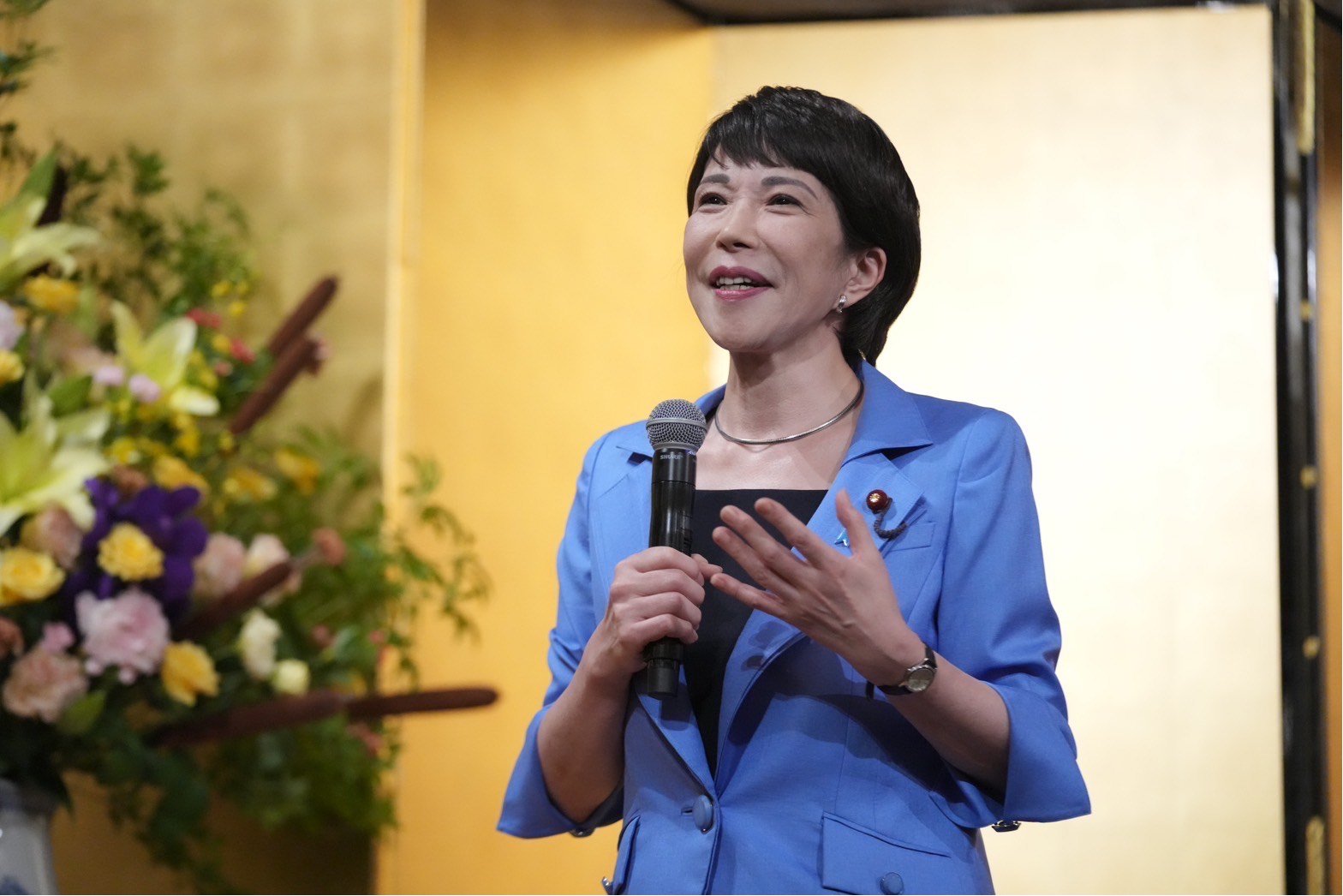
Sanae Takaichi. Photo source: @takaichi_sanae|X
Japan’s First Female PM Sworn In Amid Challenges
Tokyo: Japan ushered in a groundbreaking era in its political history today as Sanae Takaichi, a 64-year-old conservative stalwart, was elected the nation’s 104th prime minister at 09:39 PM IST, becoming the first woman to hold the office in modern times. A special session of the National Diet confirmed her leadership with 312 votes against 189 for her closest rival, capping a three-decade career marked by ideological conviction, administrative expertise, and resilience against a male-dominated political system. Her ascent shatters a long-standing gender barrier in Japan, where women have been persistently underrepresented in top roles, signalling a moment of reckoning for the nation’s governance.
Takaichi’s victory followed her commanding win in the Liberal Democratic Party (LDP) presidential race on October 4, securing 58 per cent of votes against moderates in a five-candidate contest. She succeeded Shigeru Ishiba, who resigned after the LDP’s loss of 70 seats in the October 2024 snap elections and the collapse of its coalition with Komeito. To form a government, Takaichi forged a pivotal alliance with the right-leaning Japan Innovation Party (JIP), led by Hirofumi Yoshimura, ensuring a parliamentary majority. Backed by conservative LDP lawmakers and regional blocs, Sanae Takaichi declared in her acceptance speech, “This is a moment of pride and duty. We break barriers to forge a stronger Japan with resilience, discipline, and courage.” Emperor Naruhito is set to formally appoint her later today at the Imperial Palace, sealing her historic role.
Financial markets embraced the transition, with the Nikkei 225 surging 4.3 per cent to a record 47,734 points and the yen slipping to 150 against the dollar, reflecting confidence in Takaichi’s dovish economic policies, including tax cuts and opposition to Bank of Japan rate hikes to combat inflation. Her focus on economic security and self-reliance prioritises domestic innovation in semiconductors, artificial intelligence, and renewable energy while maintaining fiscal discipline through the LDP-JIP coalition’s framework. However, analysts caution that her stimulus-driven growth plans could strain Japan’s public debt, exceeding 250% of GDP.
Takaichi’s security policies, rooted in her mentor Shinzo Abe’s legacy, signal a bold rightward shift. She champions sustaining Japan’s 2022 pledge to allocate 2% of GDP to defence, funding advanced missile systems, cyber defences, and joint US-Japan exercises to counter threats from China and North Korea. Her coalition has committed to revising Japan’s core security documents—the National Security Strategy, National Defence Strategy, and Defence Buildup Programme—by 2027, potentially accelerating amendments to Article 9 of the pacifist constitution. This would recognise the Self-Defence Forces (SDF) as a full military, enabling pre-emptive strikes and collective defence. Her “Comprehensive Economic Security Act” targets espionage, particularly from Chinese nationals, and restricts foreign land purchases near SDF bases. Internationally, she prioritises the US-Japan alliance, with an upcoming summit with President Donald Trump to deepen technology sharing and Indo-Pacific patrols. Her pro-Taiwan stance, including potential SDF patrols in the Taiwan Strait, risks tensions with Beijing, while trilateral missile defence with South Korea navigates historical frictions, complicated by her past Yasukuni Shrine visits honouring Japan’s war dead, including war criminals.
Domestically, Takaichi faces daunting challenges. Japan’s economy grapples with slow growth, an ageing population, and rising living costs, fueling voter frustration among younger and urban demographics. Her socially conservative views—opposing same-sex marriage and separate surnames for married couples—may alienate progressive and female voters who otherwise celebrate her symbolic breakthrough. Women’s rights advocates, like Tokyo-based Aiko Tanaka, hailed her ascent as “a beacon for gender equality,” but her cabinet, with only two women in 20 posts, drew criticism for falling short of her pledge to emulate Iceland’s gender-balanced model.
Born in Nara Prefecture in 1961 to a Toyota-affiliated family, Takaichi’s journey defied constraints. Limited to Kobe University despite qualifying for elite institutions, she worked as a congressional aide in the US and a TV Asahi anchor before entering politics in 1993 as an independent. Joining the LDP in 1996, she reclaimed Nara’s 2nd district in 2005 after a 2003 loss, securing it most recently in 2024 with 43,516 votes. Her extensive ministerial roles under Abe and Fumio Kishida spanned internal affairs, economic security, and science policy, cementing her as a political heavyweight. A self-styled “moderate conservative” inspired by Margaret Thatcher, she tempered controversial rhetoric during the campaign but remains a Nippon Kaigi member, advocating traditionalist values.
The international response has been mixed. Global leaders swiftly acknowledged her election. Indian Prime Minister Narendra Modi extended his congratulations on X, stating, “Heartiest congratulations, Sanae Takaichi, on your election as the Prime Minister of Japan. I look forward to working closely with you to further strengthen the India–Japan Special Strategic and Global Partnership. Our deepening ties are vital for peace, stability, and prosperity across the Indo-Pacific and beyond.” This gesture underscores Takaichi’s intent to bolster Japan’s role in the Quad, alongside India, the US, and Australia, to counter regional challenges.
The United States welcomed Sanae Takaichi as a signal of continuity in Tokyo’s pro-democracy stance, while China and South Korea issued cautious statements, wary of her Yasukuni visits and hawkish policies. Analysts note her leadership could tilt Japan rightward, particularly if constitutional reforms expand the SDF’s role. With no Diet majority, passing budgets will test the LDP-JIP coalition’s cohesion, while public approval lingers at 45 per cent amid LDP scandals. As Japan navigates geopolitical storms, yen volatility, and gender wage gaps, Takaichi’s blend of tradition and transformation—conservatism in a progressive frame—will determine whether her tenure delivers structural change or succumbs to its ambitious weight. The world watches as Japan’s “Iron Lady” steps into history, balancing symbolism with the scrutiny of leadership.
– global bihari bureau