Tripura’s ₹450 Cr Tourism Circuit Integrates Nature, Culture, Jobs
Scindia: Matabari Project Will Make Tripura a Global Tourism Hub
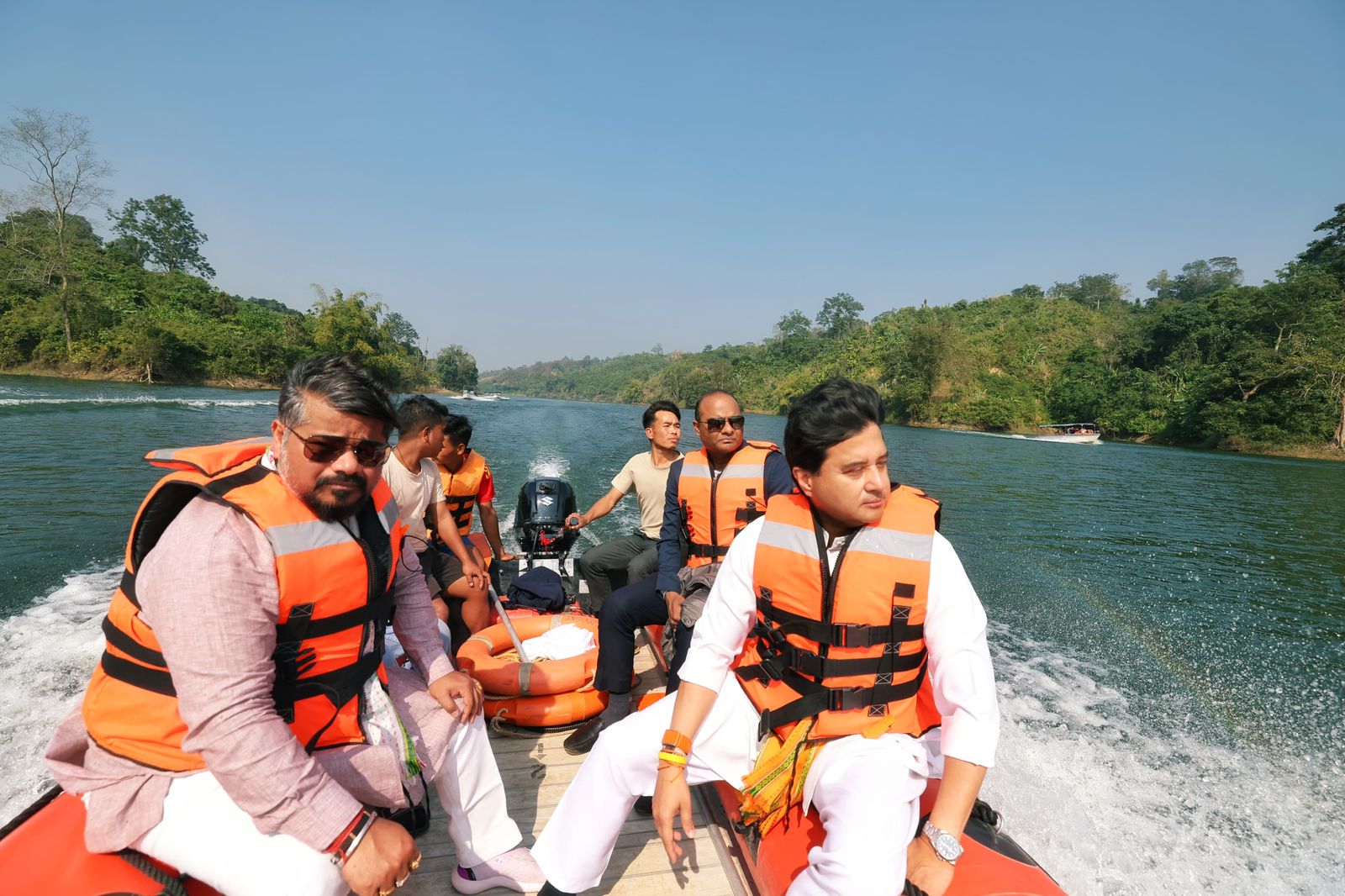
Dumbur: In the verdant landscapes of Tripura, where the waters of Dumbur Lake lap gently against its green islands, Union Minister for Development of North Eastern Region and Communications, Jyotiraditya Scindia, laid the foundation stone of the ₹450 crore Matabari Tourism Circuit today. The project is designed not merely to attract visitors but to create livelihoods, empower women, and elevate Tripura onto the global tourism map.
The Matabari Tourism Circuit aims to weave together the Tripura Sundari Temple, Chabimura, and the Dumbur Lake region, offering visitors an experience that blends spiritual pilgrimage with eco-tourism, cultural immersion, and recreational opportunities. Of the total project cost, ₹276 crore will be contributed by the Ministry of Development of North Eastern Region, with the remaining funded by state and central coordination. Beyond infrastructure, the project places a strong emphasis on human resource development, including professional training for tour guides at premier institutions and integration of local youth and self-help groups into tourism activities.
Speaking at the foundation-laying ceremony at Narkel Kunja, Scindia said, “Today, we have not merely laid stones; we have laid the foundation for future livelihoods.” He projected that the project would generate between 4,000 and 5,000 direct and indirect jobs, with nearly 30 per cent of employment opportunities reserved for women. “Tripura is a treasure that must be showcased to the world,” he said, praising the tranquil waters, verdant islands, and serene surroundings of Dumbur Lake, while highlighting the warmth and hospitality of Tripura’s people as the state’s greatest strength in fostering tourism.
The Matabari Tourism Circuit is just one part of a larger ₹750 crore development package announced during Scindia’s three-day visit. On the first day, he inaugurated and laid foundation stones for projects worth ₹220 crore in diverse sectors, including roads, healthcare, education, and solar micro-grid initiatives. On the second day, he laid the foundation for an ₹80 crore agarwood value chain project, aimed at improving farmers’ incomes and facilitating direct linkages with international markets. Together, these projects reflect a comprehensive vision of Tripura’s transformation across tourism, agriculture, infrastructure, and local industry.
Scindia linked the initiatives to Prime Minister Narendra Modi’s ‘Developed Northeast’ vision and the Act East Policy, describing Tripura as a gateway to Southeast Asia. “Strong coordination between the Centre and the State government has enabled Tripura to scale new heights of development,” he said, acknowledging the leadership of Chief Minister Manik Saha.
The Matabari Tourism Circuit itself will feature floating jetties, eco-friendly resorts, modern tourist facilities, and experiential tourism rooted in local culture, giving Dumbur a distinct international identity. The project is designed not only to attract tourists but also to create sustainable livelihoods, particularly for women and youth, making it an inclusive growth initiative.
Highlighting Tripura’s broader development model, Scindia also emphasised the role of engineered bamboo cultivation, an initiative termed “Green Gold”, which will promote sustainable development while strengthening the regional economy. A total of 22 bamboo-related projects have been approved across the Northeast, intended to provide alternative income sources for local communities and support environmentally responsible growth.
Scindia’s address also underscored the state’s human capital. He praised farmers, artisans, healthcare workers, educators, and young entrepreneurs, noting that their efforts collectively reinforce Tripura’s economic and social transformation. He particularly highlighted women’s empowerment, noting that over 10 crore women are associated with self-help groups in India, and that in Tripura, women will account for nearly 30 per cent of employment opportunities in the Matabari project. Scindia noted that the number of women representatives in Panchayati Raj institutions is almost 46 per cent, and government schemes such as Beti Bachao, Beti Padhao and Pradhan Mantri Jan Dhan Yojana have contributed to empowering women financially and socially.
On the environmental front, Scindia emphasised that the project aligns with Tripura’s ecological preservation and sustainability goals. The circuit’s eco-friendly infrastructure, careful integration with natural landscapes, and emphasis on cultural experiences aim to promote responsible tourism. He praised Dumbur’s biodiversity, the lake’s pristine waters, and the surrounding greenery, envisioning the region as a model for eco-spiritual tourism that respects local ecology while generating economic benefits.
Scindia’s remarks placed the Matabari Tourism Circuit in the context of Tripura’s larger socio-economic and cultural revival. “This project marks the beginning of a new chapter in Tripura’s history,” he said. He noted that other ongoing initiatives, such as the agarwood value chain and bamboo projects, will complement the tourism circuit by providing additional employment and income streams, making the development model multi-sectoral and sustainable.
The foundation stone ceremony was attended physically by Tourism Minister Sushanta Chowdhury, while Chief Minister Manik Saha joined virtually. The event underscored the Centre-State partnership, which has been instrumental in pushing Tripura’s development agenda, from infrastructure to tourism, agriculture, and sustainable economic growth.
By combining heritage, culture, environmental preservation, and human resource development, the Matabari Tourism Circuit aims to set a precedent for inclusive and globally visible tourism projects in the Northeast. Experts say that its integrated approach—linking spiritual pilgrimage, eco-tourism, skill development, and women’s employment—could become a template for other states seeking to leverage culture and nature for economic growth.
As Tripura charts this path, the project reflects a larger vision for the Northeast: integrating traditional strengths, like cultural heritage and natural beauty, with modern infrastructure and market-oriented development. Scindia expressed confidence that Tripura would emerge as self-reliant and globally competitive, with the tourism circuit and related projects acting as pillars of growth in alignment with national priorities.
The Matabari Tourism Circuit, in essence, is not just a project of stone and concrete, but a perceived to be a strategic investment in human potential, community livelihoods, and India’s Northeast’s global identity. With careful implementation, it promises to bring economic, cultural, and ecological benefits to the region, while offering a replicable model for sustainable tourism and inclusive development across the country, informed sources said.
– global bihari bureau