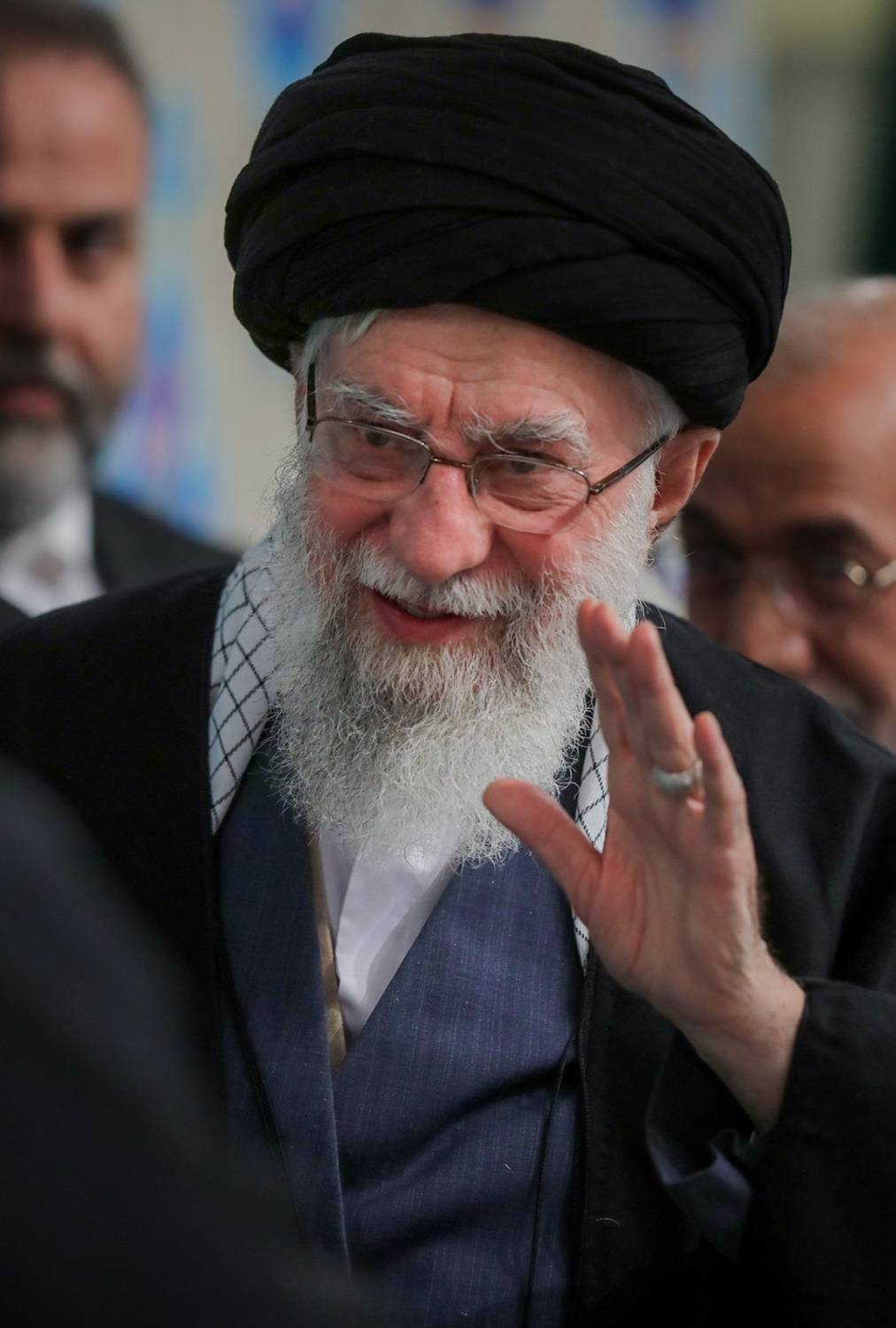
Ali Khameini
Leadership Crisis in Tehran After Strike Kills Khamenei
Global Alarm as Middle East War Enters Uncharted Phase
China, Russia Urge Ceasefire After Iran Leader Assassinated
Jerusalem/Tehran/New York/Beijing/Moscow: The military confrontation between Israel and Iran entered an unprecedented and destabilising phase after Iranian authorities formally confirmed the death of Supreme Leader Ayatollah Ali Khamenei in air and missile strikes attributed by Tehran to a coordinated United States–Israeli operation. The killing of Iran’s highest political and religious authority has intensified cross-border hostilities, created uncertainty over Iran’s leadership succession, and prompted emergency diplomacy at the United Nations amid fears of a wider regional war.
In a video statement today, the spokesperson of the Central Headquarters of the Seal of the Prophets declared that Iran would never bow to pressure from the United States. He said Iran’s adversaries were mistaken if they believed that killing the country’s revolutionary leader or striking the Islamic Republic could bring it to its knees.
Addressing Washington and Israel directly, he warned that although Iran had been harmed, it would not be broken. He added that Iran’s armed forces would ensure that those responsible for the attacks would face severe consequences.
بالفيديو | المتحدث باسم مقر خاتم الأنبياء المركزي: إيران لن تركع أمام أمريكا
الأعداء واهمون بأنهم قادرون على هزيمة إيران باغتيال قائد الثورة والجمهورية الإسلامية
نقول للأعداء ربما كنتم قادرين على جرح إيران لكنكم لن تستطيعوا إخضاعها أبداً
فلتعلم الولايات المتحدة والكيان… pic.twitter.com/VrFLgXjNhH
— إيران بالعربية | عاجل (@IranArabic_ir) March 1, 2026
The spokesperson concluded by saying that the nation would remain steadfast in following the course set by the martyred leader, Sayyid Ali Khamenei, and would pursue that path with unwavering resolve, even at the cost of ultimate sacrifice.
The conflict, which began with direct strikes on Saturday, February 28, rapidly expanded beyond covert or proxy engagements into open interstate warfare. Iranian state television reported that Khamenei and several senior aides were killed when missiles struck a fortified compound in Tehran. Authorities declared a period of national mourning and said an interim leadership council composed of constitutional bodies would assume temporary authority until succession procedures were determined.
In a condolence message, Iranian Foreign Minister Seyed Abbas Araghchi described Khamenei’s death as “martyrdom” and invoked religious symbolism, stating that the slain leader had left behind “an enduring legacy of dignity, prudence, and perseverance.” He added that “safeguarding this precious legacy and continuing the radiant path of that righteous servant of God constitutes a historic mission and a grave responsibility upon us all,” declaring that “the banner he raised shall not fall to the ground; faithful and steadfast hands will carry it to ever loftier summits.”
Israel publicly acknowledged responsibility for the operation. In a televised address from Tel Aviv, Prime Minister Benjamin Netanyahu said Israeli forces had eliminated Khamenei and senior figures of what he termed Iran’s “oppressive regime.” He declared that Israeli operations would intensify in the coming days and said the campaign was being carried out with the full support of the United States. Netanyahu framed the offensive as existential, stating that Israel was bringing “the full strength of the Israel Defense Forces (IDF) to the battle, as never before, in order to ensure our existence and our future.”
Netanyahu also acknowledged Israeli civilian casualties, saying that missile strikes had killed residents in Tel Aviv and Beit Shemesh and wounded hundreds. He expressed condolences to the families of the dead and said Israel would continue operations despite losses.
‼️WATCH: For the first time since the start of Operation ‘Roaring Lion’, the IAF is striking targets belonging to the Iranian terror regime in the heart of Tehran.
Over the past day, the IAF conducted large-scale strikes to establish aerial superiority and pave the path to… pic.twitter.com/DN2MkGCfWc
— Israel Defense Forces (@IDF) March 1, 2026
The Israel Defense Forces (IDF) issued a series of operational statements describing extensive strikes across western and central Iran. According to Israeli military claims, more than 30 sites were hit, including missile launchers, air defence systems, military command centres, and what it described as “regime targets.” The IDF said it struck missile launch facilities near Qom that stored Ghadr H-1 ballistic missiles capable of carrying hundreds of kilograms of explosives, asserting that the operation prevented multiple launches toward Israeli cities.
🎯STRUCK: Two F5 and F4 fighter jets at the airport of Tabriz in western Iran, as the jets were prepared for takeoff
The strike was conducted to degrade the Iranian Air Force’s activities and to further expand the degradation of their aerial defense. pic.twitter.com/lEvpyiPI5M
— Israel Defense Forces (@IDF) March 1, 2026
Israeli statements also said fighter jets struck F-4 and F-5 aircraft at Tabriz airport as they were preparing for takeoff, part of what Israel described as efforts to degrade Iran’s air force and air defences. The IDF further announced the killing of Iran’s Chief of Staff Abdolrahim Mousavi and several senior commanders, along with figures identified as Ali Shamkhani, Mohammad Pakpour, Saleh Asadi, Mohammad Shirazi, Aziz Nasirzadeh, Hossein Jabal Amelian, and Reza Mozaffari-Nia.
Iran rejected Israel’s narrative and accused Israel and the United States of conducting political assassinations and acts of war in violation of international law. Iranian officials said strikes hit Tehran, Isfahan, Tabriz, Kermanshah, Minab, and areas near Qom, affecting military and civilian infrastructure. Iranian media broadcast images of damaged residential neighbourhoods and emergency crews searching through rubble, while the Iranian Red Crescent said mass casualty response operations were underway in several provinces.
Casualty figures remained disputed and subject to claims and counterclaims. Iranian health authorities reported that hundreds of civilians had been killed and more than a thousand wounded, including women and children. Israeli authorities reported dozens of deaths and several hundred injuries from Iranian missile strikes on Tel Aviv, Haifa, and Beit Shemesh. The United States acknowledged injuries among its personnel at bases in the Gulf but did not release full figures.
Earlier international media reports, including a Reuters dispatch, claimed that Iran’s defence minister had been killed alongside senior commanders. Iranian officials later denied that claim, clarifying that Brigadier General Mohammad Reza Ashtiani was not the serving defence minister and had survived. The contradictory reports highlighted the difficulty of independently verifying leadership casualties amid ongoing hostilities and information warfare.
Meanwhile, Iranian official discourse increasingly framed the conflict as part of a long-term strategic confrontation rather than a limited exchange of strikes. Articles published on the official website of the Supreme Leader before his death argued that the war would not be confined to missile and air power but would rely heavily on ground forces of both the regular army and the Islamic Revolutionary Guard Corps. These writings described a doctrine of “offensive defence,” asserting that Iran would secure its borders in the south, southeast, and west while also preparing for operations beyond its frontiers if necessary.
The same platform stressed that shipping lanes, energy flows, and oil markets would inevitably become central to any prolonged conflict, even if not deliberately targeted. It argued that United States bases across the Gulf, Iraq, and Syria could draw host countries into the war and warned that escalation could trigger a global oil crisis and widespread destruction across the region, including inside Israel itself.
Days before his death, Khamenei had delivered a major speech in Tabriz that is now being widely cited in Iranian media as an ideological justification for resistance. In that address, he described the United States as a declining empire and claimed that even the strongest military in the world could be struck so hard that it would not rise again. He rejected American pressure over Iran’s missile and nuclear programs as illegitimate interference in sovereign rights and linked recent internal unrest to what he called foreign-backed attempts at destabilisation.
International reaction was swift and polarised. The United Nations Security Council convened an emergency session marked by sharp divisions among major powers. Secretary-General António Guterres warned that the killing of a sitting national leader and the expanding exchange of strikes represented “a dangerous turning point” and urged all parties to respect international law and protect civilians.
China and Russia issued strong condemnations. Chinese Foreign Minister Wang Yi, speaking with Russian Foreign Minister Sergey Lavrov, said attacks on Iran and the assassination of its leader violated the United Nations Charter and pushed the Middle East toward what he called a “dangerous abyss.” Wang called for an immediate ceasefire and warned against a return to “the law of the jungle.” Lavrov said the strikes severely undermined regional stability and pledged closer coordination with China through the United Nations and the Shanghai Cooperation Organisation.
China’s Foreign Ministry separately stated that the killing of Iran’s supreme leader constituted a grave violation of Iran’s sovereignty and urged an immediate halt to military operations.
Regional governments issued alerts as missile trajectories crossed their territories and airspace closures spread. Qatar reported debris falling near areas close to Al Udeid Air Base, injuring U.S. personnel. Kuwait and the United Arab Emirates said their defences were activated and urged restraint. Airlines continued to divert flights, and shipping through the Strait of Hormuz slowed amid fears of escalation. Oil prices rose sharply, and insurance premiums for Gulf transit surged.
India’s Ministry of External Affairs issued an advisory requesting foreign nationals stranded in India due to disrupted West Asia travel to contact Foreigners Regional Registration Offices for visa extensions and assistance.
Iran-aligned groups in Lebanon, Iraq, and Yemen warned that continued strikes on Iranian territory could draw them into the conflict. Hezbollah accused Israel and the United States of pushing the region toward full-scale war, while Iraqi militias threatened attacks on U.S. interests if operations continued.
In Washington, U.S. Secretary of State Marco Rubio announced that Iran had been designated a State Sponsor of Wrongful Detention under the Countering Wrongful Detention Act of 2025. He cited decades of hostage-taking practices since the 1979 revolution and warned that further measures could include geographic travel restrictions for U.S. passport holders. He reiterated that no American should travel to Iran and urged U.S. citizens currently there to leave immediately. Iranian officials rejected the designation as politically motivated.
Inside Iran, reports described mass mourning ceremonies, heightened security deployments, and expanded emergency response operations. State media called for unity and resistance, while authorities warned against dissent during what they described as a national crisis. Clerical leaders invoked religious themes of sacrifice and martyrdom, framing the conflict as a struggle for national survival.
Analysts and diplomats cautioned that the killing of Iran’s supreme leader has introduced deep uncertainty into the region’s balance of power. Some warned of internal political struggles in Tehran, while others said nationalist sentiment and demands for retaliation could lock both sides into prolonged confrontation. Energy markets remained volatile and regional trade was disrupted.
As missile alerts continued in Israel and Iranian cities remained on high security alert, diplomatic efforts intensified to prevent further escalation. However, statements from both governments suggested little immediate prospect of restraint.
With leadership change in Tehran, rising civilian casualties, and expanding strikes across multiple fronts, the crisis has moved beyond a single episode of retaliation into what many diplomats now describe as a defining and dangerous chapter for Middle Eastern stability, with consequences likely to extend far beyond the region in the days ahead.
– global bihari bureau