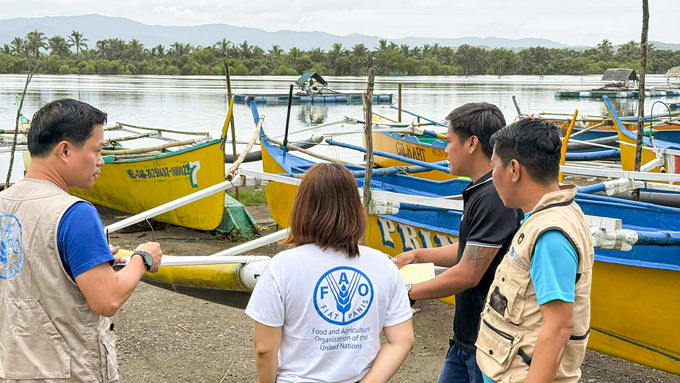
For fishers in Cagayan province, the sea is both generous and dangerous. In 2024 alone, six tropical cyclones swept over this area of the Philippines and devastated boats, nets, coastal shelters and agricultural fields inland. ©FAO/ Jomer Bais
Beating Typhoons Before They Strike
A New Playbook Against Typhoons
At the northern tip of the Philippines, where the land gives way to a long, open coastline, life has always revolved around nature’s generosity. The sea offers a rich catch—mahi mahi, marlin, mackerel, grouper and octopus—while inland fields produce a steady supply of fruits and vegetables for farming communities.
This is Cagayan, a province known for its agricultural importance. Yet the same geography that sustains livelihoods also leaves the region directly in the path of destructive typhoons that arrive year after year, threatening both lives and income.
The damage in recent times has been severe. Over the course of 2024, six tropical cyclones swept through the province, leaving behind a trail of destruction—boats wrecked, fishing nets lost, coastal shelters damaged, and agricultural lands battered. By September 2025, official estimates from the local Department of Agriculture placed total losses to fisheries and farming at more than USD 13.7 million (PHP 807.14 million), the highest recorded in any region of the country.
Even before full recovery could take place, another danger emerged. Two months later, Super Typhoon Fung-Wong, locally called Uwan, began to approach. This time, however, communities chose a different course of action: instead of bracing for impact, they prepared in advance to minimise losses.
With extreme weather events becoming more frequent, both fishers and farmers have begun to expand their roles. Their work is no longer limited to catching fish or cultivating crops; it now includes safeguarding tools, infrastructure and harvests well before storms arrive.
As soon as forecasts indicated the approach of Super Typhoon Uwan, members of the Sinag Fisherfolk Association in San Juan, Santa Praxedes, acted swiftly. From their homes in upland areas, they walked for an hour to reach the coast, where their boats were moored. With support from the Food and Agriculture Organization of the United Nations (FAO) and the local government, they transported the boats inland and secured them using ropes and nylon purchased through FAO’s unconditional cash assistance.
A similar effort unfolded further east in Buguey, where 55 members of the Minanga Este Fisherfolk Association coordinated the relocation of their boats to safer locations. At the same time, women in both communities ensured households were ready—preparing food, organising essential goods and stocking provisions ahead of landfall.
What unfolded was a powerful example of bayanihan, the Filipino tradition of collective effort and mutual support. It was also a clear demonstration of anticipatory action—taking steps in advance to reduce the impact of an impending disaster.
Inland farming communities were equally active. With technical guidance and support from FAO and the Philippines’ Department of Agriculture, three farmer groups worked to secure their resources. Seeds and fertilisers were moved to safer storage, livestock shelters were reinforced, and other essential assets were protected using materials purchased locally through anticipatory cash support.
Amor Daluson, who leads the Gunglo Dagiti Mannalon ti Portugal farmer group, recalled the limitations they once faced. “We did not have much equipment to use, but we were very happy when support from FAO arrived because we now have additional tools to help us take care of our crops and livestock,” he said, noting that such support directly contributes to food security for the community.
Gilbert Respicio, Chairman of the Cabaleng San Isidro Farmers Agriculture Cooperative, stressed how critical the timing of assistance was. “The materials we received enabled us to secure our facilities, livestock, equipment and crops,” he explained.
These early interventions helped protect agricultural assets valued at USD 37,000 (PHP 2.15 million), offering clear evidence that preparation and timely action can significantly reduce potential losses.
Beyond the immediate protection of assets, the experience has strengthened the confidence of these communities. They are not only reinforcing physical structures but also building the capacity to anticipate and manage risks more effectively.
This shift is now being reflected at the national level. The Government of the Philippines has adopted the Declaration of State of Imminent Disaster Act, formally incorporating anticipatory action into the country’s Disaster Risk Reduction and Management Framework.
When Super Typhoon Fung-Wong eventually passed, the results of this approach became visible. Boats remained intact, fishing gear was preserved, and families were able to return to their work without the heavy burden of rebuilding from scratch. Farmers, too, resumed their activities with renewed energy.
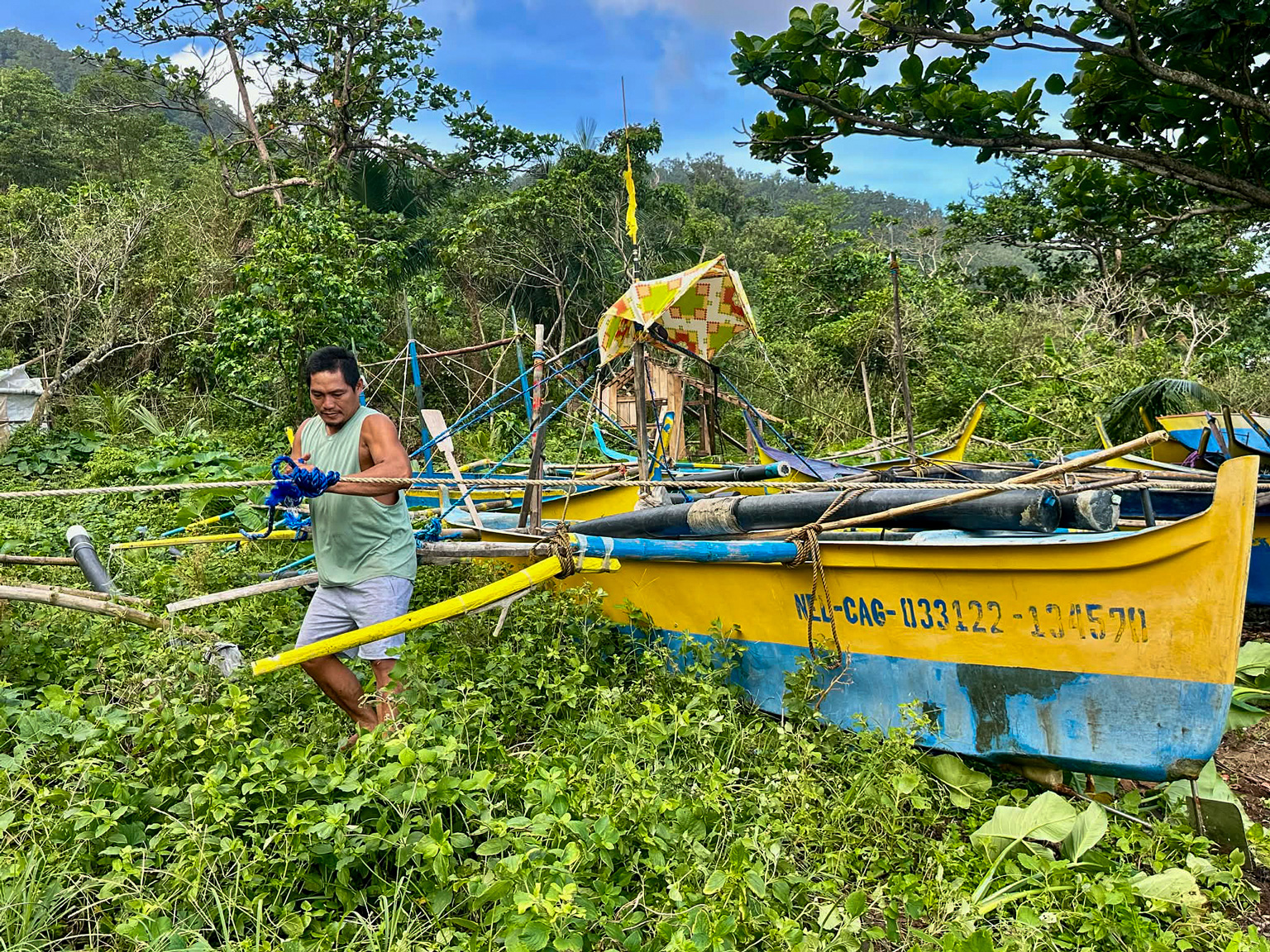
In Cagayan, resilience is being redefined. It is no longer simply about recovering after a disaster, but about preparing before it strikes. Through knowledge, planning and the enduring spirit of bayanihan, communities are showing that even the most powerful storms can be met with readiness rather than fear.
This progress has been supported by contributions from the European Civil Protection and Humanitarian Aid Operations (ECHO), the Federal Republic of Germany through FAO’s Special Fund for Emergency and Resilience Activities (SFERA), and the United Nations Central Emergency Response Fund (CERF). It also reflects sustained collaboration between FAO and the Government of the Philippines. Additionally, the Government of Australia has provided funding to support livelihood recovery efforts in Cagayan province.
Looking ahead, FAO’s Global Emergency and Resilience Appeal 2026 aims to assist 100 million people worldwide in safeguarding the agrifood systems they depend on. Communities in the Philippines are among those included in this initiative. Anticipatory action is now a central pillar of efforts to expand agricultural solutions, complementing food and nutrition assistance to reach more people sustainably and cost-effectively.
Source: The FAO News And Media Office, Rome
– global bihari bureau