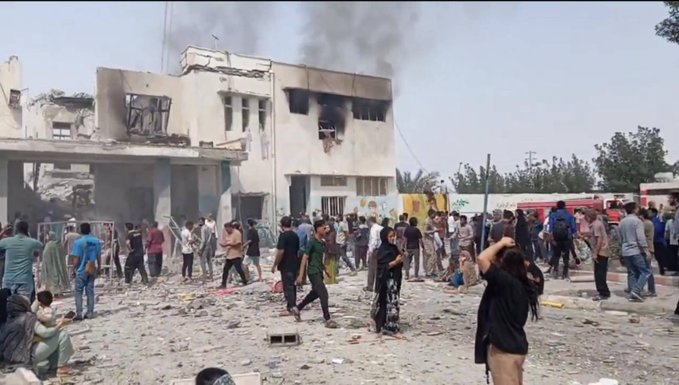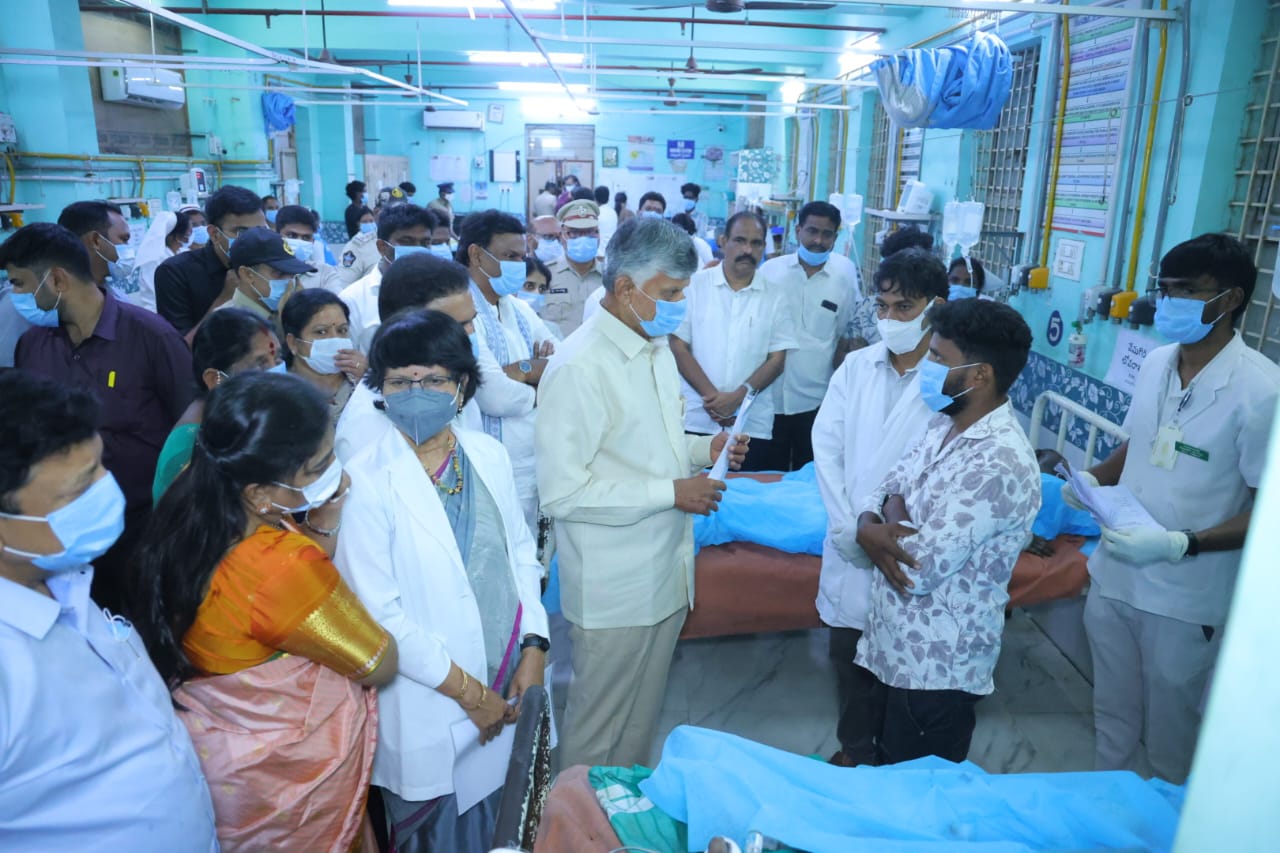
Andhra Pradesh Chief Minister N Chandrababu Naidu and Home Minister Anitha Vangalapudi with the injured undergoing treatment at the government hospitals in Samarlakota and Kakinada.
Andhra Tragedy Mirrors Past Industrial Disasters
Repeated Industrial Blasts Raise Red Flags
Factory Explosions Expose Compliance Gaps
Kakinada: An explosion at a fireworks manufacturing unit in Andhra Pradesh’s Kakinada district on February 28, 2026, has once again drawn attention to India’s persistent industrial safety challenges, even as authorities continue to investigate the immediate cause of the blast that claimed at least 18 lives and injured several others.
The explosion occurred around 2 pm at Surya Sri Fire Works in Vetlapalem village under Samarlakota mandal, near the Godavari canal. Officials said between 30 and 40 workers — many of them women — were inside the unit, reportedly engaged in mixing explosive materials used in firecracker production. The force of the blast was significant, with residents reporting that it was heard up to five kilometres away. The resulting fire engulfed the facility, throwing some bodies into nearby fields while others were trapped under debris or sustained severe burns.
Initial casualty figures varied between 18 and 21 deaths, with eight to 13 injured, some in critical condition. The injured were shifted to the Government General Hospital in Kakinada and other treatment facilities. Post-mortem examinations were underway as district authorities coordinated rescue and relief operations. Andhra Pradesh Chief Minister Nara Chandrababu Naidu visited the site of the explosion in Vetlapalem and spoke with the officials about the details of the accident and the relief measures being taken.
Prime Minister Narendra Modi expressed grief over the loss of lives and announced an ex gratia payment of Rs. 2 lakh from the Prime Minister’s National Relief Fund to the next of kin of each deceased, along with Rs. 50,000 for the injured. The Andhra Pradesh government said it had ordered a detailed probe to determine whether the unit was operating within its licensed capacity and whether safety protocols were adhered to.
While investigators examine the specific triggers — including possible mishandling of volatile compounds or overcrowding of workspaces — the Kakinada tragedy fits into a troubling national pattern of factory explosions and industrial fires across high-risk sectors.
In May 2020, a styrene gas leak at the Visakhapatnam plant of LG Polymers India killed 11 people and affected over a thousand residents. A High-Power Committee appointed by the Andhra Pradesh government later cited deficiencies in storage management, monitoring systems and emergency preparedness, prompting proceedings before the National Green Tribunal.
In August 2023, a reactor explosion at a pharmaceutical unit in Anakapalli district of Andhra Pradesh killed at least 17 workers, with investigators probing whether overheating and improper solvent handling were factors. The pharmaceutical and chemical manufacturing belt in coastal Andhra has witnessed several such incidents over the past decade, often linked to pressure build-up in reactors or lapses in standard operating procedures.
Tamil Nadu’s fireworks sector has also faced repeated tragedies. In February 2021, a major blast at a fireworks factory near Tiruppur killed more than 20 workers. Subsequent inquiries pointed to excessive storage of explosive materials and violations of mandated spacing norms between production sheds.
Industrial clusters in Maharashtra have seen similar accidents. A chemical plant explosion in 2016 in Dombivli’s MIDC area killed several workers and damaged nearby residential structures, underscoring concerns about hazardous industries operating in proximity to expanding urban settlements. In September 2020, a fire at a gas processing facility operated by Oil and Natural Gas Corporation in Uran, Navi Mumbai, resulted in multiple fatalities, leading to an internal safety review.
These incidents, across sectors ranging from petrochemicals and pharmaceuticals to fireworks and boiler-based textile units, reveal recurring fault lines. Official inquiries frequently identify similar vulnerabilities: improper storage of flammable substances, deviation from licensed production limits, inadequate worker training, insufficient safety audits, and weak enforcement of occupational health standards. In many cases, seasonal spikes in production — especially ahead of festivals or export deadlines — increase the handling of volatile materials in confined spaces.
Another structural challenge lies in fragmented regulatory oversight. Factory inspectors, explosives departments, pollution control boards and local administrations share supervisory responsibilities, but coordination gaps and resource constraints often limit the frequency and depth of inspections. Once licences are granted, unauthorised modifications to plant layouts or incremental increases in output may go undetected until an accident exposes them.
The human dimension is equally stark. Many high-risk units employ migrant and contract workers, including women, who may not receive systematic training in handling explosive or hazardous chemicals. Emergency exits, fire-resistant construction and real-time monitoring systems are frequently absent in smaller units.
As rescue teams in Kakinada clear debris and families await answers, the larger question extends beyond the immediate cause of the blast. Whether the latest tragedy results in structural reform — including stricter audit mechanisms, digitised compliance tracking and enhanced worker certification — remains to be seen. For now, the Kakinada explosion stands as a reminder that industrial growth, when not matched by rigorous enforcement and safety culture, continues to exact a high human cost.
– global bihari bureau