New Assembly Complex Redraws Assam’s Power Map
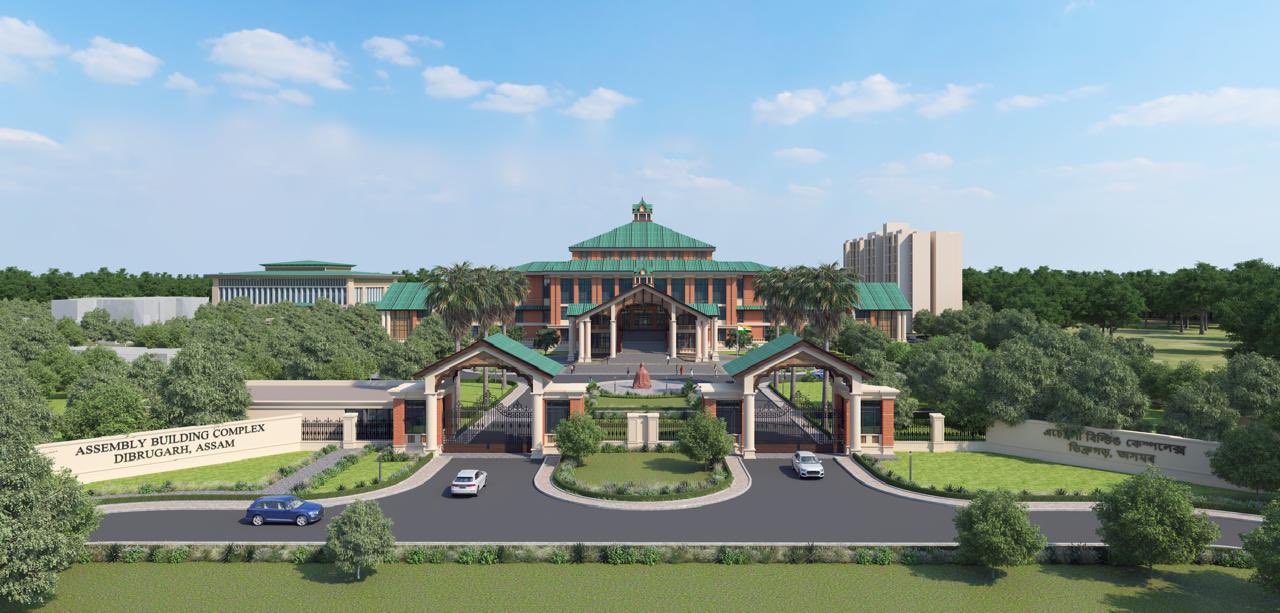
Dibrugarh: The foundation stone of a new Assam Legislative Assembly complex in Dibrugarh has marked a significant political and administrative shift for the state, reinforcing the government’s decision to develop the city as Assam’s second capital and to extend the centre of governance beyond Dispur. Union Home Minister Amit Shah, joined by Chief Minister Himanta Biswa Sarma and senior Union ministers, inaugurated and launched a cluster of infrastructure projects valued at about ₹1,715 crore, framing the initiative as part of a broader push towards decentralised administration and inclusive regional development in Upper Assam.
Explaining the rationale behind the move, Shah said the decision was meant to give all regions of Assam a stronger sense of participation in governance. “As part of efforts to make Assam inclusive, the decision has been taken to make Dibrugarh the state’s second capital,” he said, adding that residents of the city would now be regarded as living in one of Assam’s capitals.
The new Assembly complex, estimated to cost ₹284 crore and coming up on 57 bighas of land, is intended to translate that political announcement into a permanent institutional presence. Officials said the project would enable parts of the legislative and administrative machinery to function from Upper Assam, easing the long-standing concentration of power in Guwahati. Shah linked the initiative to social cohesion, remarking that “many castes, communities and tribes live here; all of them have a right over Assam, and together we will build a great Assam.”
Alongside the Assembly building, the Home Minister laid the foundation stone for a residential complex for legislators, a wildlife health and research institute and the second phase of a multi-disciplinary sports complex, while inaugurating the first phase of the sports facility. Together, these projects are designed to shape Dibrugarh not only as a political node but also as a centre for research, youth engagement and public services.
The wildlife research institute, with an outlay of ₹292 crore, is planned as a specialised centre for disease surveillance, diagnosis and scientific research, including studies on genetic and zoonotic diseases. Officials said the facility would also build capacity in wildlife and bird health and is envisaged as an institution of national and international relevance, reflecting a growing emphasis on environmental and public health preparedness.
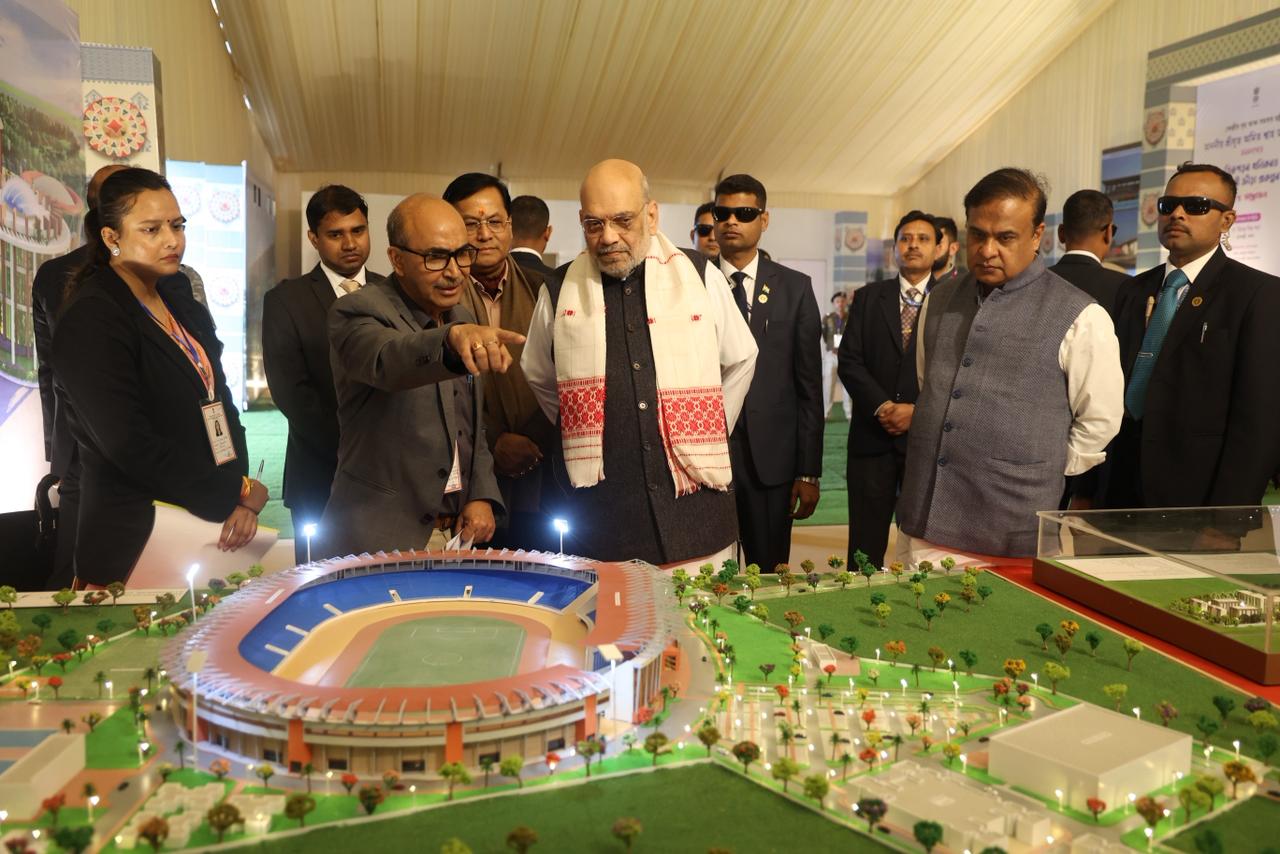
The sports complex, spread over more than 100 bighas, includes an indoor stadium, swimming pool, football and athletics grounds, tennis and volleyball courts, and accommodation for players and coaches. The expansion plan will raise seating capacity from 5,000 to 35,000, positioning Dibrugarh to host major sporting events. Stressing the link between youth development and infrastructure, Shah said that enthusiasm alone was insufficient and that “modern training arrangements and proper facilities are necessary if young people are to compete at national and international levels.”
Environmental management formed another central pillar of the programme. The Assam Wetlands Restoration and Rejuvenation Project, funded under the National Disaster Mitigation Fund with an allocation of ₹692 crore, covers the restoration of 125 wetlands across nine districts. The initiative seeks to address long-standing problems of siltation, encroachment and ecological degradation, while strengthening the state’s flood mitigation and climate resilience framework. Shah said the project would “save about 7.5 lakh people from floods, irrigate around 77,000 hectares of land and increase groundwater levels through greater water-holding capacity,” with additional benefits for fisheries, tourism and water sports.
From Tea Hub to Political Centre: Dibrugarh’s Shift
Economic prospects were also highlighted, particularly in relation to Assam’s tea industry. Reference was made to India’s recently concluded trade agreement with the European Union, which is expected to allow Assam’s tea exports to enter European markets at zero tariff. For Dibrugarh, long considered the nerve centre of the tea sector, the development was projected as a step towards integrating local producers more directly into global trade networks. Shah said the agreement would enable Assam’s tea to reach “from Paris to Berlin with zero tariff.”
The political narrative surrounding the event drew a contrast between Assam’s past experience of insurgency and its present focus on development. Speakers pointed to peace agreements across the Northeast under which more than 10,000 former militants had laid down arms, creating conditions for infrastructure expansion and investment. Shah observed that “there was once a time when curfews, bomb blasts and the sound of bullets filled the air here; today, the music of Bhupen Hazarika reaches the entire world from this region,” linking security gains to cultural revival. He also recalled that national recognition had been accorded to Assamese icons such as Bhupen Hazarika and Gopinath Bordoloi, framing this as part of a broader assertion of regional identity.
Union Minister Sarbananda Sonowal described the occasion as a turning point for Upper Assam. “Today is a historic day for Dibrugarh,” he said, adding that the projects reflected “the transformative development agenda pursued under the leadership of Prime Minister Narendra Modi for Upper Assam and the entire Northeast.” He said the new Assembly complex and associated infrastructure would provide momentum to Dibrugarh’s emerging role in state administration, noting that “following the declaration of Dibrugarh as Assam’s second capital, the state government acted with urgency to build essential infrastructure and modern facilities.”
Sonowal also linked the initiatives to broader economic trends, citing Assam’s growth trajectory in recent years and arguing that sustained peace had enabled development across sectors. He emphasised that the decentralisation of administrative functions was intended to strengthen governance capacity while promoting more balanced regional growth.
Security and demographic concerns remained part of the government’s policy framing. Shah reiterated the administration’s position on preventing illegal infiltration and reclaiming encroached land, arguing that demographic stability was central to both internal security and development planning. “If demographic change is not stopped, Assam may face serious difficulties in the coming days,” he said, presenting the issue as a long-term governance challenge rather than a short-term political debate.
The programme in Dibrugarh also coincided with cultural events, including the closing ceremony of the Mising Youth Festival in neighbouring Dhemaji, underscoring the government’s attempt to link infrastructure development with cultural preservation and community participation. Sonowal described the festival as evidence of a commitment to “preserving indigenous traditions while empowering youth and strengthening community participation.”
Taken together, the launch of the new Assembly complex and the accompanying projects place Dibrugarh at the centre of Assam’s evolving administrative map. Beyond the scale of investment, the move carries symbolic and practical implications: it redistributes political attention, anchors governance closer to Upper Assam, and weaves together themes of economic integration, environmental management and cultural recognition. Whether Dibrugarh’s status as a second capital matures into a fully functional seat of administration will depend on how consistently legislative and executive activity is conducted from the city in the years ahead.
– global bihari bureau