

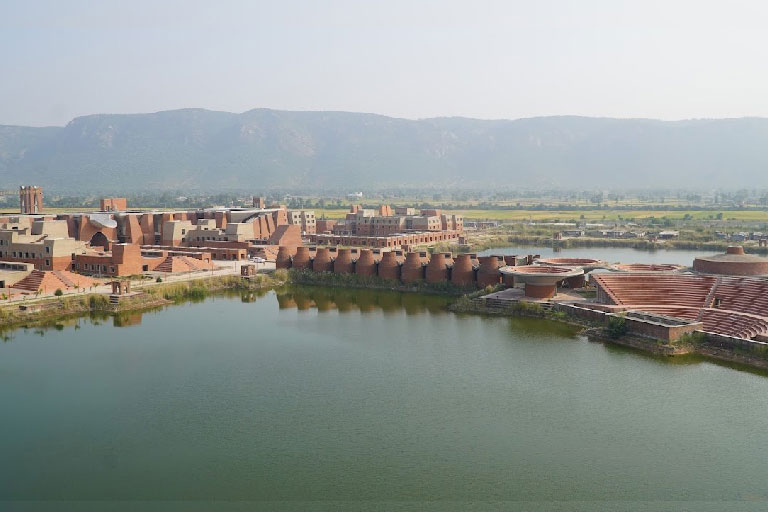
Nalanda University
 By Dr Sanjeev Dhari Sinha*
Bihar’s Story: A Land of Roots and Resilience
Picture the Ganga flowing past villages, carrying Bihar’s story—home to Hinduism, Buddhism, Jainism, and Sikhism. This is where Sita was born in Punaura, Valmiki wrote the Ramayana’s lessons of duty in Valmikinagar, and Vaishali launched the world’s first republic in the 6th century BCE. Bodh Gaya saw Gautama become the Buddha, Vaishali gave us Mahavir’s Jainism, and Patna Sahib welcomed Guru Gobind Singh, Sikhism’s brave heart. While Jerusalem shaped three faiths – Judaism, Christianity and Islam, Bihar nurtured four, its land rich with their legacy. Its languages—Maithili, Bhojpuri, Bajjika, Angika, Magadhi—are older than Hindi, giving it life, like roots to a tree. But Bihar’s also a place of struggle, its proud heart fighting for a better today.
Walk through its villages, and you’ll hear Maithili’s poetry from Vidyapati’s 14th-century Padavali, praising Krishna, or Magadhi’s epic tales, like the Buddha’s life in the Pali Canon. Poets like Ramdhari Singh ‘Dinkar’ stirred revolutions, while Phanishwar Nath ‘Renu’ captured rural Bihar’s soul. Artisans craft Madhubani paintings, Manjusha art, pottery, and bamboo works, filling homes with colour. The food—Litti Chokha’s warm bite, Sattu Paratha’s hearty fill, Khaja’s sweet snap—feels like home, carried by Biharis from Patna’s busy streets to Dubai’s towers, mixed with pizza and a bit of slang.
But staying home is tough. Every year, five crore Biharis leave for jobs in Mumbai’s construction sites or Doha’s deserts, leaving families stuck, lands mortgaged, and a system running on bribes, medical taxes, and shady deals. Migrants send 15,000 to 20,000 rupees home monthly—more for weddings or emergencies—through risky hawala networks, keeping Bihar going. But the state imports everything, from pencils to rickshaws, while other states profit off Bihari workers, selling rice or software for dollars. Courts are slow, police and hospitals are stretched, schools barely function, and basic rights feel out of reach. Voter IDs and Aadhaar cards sit in pockets, just paper, offering no real place in a system that moves on without them.
In 2025, Bihar will be front and centre, with its future a national focus. The Bihar Legislative Assembly elections in October–November see the National Democratic Alliance (NDA), led by Chief Minister Nitish Kumar’s Janata Dal (United) (JD(U)) and the Bharatiya Janata Party (BJP), face the Rashtriya Janata Dal (RJD)-led Mahagathbandhan, with voters demanding jobs and roads over old caste divides. Bihar’s 40 Lok Sabha seats, alongside Andhra Pradesh’s 25, make them key to the NDA’s survival at the Centre, with JD(U) and Andhra’s Telugu Desam Party (TDP) holding the balance. The Union Budget 2025–26 offers a Makhana Board, food institutes, and new airports, while Bihar’s ₹3.17 lakh crore budget pushes schools and health. But people are sceptical—past promises often stalled. Still, Chhath Puja’s UNESCO bid and Rajgir’s Hero Asia Cup Hockey bring pride, and a nuclear plant and irrigation projects offer hope.
 Kolhua Stupa in Vaishali. Image by Pushkar Kumar from Pixabay
Bihar’s story mixes pride with pain. It’s home to Nalanda University, the world’s first, where Vaishali dreamed democracy, and Sita’s birthplace taught duty through the Ramayana. Bodh Gaya gave us Buddhism, Vaishali cradled Jainism, Patna Sahib birthed Sikhism’s final Guru, and its languages shaped Hindi. But now, some call it a “death trap,” its people outsiders in their own land, mocked with sneers at their accents. Leaders chase Delhi’s favour, shaky coalitions turn elections into cash-driven shows, and social media’s a race to be noticed—Biharis posting on Facebook and Instagram, desperate to feel seen. Rights and justice stay out of reach, with broken systems leaving voices unheard.
The struggle hits hard. Families wait alone, lands tied up in debt, migrants’ work goes unnoticed. During COVID-19, countless Biharis died far from home, their names forgotten. Online voting, through the Election Commission of India’s Network (ECINET), could bring a digital ID, maybe even insurance to track and protect migrants—something they missed in the pandemic. But things are still shaky, with young talent untapped and an economy leaning on remittances while importing everything. Patna Mahotsav and Mithila Mela keep culture alive, but Bihar needs jobs, training, and a system that cares.
Still, Bihar’s spirit shines through. Dr. Rajendra Prasad, India’s first President, built the nation’s bureaucracy, giving it strength. Jayaprakash Narayan fought for justice with his ‘Total Revolution’. Today, Anand Kumar’s Super 30 lifts village kids to Indian Institutes of Technology (IITs), showing what’s possible. Vashishtha Narayan Singh, a brilliant mathematician who worked with NASA, challenged Einstein’s theories. Bindeshwar Pathak’s Sulabh International gave dignity through sanitation. From Patna’s coaching hubs, folks like Shubham Kumar top Union Public Service Commission (UPSC) exams, carrying Bihar’s drive into India’s bureaucracy. With hydro power, job training, and leaders who value every Bihari, this land—vital to the NDA’s reign—can build a future where its old roots and new dreams come together, inspiring the world. Bihar’s ready—it’s time to step up.
*The writer is a professor of English in Libya and hails from Bihar.
Nice read with so many important details on Bihar.