Washington: An American citizen’s violent attempt to hijack a Tropic Air flight in Belize, swiftly neutralised by a passenger’s decisive action, has jolted the aviation world, exposing vulnerabilities that resonate far beyond the Caribbean nation’s borders. “Horrifying… We are grateful… that that did not turn into a mass casualty event,” said State Department spokesperson Tammy Bruce, praising Belizean law enforcement’s response to the April 17, 2025, incident that spared over a dozen passengers. This isolated act, unrelated to broader terrorist networks, underscores the persistent threat to civilian aviation, a concern amplified by separate U.S. actions targeting terrorism financing in Yemen and state-enabled aggression from China. Together, these developments signal a global security alert, prompting urgent efforts to safeguard air travel, disrupt illicit networks, and counter geopolitical provocations, though formidable challenges, from resource constraints to diplomatic resistance, loom large.
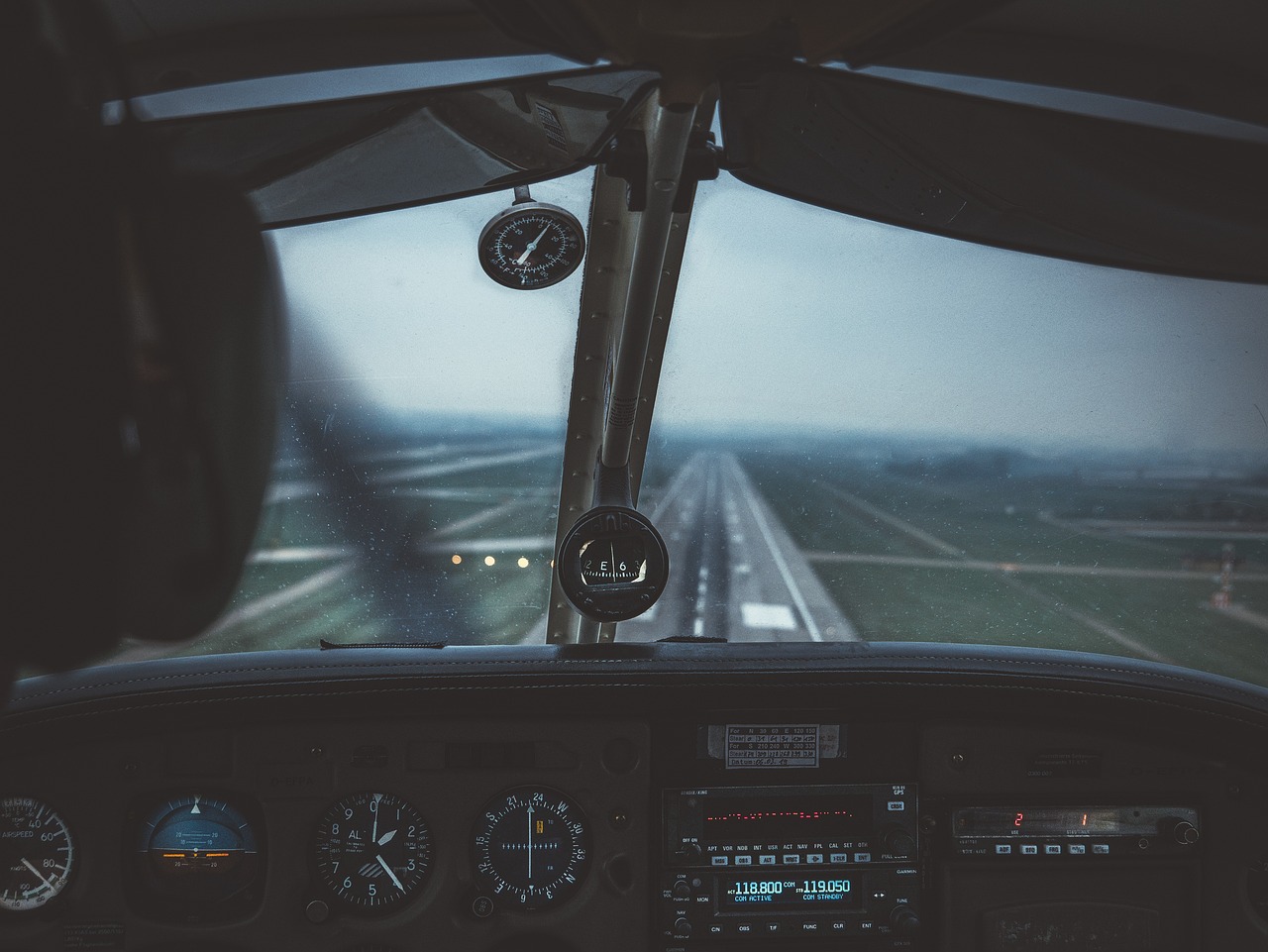
The Belize incident unfolded when Akinyela Sawa Taylor, a 49-year-old U.S. citizen, brandished a knife aboard Tropic Air flight 9N711, a Cessna 208EX Grand Caravan carrying 14 passengers and pilot Howell Grange from Corozal to San Pedro. Taylor, whose motives remain unclear, demanded the plane be flown out of Belize—possibly to Mexico or the United States—and requested refuelling, Police Commissioner Chester Williams said. For nearly two hours, the aircraft circled erratically over Belize City, dangerously low on fuel, as authorities, supported by a police helicopter, monitored its path. Taylor stabbed three individuals: Grange, who heroically guided the plane to a safe landing at Philip S. W. Goldson International Airport, and passengers Jair Castañeda and Fitzgerald Brown. Brown, despite a critical lung injury, shot Taylor with a licensed firearm, ending the threat. Taylor succumbed to his wounds in the hospital, while the injured, hailed as heroes, are expected to recover, per local reports. “He’s our hero,” Williams said of Brown, crediting his courage.
Belizean authorities, declaring a full emergency, swiftly secured the scene, with the Belize Defence Force and airport staff aiding police efforts. The government launched a thorough inquiry, collaborating with the U.S. Embassy, which expressed regret but noted no prior contact with Taylor. “We don’t know why he wanted to go back to the United States,” said Embassy spokesperson Luke Martin. Tropic Air CEO Maximillian Greif lauded Grange’s “nothing short of heroic” actions, emphasising rigorous pilot training. The incident, the most alarming aviation breach in Belize’s recent history, prompted immediate security enhancements, including passenger bag checks and scanning equipment at municipal airstrips, per the Belize Airports Authority. These measures, aligning with International Civil Aviation Organisation (ICAO) standards, aim to fortify small airports, though resource limitations challenge implementation, analysts note. The FBI, tasked with U.S.-linked aviation threats, is likely assisting investigations to uncover Taylor’s background, with Patel’s March 2025 testimony underscoring the need for global cooperation: “Aviation remains a prime target… international cooperation is non-negotiable.”
This hijacking, explicitly unconnected to terrorist groups like the Houthis or state actors like China’s Chang Guang Satellite Technology Co., Ltd., nonetheless highlights aviation’s vulnerability, a concern since the 2001 attacks reshaped global security. Belize’s tourism-driven economy, reliant on safe air travel, faces economic risks, prompting calls for U.S.-led training and intelligence-sharing. The incident’s ripple effects underscore a broader truth: even isolated acts can erode confidence in global aviation, necessitating robust countermeasures to counter lone actors or organised threats.
In a distinct but equally pressing development, the U.S. sanctioned Yemen’s International Bank and its officials for funding Iran-backed Houthi militants, a move Bruce framed as critical to dismantling Iran’s threat network. “The United States is committed to disrupting the Houthi financial networks and banking access,” she said. The Houthis, entrenched in Yemen’s civil war, rely on external support, with recent U.S. sanctions exposing a Russia-based network procuring weapons and stolen Ukrainian grain, US Treasury Secretary Scott Bessent said. “Today’s action underscores our commitment to degrading the Houthis’ ability to threaten the region,” Bessent added. National Security Advisor Mike Waltz, in a March 2025 ABC News interview, accused Iran of enabling Houthi missile and drone attacks that disrupt global commerce, a threat amplified by their underground arsenals.
Iran, while silent on the April 2025 sanctions, sustains Houthi operations through its Islamic Revolutionary Guard Corps (IRGC), linked to weapons smuggling and financial aid, per U.S. Treasury reports. Iran’s oil exports to China, exceeding $1 billion in 2024, bolster its capacity to fund proxies, per OFAC findings, indirectly enabling Houthi attacks that have reportedly raised Red Sea shipping costs by 150% since October 2023. Tehran’s strategic ambiguity—avoiding direct statements—allows plausible deniability while supporting groups like the Houthis, complicating U.S. efforts, analysts say. This dynamic necessitates broader sanctions targeting Iran’s oil trade, as Bessent advocated, to weaken its proxy network.
Efforts to counter the Houthis are intensifying but face hurdles. The U.S. Treasury’s Office of Foreign Assets Control (OFAC) has sanctioned Houthi operatives and suppliers across Iran, China, and Russia, per actions in October 2024 and March 2025. Operation Prosperity Guardian, a U.S.-led maritime coalition, aims to secure Red Sea shipping, but its limited success underscores enforcement challenges, according to The Soufan Center, a New York-based independent non-profit organisation offering “research, analysis, and strategic dialogue on foreign policy challenges with a particular focus on global security, conflict prevention and resolution, and the rule of law”. The U.S. has spent $1 billion since March 2025 targeting Houthi arsenals, with mixed results, per Reuters. Waltz urged military and diplomatic escalation, noting that sanctions alone are insufficient. The U.K. and U.S. have jointly sanctioned Houthi leaders, per GOV.UK, while experts recommend tracking illicit trade and pressuring banks, citing past successes against Houthi smuggling. Iran’s backing and Houthi resilience demand innovative approaches, such as public-private partnerships to monitor funds, per the Combating Terrorism Center.
Separately, the U.S. sanctioned Chang Guang for providing satellite imagery to Houthis, enabling attacks on U.S. interests, Bruce announced. “Chang Guang… is directly supporting Iran-backed Houthi terrorist attacks… Beijing’s support… is yet another example of China’s empty claims to support peace,” she criticised, noting failed U.S. engagements with Beijing. Chang Guang’s history, including 2023 sanctions for aiding Russia’s Wagner group, underscores its role in conflicts, per Reuters. Linked to the People’s Liberation Army, the firm’s imagery likely aids Houthi targeting, amplifying trade disruptions, per The Financial Times. China’s embassy spokesperson, Liu Pengyu, responded by saying he was “not familiar with the situation” and had no comment, reflecting Beijing’s cautious stance. This aligns with China’s non-interference policy, prioritising economic ties over confrontation, according to the Soufan Center.
Efforts to address China’s role face resistance but are advancing. The U.S. has pressed Beijing to curb Houthi support, with Chinese officials urging Iran to restrain the group to protect trade, per Reuters. Yet, Chang Guang’s actions persist, prompting U.S. sanctions and calls for stricter technology export controls, per India Today. A proposed UN mandate to legitimise anti-Houthi operations could pressure China, per Chatham House, a British think tank based in London, but Beijing’s veto power poses risks. Experts recommend multilateral sanctions and exposing China’s contradictions, citing its Global Security Initiative as hollow, per The Diplomat. China’s economic leverage, with 90% of Iran’s 2024 oil exports, complicates diplomacy, per the Atlantic Council. Beijing’s muted response suggests a strategic choice to avoid escalation, necessitating stronger international pressure to curb state-enabled terrorism.
These incidents—Belize’s hijacking, Houthi financing, and China’s role—form a troubling triad, each distinct yet collectively signalling a global security crisis. The Belize incident, unlinked to Houthis or Chang Guang, demands FBI-led probes and ICAO-driven standards, but resource gaps persist, per Patel. Houthi sanctions, bolstered by Bessent’s crackdowns, target Iran’s network, yet Waltz’s warnings highlight military needs. China’s actions require diplomatic and economic pressure, with Bruce’s critique and Liu Pengyu’s non-response exposing Beijing’s duplicity. Iran’s tacit Houthi support, inferred from IRGC links, complicates containment, requiring oil trade sanctions, per Bessent. The $1 billion campaign’s limited impact, per Reuters, underscores the complexity of these threats, where aviation risks, terrorism financing, and state-backed aggression intersect.
Analytically, this convergence reflects a fragmented security landscape, where localised incidents and geopolitical strategies collide. The Belize hijacking signals the need for real-time intelligence and U.S.-Belize cooperation to fortify airports. Houthi resilience, fueled by Iran and Russia, challenges sanctions, with Bessent advocating partnerships to track funds. China’s role, leveraging technology, risks escalation, necessitating UN-backed coalitions and export controls, per The Soufan Center. Iran’s ambiguity enables proxy support, requiring targeted oil sanctions, according to Bessent. “The U.S. must lead, but allies must share the burden,” Waltz said, urging collective action. A holistic approach—integrating aviation safeguards, counter-financing, and diplomacy—is critical, but Houthi adaptability, China’s defiance, and aviation’s exposure demand sustained vigilance.
The State Department awaits further hijacking details while pursuing regional stability, Bruce noted. The FBI’s aviation focus, Waltz’s Houthi warnings, Bessent’s sanctions, and Liu Pengyu’s non-response frame a multi-pronged strategy, yet challenges endure. The Red Sea’s 150% cost surge, Chang Guang’s Wagner precedent, and Iran’s oil trade highlight the stakes. As Bruce’s briefing suggests, these threats converge in a shared imperative: a world where security demands relentless cooperation across borders, sectors, and ideologies to counter a rising tide of instability.
– global bihari bureau