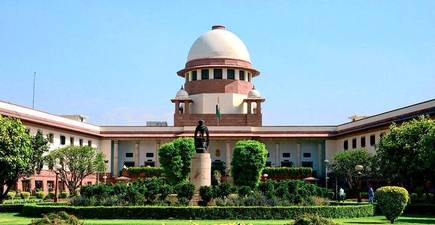
The Supreme Court of India
UGC Equity Rules Stayed Over Definition of Discrimination
Court Flags Vagueness in New UGC Equity Framework
New Delhi: The Supreme Court today stayed the operation of the University Grants Commission (UGC)’s Promotion of Equity in Higher Education Institutions Regulations, 2026, and directed that the earlier 2012 framework on anti-discrimination and equal opportunity would continue to govern universities and colleges until further orders.
A Bench headed by Chief Justice Surya Kant, with Justice Joymalya Bagchi, observed that certain provisions of the 2026 regulations appeared, at a prima facie stage, to be vague and susceptible to misuse. The Court issued notice to the Union government and the UGC and listed the matter for further hearing in March 2026. The stay was granted as an interim measure pending a detailed examination of the constitutional validity of the impugned provisions.
The Promotion of Equity in Higher Education Institutions Regulations, 2026, were notified by the University Grants Commission earlier this month with the stated objective of strengthening institutional mechanisms to prevent discrimination and promote inclusive practices across universities and colleges. The regulations sought to create a uniform national framework by mandating the establishment of Equal Opportunity Centres, Equity Committees and helplines in all higher education institutions, along with defined procedures for receiving, examining and resolving complaints relating to discrimination and inequity.
Under the new framework, the UGC also introduced provisions requiring institutions to submit periodic compliance reports and made heads of institutions, such as vice-chancellors and principals, directly responsible for implementation. The regulations further envisaged sanctions for non-compliance, including possible withdrawal of grants and denial of access to certain academic schemes. While the definition of “discrimination” was expanded to include multiple grounds such as caste, religion, gender, disability and place of birth, the definition of “caste-based discrimination” was framed separately, which later became the central point of legal challenge.
The regulations were challenged soon after their notification by a group of petitioners that included students, civil society members and individuals who claimed to be affected by the manner in which caste-based discrimination had been defined. According to the petitions, some of the challengers identified themselves as belonging to categories outside the Scheduled Castes, Scheduled Tribes and Other Backward Classes and argued that the regulatory framework excluded them from equal access to grievance redressal mechanisms. The petitions were filed before the Supreme Court on January 27, 2026, according to court records, seeking a declaration that certain provisions of the regulations were unconstitutional and required reconsideration. The challengers contended that the regulatory framework, though aimed at promoting equity, created differential treatment in access to grievance redressal mechanisms and raised concerns of legal uncertainty.
The petitioners urged the Court to examine whether the new rules struck an appropriate balance between the objective of social justice and the constitutional guarantee of equality before law. They also sought interim relief on the ground that immediate implementation of the regulations could lead to confusion and inconsistent application across institutions, pending a final adjudication on their validity.
The petitions before the Court primarily challenge the definition of “caste-based discrimination” contained in Regulation 3(c) of the 2026 rules. Petitioners argued that the provision limits caste-based discrimination only to acts directed against members of the Scheduled Castes, Scheduled Tribes and Other Backward Classes. According to them, this creates an exclusionary framework that does not recognise the possibility of caste-related discrimination faced by individuals outside these categories and denies them access to institutional grievance redressal mechanisms.
They contended that such a classification is arbitrary and violates Articles 14 and 15(1) of the Constitution, which guarantee equality before law and prohibit discrimination on the grounds of caste. It was further argued that the regulations also affect Article 21 by denying a section of students and staff an effective procedure to seek redress for grievances linked to caste hostility.
Petitioners also highlighted an internal inconsistency in the 2026 regulations. While Regulation 3(c) defines caste-based discrimination in narrow terms, Regulation 3(e) adopts a broader definition of “discrimination” covering caste, religion, race, gender, disability and place of birth. This, they submitted, renders the framework incoherent and legally uncertain, as two different standards appear to operate within the same set of rules.
Another challenge raised before the Court concerned the grievance redressal architecture created under the 2026 regulations. The petitions stated that Equal Opportunity Centres, Equity Committees, helplines and inquiry mechanisms are structured primarily around complaints from specified caste groups, thereby excluding others from the same institutional safeguards. Such differential access, it was argued, amounts to impermissible discrimination by the State itself.
The Court was also urged to consider the risk of what the petitioners described as a reverse or one-sided presumption, namely that discrimination can occur only in a single social direction. Petitioners maintained that the regulations assume that caste discrimination necessarily flows from non-marginalised groups towards marginalised communities and do not account for other forms of caste-based hostility. This presumption, they said, lacks an intelligible basis and cannot withstand constitutional scrutiny.
In addition, the language of the 2026 regulations was assailed as vague and open-ended. Several provisions, it was argued, do not clearly define actionable conduct or the limits of inquiry, leaving room for arbitrary interpretation and enforcement. Such uncertainty, the petitions submitted, can have a chilling effect on fundamental freedoms and institutional autonomy.
Against this background, the Court ordered that the UGC’s 2012 framework on anti-discrimination would continue to apply while the legality of the 2026 regulations is examined.
A comparison between the two regimes shows a significant shift in approach. The 2012 regulations were largely advisory in nature. Institutions were encouraged to establish Equal Opportunity Cells and promote inclusive practices, but enforcement mechanisms and penalties were limited. Grievance redressal processes under the earlier framework were discretionary, with no strict timelines or clearly defined sanctions for non-compliance.
In practical terms, this meant that universities and colleges retained wide autonomy in deciding how and when to implement the guidelines. While the creation of Equal Opportunity Cells was recommended, there was no uniform national standard governing their composition, powers, or procedures. Compliance depended largely on the institutional will of individual administrations rather than on a binding legal obligation.
Because the framework did not prescribe mandatory reporting or monitoring mechanisms, the UGC had limited capacity to assess whether institutions were effectively addressing complaints of discrimination or inequality. The absence of specified timelines for inquiry or resolution often resulted in delays, and in some cases, complaints remained unresolved for extended periods.
Moreover, the lack of clearly articulated penalties meant that institutions faced little regulatory consequence for failing to establish grievance mechanisms or for inadequately responding to allegations of discrimination. As a result, the 2012 regime functioned more as a policy guideline promoting best practices than as a regulatory system capable of ensuring uniform enforcement across higher education institutions.
This advisory character of the 2012 regulations is one of the key contrasts with the 2026 framework, which sought to transform these broad principles into binding obligations with defined structures, accountability, and consequences for non-compliance.
The 2026 regulations introduced a mandatory and statutory structure. They required every higher education institution to constitute Equal Opportunity Centres, Equity Committees and helplines, with defined procedures for inquiry and reporting. Coverage was expanded beyond students to include faculty and non-teaching staff. Institutional heads such as vice-chancellors and principals were made directly responsible for compliance.
The newer framework also envisaged a system of monitoring and reporting through mandatory disclosures to the UGC and provided for sanctions in cases of non-compliance, including possible withdrawal of grants and denial of academic schemes.
While the definition of “discrimination” under the 2026 rules was broadened to include multiple grounds such as caste, religion, gender and disability, the specific definition of caste-based discrimination became the focal point of constitutional challenge.
With the stay now in force, universities and colleges will continue to be governed by the 2012 regulations until the Supreme Court delivers a final ruling on the validity of the 2026 framework. The Court has indicated that the issues raised involve questions of clarity, coherence and constitutional balance, and will be examined in detail at the next stage of hearing.
The matter is scheduled to be taken up again in March, when the responses of the Union government and the UGC will be considered, and the future of the 2026 equity regulations will be decided.
– global bihari bureau