WTO Members Weigh China’s Challenge to Indian EV Schemes
India Blocks China’s Request for WTO Panel on EV Incentives
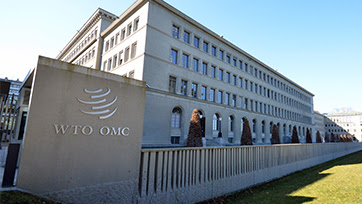
Geneva: The World Trade Organization’s Dispute Settlement Body today considered China’s request for a panel to examine India’s incentive measures in the automotive and renewable energy technology sectors, including programmes linked to advanced chemistry cell batteries, automobile and auto components, and electric vehicles.
The dispute, registered as Dispute Settlement case DS642 and formally titled India – Measures Concerning Trade in the Automotive and Renewable Energy Technology Sectors, arises from China’s claim that several Indian programmes condition financial incentives on the use of domestically produced inputs or otherwise discriminate against goods of Chinese origin. China argues that these measures are inconsistent with India’s obligations under World Trade Organization (WTO) agreements and restrict fair competition in global supply chains for clean energy and automotive technologies.
China made its request under Articles 4 and 6 of the Understanding on Rules and Procedures Governing the Settlement of Disputes, Article XXIII of the General Agreement on Tariffs and Trade 1994, Articles 4 and 30 of the Agreement on Subsidies and Countervailing Measures, and Article 8 of the Agreement on Trade-Related Investment Measures. It asked that any panel be established with standard terms of reference under Article 7.1 of the Dispute Settlement Understanding.
At the meeting, China said it had sought the establishment of a panel after consultations with India held on November 25, 2025, and January 6, 2026, but failed to resolve the dispute. According to China, the contested measures are trade-restrictive and discriminatory and breach India’s commitments under the Agreement on Subsidies and Countervailing Measures, the General Agreement on Tariffs and Trade 1994, and the Agreement on Trade-Related Investment Measures. China further argued that the measures appear to nullify or impair benefits accruing to it, directly or indirectly, under those agreements.
China said the most effective way to advance climate change mitigation and renewable energy objectives was through collaboration among WTO members rather than through policies that favour domestic products over imported ones. It added that it remained open to continuing engagement with India to resolve the matter amicably in accordance with multilateral trade rules.
India told the Dispute Settlement Body that it had engaged with China in good faith during the consultation process with a view to reaching a mutually satisfactory resolution. However, India said there appeared to be an inaccurate understanding of the facts surrounding its programmes and that, in light of this, it was not in a position to agree to China’s request for the immediate establishment of a panel.
The chair of the Dispute Settlement Body took note of the statements made by both members and said the body would revert to the matter if requested again. The Dispute Settlement Body did not assess or rule on the substance of the claims at this stage. Under WTO procedures, a panel may be established automatically on a second request by the complaining member unless there is consensus against doing so, making further action likely if China renews its request.
The dispute centres on three major Indian policy instruments that form part of the country’s broader “Make in India” industrial strategy. These include the Production Linked Incentive National Programme on Advanced Chemistry Cell Battery Storage, the Production Linked Incentive Scheme for the Automobile and Auto Component Industry, and the Scheme to Promote Manufacturing of Electric Passenger Cars in India.
China first requested consultations with India on 15 October 2025, claiming that these programmes condition eligibility for incentives on meeting domestic value addition thresholds. Under the advanced chemistry cell battery scheme, adopted in June 2021 with a budgetary outlay of 18,100 crore rupees, beneficiary firms must commit to building large-scale battery manufacturing facilities in India and achieve phased domestic value addition targets rising from 25 per cent to 60 per cent within five years. Subsidy payments are calculated on the basis of production volumes, the level of domestic value added, and a prescribed rate per kilowatt hour of batteries sold, and are disbursed over a five-year period following the commissioning of manufacturing facilities.
The Production Linked Incentive Scheme for the Automobile and Auto Component Industry, introduced in September 2021 with a planned outlay of 25,938 crore rupees over five years, supports manufacturers of advanced automotive technology vehicles and components. Only pre-approved products that achieve at least 50 per cent domestic value addition qualify for incentives, which are linked to incremental sales over a base year and paid annually.
The third measure, the Scheme to Promote Manufacturing of Electric Passenger Cars in India, adopted in March 2024, allows approved companies to import fully assembled electric passenger cars at a reduced customs duty rate of 15 per cent for up to five years, subject to an annual cap of 80,000 vehicles. To benefit from this reduced tariff, companies must establish manufacturing facilities in India within three years and meet domestic value addition milestones of 25 per cent by the third year and 50 per cent by the fifth year, backed by substantial investment commitments and bank guarantees.
China contends that these domestic value addition requirements amount to subsidies contingent on the use of domestic goods and breach national treatment obligations by according less favourable treatment to imported products than to like domestic goods. It also argues that the electric passenger cars scheme is inconsistent with the most-favoured-nation principle because it appears to accord advantages to products from certain countries that are not immediately and unconditionally extended to like products from all WTO members.
Alongside its consultation request, China submitted a formal statement of available evidence under Article 4.2 of the Agreement on Subsidies and Countervailing Measures. This included official notifications published in the Gazette of India, programme guidelines issued by the Ministry of Heavy Industries, and other implementing instruments detailing domestic value addition calculations, investment thresholds, production capacity requirements, and subsidy disbursement mechanisms.
China has stated that its complaint covers not only the existing measures but also any amendments, supplements, extensions, renewals, replacements, or related implementing measures adopted by India in connection with the three schemes. It has also reserved the right to raise additional facts, measures and legal claims under other provisions of WTO agreements as the dispute proceeds.
The case comes at a time when governments worldwide are expanding industrial policies to support electric vehicles, battery manufacturing and renewable energy technologies, intensifying scrutiny over how such measures align with multilateral trade rules. The outcome of the dispute could have broader implications for the design of climate-related industrial incentives within the WTO framework.
For now, the Dispute Settlement Body has taken note of the positions of China and India and agreed to return to the issue should a member renew the request for the establishment of a panel.
– global bihari bureau