WTO, World Bank launch new tools to support developing economies on services trade
New Platform Aims to Empower Developing Economies on Services
New Dashboard, Handbook to Strengthen Services Strategies
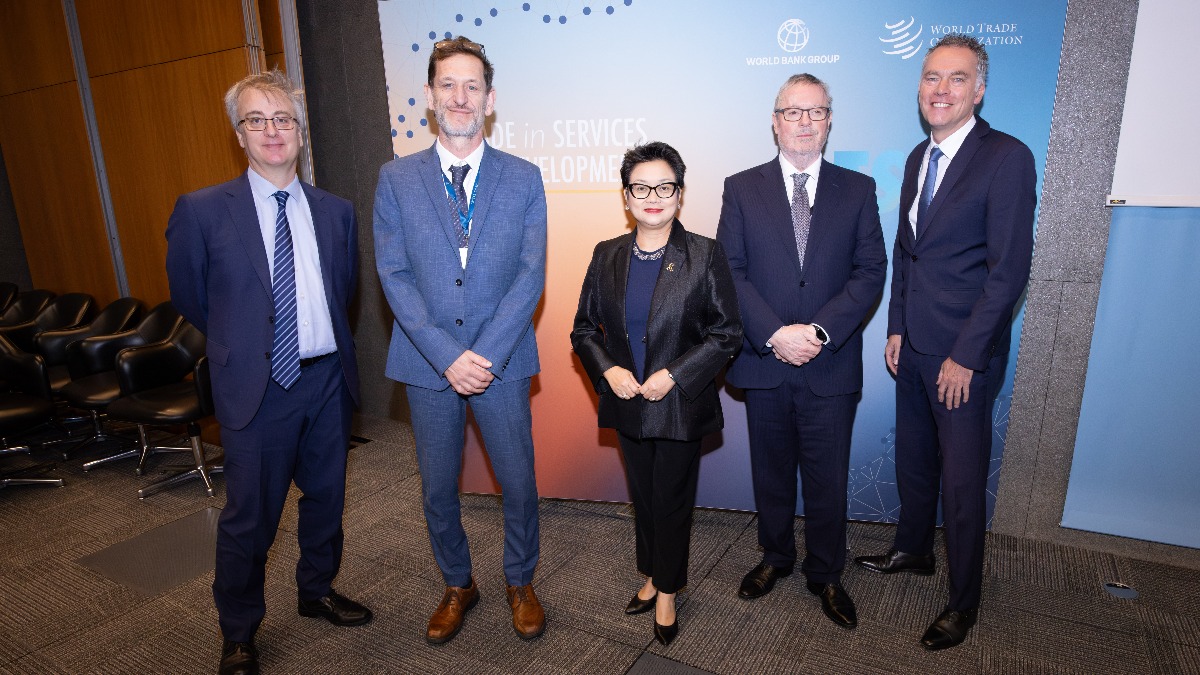
Geneva: With services now accounting for the fastest-growing share of global trade, the World Trade Organization (WTO) and the World Bank are moving to ensure that developing economies are not left out of the next wave of growth. Opening the Trade in Services for Development (TS4D) Conference, the two institutions unveiled a new online platform equipped with analytical and capacity-building tools designed to help governments convert the momentum of the services economy into jobs, investment and long-term development gains.
The platform is intended to function as a one-stop shop where policymakers and the wider public can access information on the joint WTO–World Bank initiative and its workstreams. Its centrepiece is the Trade in Services Competitiveness Dashboard, an interactive tool that gives governments a real-time picture of how their services sectors perform relative to global peers. Presenting the dashboard, WTO Counsellor Martin Roy said the objective is to centralise access to capacity-building resources under the TS4D umbrella and strengthen information sharing among international organisations. He added that the dashboard will allow policymakers to pinpoint strengths, weaknesses, opportunities and gaps, paving the way for clearer priorities and more evidence-based national strategies.
Sébastien Dessus, Manager of the World Bank’s Trade Policy and Facilitation Unit, highlighted the visibility and integration of data as a breakthrough. He noted that consolidating services-related information demonstrates the scale and economic potential of the sector, offering much-needed diversification for countries wary of dependence on a limited set of exports. Dessus also pointed out that governments rarely have a single agency responsible for services trade, and that the tool delivers the comprehensive picture needed for informed decision-making. He said the World Bank has already begun working with governments in the Middle East, North Africa and East Asia to implement the tools and is deepening collaboration with the private sector.
The launch also included the WTO–World Bank Handbook on Good Regulatory Practices to Facilitate Trade in Services, which provides case studies, diagnostic features and practical guidance to help governments benchmark their domestic regimes against recognised good practices and prepare for reforms. Its goal is to foster transparent, efficient and predictable regulatory environments that attract investment and enable services trade to expand.
Beyond the dashboard and handbook, the platform hosts information on a multi-agency project to identify best practices in services export promotion in developing countries, backed by the United Nations Economic Commission for Latin America and the Caribbean (UNECLAC), the African Development Bank, the Asian Development Bank and the Inter-American Development Bank. A series of country case studies is under development to support governments seeking to sharpen their services export strategies. The portal also compiles data tools central to other TS4D workstreams, including the joint World Bank–WTO Services Trade Policy Database and the Services Trade Restrictions Index.
A training programme for selected senior trade officials from developing economies was underway on the margins of the conference, signalling that the launch is being paired with hands-on support to ensure governments can apply the new tools in policy planning rather than simply access them.
– global bihari bureau