Agriculture negotiations Chair reports on prospects for progress for MC14
Food Security Top on the Table at MC14 Meet
Geneva: World Trade Organization (WTO) members aim for concrete outcomes on agriculture and food security at the 14th Ministerial Conference (MC14) in Cameroon in six months, despite scepticism about bridging divergences. This ambition stems from consultations where many delegations emphasised the need for meaningful results in these areas as part of the MC14 package, focusing on issues like domestic support reductions, public stockholding for developing countries, and export restrictions on food to enhance global food security. For instance, the Cairns Group of agricultural exporters and the African Group are collaborating on proposals for domestic support and public stockholding, with plans to submit contributions soon, while other members suggested immediate deliverables for vulnerable nations, such as least developed countries facing food insecurity.
The scepticism arises from persistent gaps in negotiating positions, with no new member submissions tabled and only six months until MC14, making substantive agreements challenging. Ambassador Xolelwa Slingsby Hussain, Chair of the WTO Committee on Agriculture in Special Session, today categorised members into groups: those independently consulting on topics like food export restrictions; those still in internal deliberations; and market access proponents needing facilitation. Without convergence, Hussain has no plans for a Chair’s text, urging instead for technical discussions and side events to build momentum.
Hussain noted that recent trade policy developments have heightened challenges to consensus, stating, “The current turbulence in the international trading system undoubtedly adds to the prevailing uncertainty.” These developments include escalating US-China trade tensions, with US-imposed tariffs expected to reduce bilateral trade volumes by over 80 per cent in 2025. UNCTAD’s September 2025 Global Trade Update highlights trade policy uncertainty looming over markets, driven by higher costs and slower growth from such measures. A former envoy noted on September 26, 2025, that US and China policies are creating turbulence in global trade. Additionally, a major US-EU agreement in July 2025 set a 15 per cent tariff ceiling on most EU exports to the US, including automobiles, adding to volatility. Maritime trade growth is projected to stall in 2025 due to geopolitical volatility and higher costs, per UN Trade and Development reports. These factors complicate the WTO consensus, as unilateral tariffs undermine multilateral rules and predictability.
This scepticism must be viewed in light of the 13th Ministerial Conference (MC13) in Abu Dhabi in February 2024, where agriculture negotiations yielded no agreements despite high expectations. MC13 failed to deliver on key issues like export prohibitions or restrictions for food security, missing an opportunity to exempt humanitarian food purchases from such measures. Divergences on public stockholding, domestic support, and market access remained intractable, with no consensus on proposals like JOB/AG/229 from developing countries. Agriculture talks did not finalise, continuing into the final day without breakthroughs, reflecting deep divisions similar to those now facing MC14. The lack of progress at MC13, coupled with no major advancements since, fuels doubts that the same unresolved issues—such as balancing food security needs of developing nations with trade liberalisation demands from exporters—can be bridged in time for MC14, especially amid heightened global trade tensions.
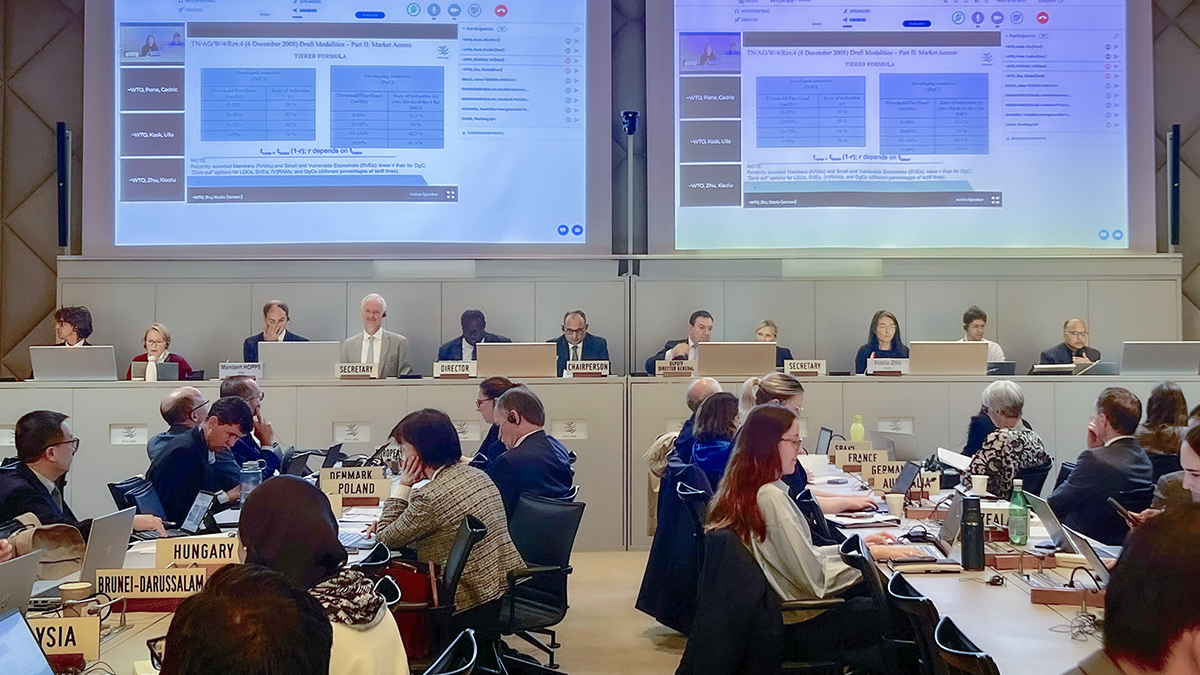
The Secretariat presented the history of market access negotiations since 1999, detailing the evolution from initial launch to recent efforts for incremental outcomes. Another presentation on market access in regional trade agreements revealed that such agreements eliminate tariffs on a large share of agricultural tariff lines, though less than for non-agricultural goods; a large share of agricultural imports becomes duty-free, but less than non-agricultural items; and remaining agricultural tariffs are higher than those on non-agricultural products.
In a session on public food stockholding at administered prices for developing economies and the Special Safeguard Mechanism (SSM), allowing temporary tariff hikes for import surges or price drops, developing members pushed their JOB/AG/229 proposal for stockholding to address food insecurity. Sceptics noted prior failures to reach consensus. SSM proponents emphasised its role for resilience and livelihoods, urging engagement. Suggestions included thematic sessions and an interim price-based mechanism. Hussain urged efforts to bridge differences, stating, “Negotiations must be transparent and inclusive based on member submissions shared with the whole membership, with the CoASS at the very heart of the process.”
Hussain will facilitate focused talks, encourage innovative approaches, and organise market access meetings as requested. He welcomed indications of new submissions and urged members to share proposals soon, given the tight timeline.
– global bihari bureau