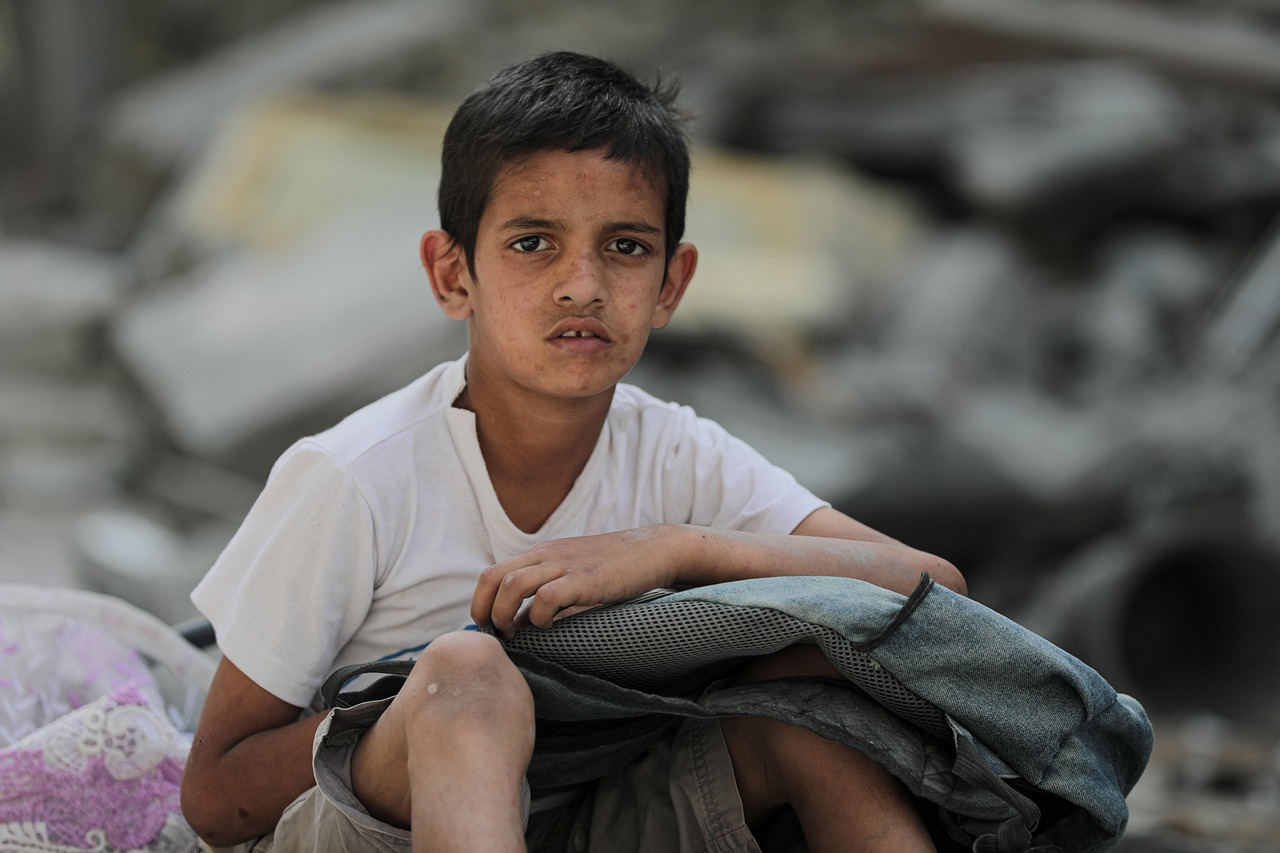
UN Issues Urgent Global Call to Stop Gaza’s Famine Crisis
Gaza Strip: A stark famine alert issued by the Integrated Food Security Phase Classification (IPC) today has declared that Gaza is on the brink of a full-scale famine, driven by relentless conflict, mass displacement, severely restricted humanitarian access, and the collapse of essential services like healthcare. The IPC, a multi-partner initiative involving the World Health Organization (WHO), Food and Agriculture Organization (FAO), United Nations World Food Programme (WFP), and UNICEF, reports that two of three famine thresholds—plummeting food consumption and acute malnutrition—have been breached in parts of the Gaza Strip, with mounting evidence of hunger-related deaths. UN agencies are urgently calling for an immediate ceasefire, unimpeded humanitarian access, and global support to prevent widespread starvation and avert a humanitarian catastrophe.
The IPC alert confirms catastrophic food security conditions across Gaza’s 2.1 million population, with over 500,000 people—nearly a quarter—facing famine-like conditions classified as IPC Phase 5 (Catastrophe). Since the last IPC update in May 2025, food consumption has deteriorated sharply, with 39 per cent of Gazans going days without eating. In Gaza City, acute malnutrition among children under five has quadrupled in two months to 16.5 per cent, signalling a critical rise in the risk of death from hunger. “Gaza is now on the brink of a full-scale famine. People are starving not because food is unavailable, but because access is blocked, local agrifood systems have collapsed, and families can no longer sustain even the most basic livelihoods,” said FAO Director-General QU Dongyu. The third famine threshold, starvation-related deaths, is increasingly evident, though data collection is hindered by the near-total collapse of health systems after nearly three years of conflict.
The crisis has left over 320,000 children under five at risk of acute malnutrition, with thousands suffering from severe acute malnutrition, the deadliest form of undernutrition. Since April, hospitals have treated over 20,000 children for acute malnutrition, with 6,500 admitted in June and 5,000 in the first two weeks of July. At least 16 children under five have died from hunger-related causes since mid-July, with fewer than 15 per cent of essential nutrition treatment services functional. “Emaciated children and babies are dying from malnutrition in Gaza,” said UNICEF Executive Director Catherine Russell. “We need immediate, safe and unhindered humanitarian access across Gaza to scale up the delivery of life-saving food, nutrition, water and medicine.”
The famine conditions stem from intensified hostilities since October 2023, following Hamas-led attacks in Israel, which have displaced 90 per cent of Gaza’s population multiple times and reduced safe zones to less than 12 per cent of the territory. A near-total blockade since March 2, 2025, has devastated local food systems, destroying 70 per cent of crop fields and rendering two-thirds of agricultural wells non-functional. WFP’s food stocks were depleted by April 25, 2025, and all 25 WFP-supported bakeries closed due to shortages of wheat flour and fuel. “The unbearable suffering of the people of Gaza is already clear for the world to see. Waiting for official confirmation of famine to provide life-saving food aid they desperately need is unconscionable,” said WFP Executive Director Cindy McCain, emphasising that delays will escalate the death toll.
UN agencies have outlined five critical actions to reverse the crisis. First, an immediate and sustained ceasefire is essential to stop hostilities, enable the safe release of hostages, and facilitate humanitarian operations. Second, safe and unimpeded humanitarian access through all available crossings is needed to deliver over 62,000 tons of monthly aid, including food, nutrition supplies, water, fuel, and medical assistance. Third, protecting civilians, aid workers, and infrastructure like health and water systems is crucial to prevent disease outbreaks exacerbated by malnutrition. Fourth, restoring commercial supply chains to revive local markets and provide dietary diversity with fresh produce, dairy, and proteins is vital. Fifth, investment in recovering local food systems, including bakeries, markets, and agriculture, is necessary for long-term stability. “The right to food is a basic human right,” QU Dongyu stressed, urging immediate action to restore livelihoods.
Humanitarian efforts are severely hampered by restricted aid access, with convoys often obstructed or looted. Recent Israeli commitments to daily humanitarian pauses from 10 am to 8 pm are welcomed, but insufficient to meet the scale of need. “We need to flood Gaza with large-scale food aid, immediately and without obstruction, and keep it flowing each and every day to prevent mass starvation,” McCain said. Air-dropped aid, recently initiated, is deemed “far too expensive and inefficient” by WFP’s Ross Smith, with reports of injuries to at least 11 Gazans during distributions on Sunday. “This is unlike anything we have seen in this century; it reminds us of previous disasters in Ethiopia or Biafra,” said WFP’s Jean-Martin Bauer, emphasising that humanitarian access is critical as markets are non-functional and people cannot provide for themselves.
UN Women highlighted the disproportionate impact on women and girls, who face “the impossible choice of starving to death at their shelters or venturing out in search of food and water at extreme risk of being killed,” according to Sofia Calltorp, Director of UN Women in Geneva. She reiterated demands for unrestricted aid access, hostage release, and a ceasefire, expressing hope that the French and Saudi-led International Conference for the Peaceful Settlement of the Question of Palestine could advance a two-state solution for lasting peace.
The IPC’s findings build on a May 2025 projection that warned of catastrophic food insecurity (IPC Phase 5) for 470,000 people by September 2025, following a November 2024 alert of imminent famine in northern Gaza. Social media reports describe ambulance sirens across Gaza, with starving individuals overwhelming emergency rooms, and the Gaza health ministry noting “extreme exhaustion and fatigue” among patients. UN Secretary-General António Guterres called the situation a “humanitarian catastrophe of epic proportions,” urging a shift from a “trickle” to an “ocean” of aid to address the crisis.
– global bihari bureau