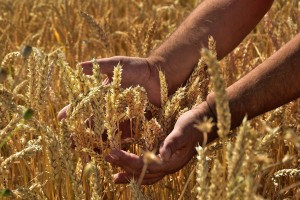
Rome: Global food markets are showing signs of relief, with the Food and Agriculture Organization of the United Nations (FAO) reporting a dip in world food commodity prices for May 2025, driven by sharp declines in maize, palm oil, and sugar prices, even as butter and bovine meat hit historic highs. Alongside this, the FAO’s latest Cereal Supply and Demand Brief forecasts a record-breaking global cereal production for 2025, promising a partial rebound in stocks and trade, painting an optimistic yet complex picture for food security.
The FAO Food Price Index, which tracks monthly changes in international prices of globally traded food commodities, averaged 127.7 points in May, down 0.8% from April but still 6.0% higher than a year ago. A steep drop in maize prices, fueled by strong harvests in Argentina and Brazil and expectations of a record U.S. crop, led to the decline in the FAO Cereal Price Index, which fell 1.8% from April and 8.2% from May 2024. Wheat prices edged lower with improved crop conditions in the northern hemisphere, but rice prices bucked the trend, rising 1.4% due to strong demand for fragrant varieties, higher Indica rice prices, and currency fluctuations. Vegetable oil prices also slid, with the FAO Vegetable Oil Price Index dropping 3.7% as palm oil prices fell sharply due to seasonal output increases in Southeast Asia, soy oil benefited from robust South American supplies, and rapeseed and sunflower oils weakened amid softer global demand.
Sugar prices followed suit, with the FAO Sugar Price Index falling 2.6%, reflecting concerns over a weaker global economic outlook, reduced demand from beverage and food industries, and expectations of a production recovery next season. However, not all commodities saw declines. The FAO Meat Price Index rose 1.3%, propelled by record-high bovine meat prices and increases in ovine and pig meat, though poultry prices dipped due to surplus supplies in Brazil after import bans sparked by an avian influenza outbreak on a commercial farm in mid-May. Dairy prices also climbed, with the FAO Dairy Price Index up 0.8%, driven by strong Asian demand keeping butter at historic highs and lifting prices for cheese and whole milk powder.
In a parallel development, the FAO’s Cereal Supply and Demand Brief projects a record global cereal production of 2,911 million tonnes in 2025, a 2.1% jump from 2024. This surge is expected to outpace global cereal utilisation, forecast to grow by 0.8% to 2,898 million tonnes in 2025/26, with food consumption rising 0.9% and feed use expanding by 0.5%. The resulting surplus should lift global cereal stocks by 1.0% to 873.6 million tonnes, partially recovering from last year’s contraction and keeping the global stock-to-use ratio stable at 29.8%. Cereal trade is also set to rebound, with a 1.9% increase to 487.1 million tonnes, driven by a 3.8% rise in wheat trade, though rice trade is expected to contract slightly by 0.7%. Updated estimates for the 2024/25 marketing season further refine this outlook, with more details to come in the FAO’s Food Outlook report on June 12.
Adding depth to the narrative, the Agricultural Market Information System (AMIS), hosted by FAO, released its monthly Market Monitor, spotlighting the climate’s impact on maize yields. While Eastern Europe, India, and Southern Africa face weather-related yield swings, stability in China and the United States, which together produce half of the world’s maize, offers a buffer. This regional contrast underscores the need for tailored strategies to ensure food security amid unpredictable conditions.
As global food prices ease and cereal production hits new heights, the outlook offers cautious optimism. Yet, challenges like climate variability, avian influenza disruptions, and economic uncertainties linger, keeping markets on edge. With the FAO’s detailed Food Outlook report on the horizon, stakeholders worldwide are poised to navigate this evolving landscape, balancing abundant harvests with persistent risks.
– global bihari bureau