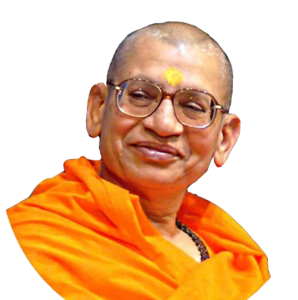
By Swami Viditatmananda Saraswati*
Who is a Hindu? This is a very popular question with many answers. Hindu is not a Vedic word, and it is said that the word was perhaps coined by the Persians. They could not pronounce the word Sindhu, so they called the people living in the Indus Valley Hindus. We therefore do not find the word Hindu in the ancient scriptures, though in the recent works, we do find the word being explained as him apśabdaü dyati khandayati iti hinduh, one who condemns falsehood, also meaning one who is committed to the truth, is a Hindu. Hīnaü dūṣyati iti hinduh, one who condemns anything that is low, base or wild can also be called Hindu. Further, the Vedic culture is primarily based on worshipping the gods. Nārayaëādi-devatā-bhaktah, one who is the worshipper of the gods, such as Näräyaṇa, can be called a Hindu. Thus, different explanations are given for the word Hindu.
Hence we may say that one who follows the eternal fundamental values of life, one in whose life the worship of the gods is very important, one who lives a responsible life, one who is committed to a righteous way of life, one for whom the spiritual growth is very important in life and hence one for whom matter sub-serves the spirit, can be called a Hindu.
A Hindu is also one who has faith and trust in the Vedas. What we call Hinduism can properly be called the Vaidika Dharma. Hindus follow the teachings of the Vedas and many other texts that are derived from the Vedas. The Vedas are the fundamental texts, and then there are the Smritis, the Puranas, and a whole body of literature based on the Vedas also is there. The followers of the teaching of these texts can be called Hindus. Thus, Hinduism is a way of life based on the vision of life provided by the Vedas.
Hinduism and the sanätana dharma are not different. Hinduism is sanätana dharma. Dharma means a righteous way of living, and sanätana means eternal. A way of living based on the eternal values is called the sanätana dharma. A way of living involves the spirit as well as the form. The spirit is an abiding, lasting principle. The form is subject to change with reference to the time, the place, the social and geographical conditions, etc. The spirit of the sanätana dharma is based on the eternal values. The form in which these values are practised changes with time. The Vedas teach the eternal values, the principles, which form the spirit of the way of life of a Hindu. The Hindus adopt the eternal values in the applicable form of life depending on the time, the place and the conditions. So Hindu dharma and the sanätana dharma are the two names of the same dharma or religious and spiritual tradition.
Who founded the Hindu religion? This question arises because we take for granted that a religious tradition must necessarily be founded, and that it must be historical; but this is not the case with Hinduism. It was not founded by an individual, and we do not say that it even has a beginning.
The fundamental scriptures of Hinduism are the Vedas. The word Veda is derived from the root ‘vid’, which means “to know.” The Vedas are a body of sacred knowledge or wisdom which reveals knowledge that is eternal. The Vedas consist of the mantras, the sacred hymns and the passages. They were not composed, but were revealed to the rishis, or the sages, who, on account of the power they attained due to penance, concentration, devotion and worship of the Lord, attained a very refined state of mind, in which they were able to see the mantras.
Like the laws of nature that scientists such as Newton and Einstein came to understand later, always existed, the Vedas were always there, and since they are a collection of the revelations that many sages received, it is the truth revealed in them, and not who speaks in them, that is important.
Humans have a natural urge to know and to live the truth. Our intellect has a natural affinity for the truth. It never wants falsehood. This is expressed in the famous prayer in the Brahadaranyaka Upanishad, “Lord, please lead me from untruth to truth, from darkness to light, from death to immortality.” The Vedas reveal a way of life to fulfil this human urge.
However great a person is, his statements and insights are limited by the limitations of the human intellect, such as ignorance, doubt, misapprehension and by the limitations of the senses and the mind, etc. As a consequence, books written by them will reflect those limitations. Since the Vedas were revealed, and not composed, they are free from the limitations, or defects, of the human intellect. We therefore look upon them as pramanam, or a valid means of knowledge.
In summary, Hinduism has no beginning, was not founded by a single person, and is hence not limited to the views and teachings of a person. Its teachings are based on the Vedas, and are broad and universal. Since the Vedas reveal the fundamental truth of life, and the truth has no beginning, it can be said that the Hindu religion also has no beginning. It is as ancient as mankind.
How can one become a Hindu?
Hinduism is very broad-minded and inclusive. It does not matter which tradition, place and time you hail from. As long as you follow the fundamental principles of the Vedas, have the right perceptions in life, and follow the right values, you are a Hindu and are qualified to attain moksha, which is the end that Hinduism aspires to attain. Hence, we can say that one is born a Hindu. There are no rituals or ceremonies to go through to become one. Hindus, in fact, do not see a need to preach conversion. As best as I know, there is no formal process of conversion. Hindus never converted others, but anyone wanting to practice Hinduism was included in the fold. Therefore, Hinduism spread far and wide beyond the borders of India to China, Java, Sumatra and other places. It is by willing acceptance, and not conversion, that one becomes a Hindu.
Are there commandments in Hinduism?
If by commandments you mean absolute rules, which cannot be violated under any condition, then I would say there are none, because rules cannot be absolute. Rules can be universal. However, what a given rule means in a given situation needs to be understood, and wisdom is needed for that.
In this way, the observance of the rule is left to the wisdom of the person. What non-violence, truthfulness, etc., mean in a given situation is to be determined by the individual. We therefore have the itihasas and puränas, stories of great heroes and saints to take lessons from.
There are universal values but no absolute commandments as to what can or cannot be done. This does not mean that there is permissiveness or that the values are subjective. What is needed is the recognition that no one thing can be called the truth at all times, places and conditions in the relative world.
One of the rules is, “May you speak the truth in a pleasant manner. If you find that truth is unpleasant, then you may not speak that.” These are guidelines to help us understand what speaking the truth means. The ultimate purpose of following values is to bring about a greater good, growth and harmony. It calls for wisdom to determine what a given value means in a given situation.
The purpose of life according to Hindu philosophy
Moksha, meaning release from all bondage, limitation, pain and sorrow, is the purpose of life according to Hinduism. It can also be called liberation/freedom from the cycle of birth and death.
Unlike other forms of life, which do not have purposes other than eating, drinking, procreating and self-preservation, human life has a higher purpose. We are endowed with dissatisfaction with the way things are, the way we are, and a consequent desire to change ourselves and the world around us. This phenomenon proves that humans seek satisfaction and permanent, unconditional happiness. In other words, we seek total freedom from sorrow. This is the end everyone pursues knowingly or unknowingly.
Vedänta says that humans will continue to strive till this end is attained, and if not fulfilled in this lifetime, the pursuit will continue in subsequent ones.
Hence, moksha, or freedom, abidance in boundless happiness, and total freedom from sorrow and bondage is the goal of human life according to Hinduism.
*Swami Viditatmananda Saraswati has been teaching Vedānta Prasthānatrayī and Prakaraṇagranthas for the last 40 years in Ahmedabad, Gujarat. Throughout the year, he conducts daily Vedānta discourses, accompanied by retreats and Jñāna Yajñas on Vedānta in different cities in India and foreign countries.