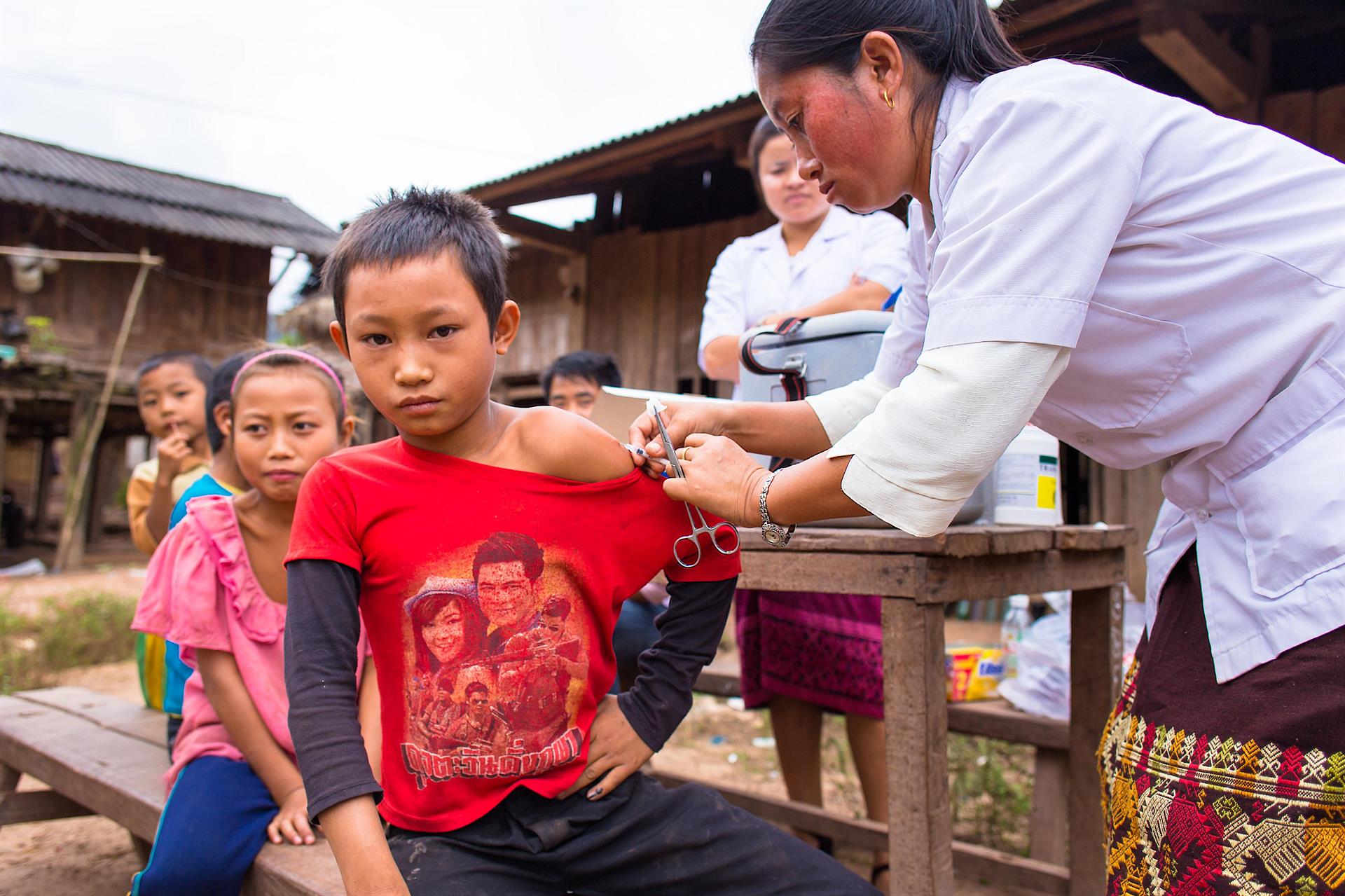
Photo: WHO/Daniel Hodgson
Geneva/Kathmandu: Nepal has eliminated rubella as a public health threat, marking it as the sixth country in the WHO’s South-East Asia Region to achieve this status, the World Health Organization (WHO) announced today.
Rubella, also known as German measles, is a contagious viral infection that poses severe risks to pregnant women, potentially leading to miscarriage, stillbirth, or congenital defects in newborns. The disease is preventable through safe and cost-effective vaccines.
The Regional Verification Commission for Measles and Rubella Elimination in South-East Asia (SEA-RVC), during its annual meeting from July 22-24, 2025, reviewed data submitted by Nepal’s national verification committee on disease surveillance and immunisation coverage. The commission verified Nepal’s elimination of rubella, joining Bhutan, DPR Korea, Maldives, Sri Lanka, and Timor-Leste in this achievement. This aligns with the region’s goal, set in 2013 and revised in 2019 and 2024, to eliminate measles and rubella by 2026, following setbacks from the COVID-19 pandemic.
Nepal introduced the rubella-containing vaccine in 2012 through a nationwide campaign targeting children aged 9 months to 15 years. A second dose was added to the routine immunisation schedule in 2016. Four national vaccination campaigns in 2012, 2016, 2020, and 2024 achieved over 95% coverage for at least one dose of the rubella vaccine by 2024, despite challenges from earthquakes in 2015 and 2023 and the COVID-19 pandemic. Strategies such as an annual “immunisation month,” outreach to vaccinate missed children, and district incentives for full immunisation bolstered these efforts. Nepal also introduced the region’s first robust laboratory testing algorithm for rubella surveillance, enhancing detection and verification.
Dr. Catharina Boehme, Officer-In-Charge at WHO South-East Asia, attributed Nepal’s success to the commitment of its leadership, healthcare workers, volunteers, and communities. Pradip Paudel, Nepal’s Minister of Health and Population, praised the national immunisation programme, supported by WHO and Gavi.
He thanked all contributors while urging continued efforts to protect children from vaccine-preventable diseases. Dr. Rajesh Sambhajirao Pandav, WHO Representative to Nepal, acknowledged the collaborative effort and reaffirmed WHO’s commitment to sustaining this achievement.
“Nepal’s achievement of rubella elimination is yet another testament to the success of the national immunisation programme ahead of the regional target, which has long been one of the strongest pillars of our health care system. Gavi and WHO’s steadfast support to the programme and the overall health sector in Nepal is deeply valued and acknowledged. I take this moment to thank and congratulate all the leaders, health workers, volunteers and community members who’ve contributed to this achievement. And I call upon all stakeholders to continue their unwavering support so that no child in Nepal has to suffer from a vaccine-preventable disease,” Paudel said.
The SEA-RVC, established in 2016, monitors progress toward measles and rubella elimination in the region. Nepal’s achievement follows its prioritisation of immunisation, with Bhutan, DPR Korea, Maldives, and Timor-Leste having eliminated measles, and the same group, plus Sri Lanka and Nepal, having eliminated rubella.
– global bihari bureau