Last 4 Digits to Lock Out Non-Citizens?
Washington: The United States (U.S.) upgraded its primary federal tool for verifying voter citizenship on November 3, even as renewed scrutiny surrounded President Donald Trump’s earlier comments tying U.S. financial support for Argentina to that country’s elections.
The U.S. Citizenship and Immigration Services (USCIS) announced that states can now use the last four digits of a registrant’s Social Security number (SSN)—along with name and date of birth—to confirm U.S. citizenship through the Systematic Alien Verification for Entitlements (SAVE* programme, rather than requiring the full nine-digit number. The agency said the move would make it easier for states to “verify that only U.S. citizens are voting in federal elections,” aligning with the Trump administration’s priority to tighten election integrity procedures under Executive Order (EO) 14248, Preserving and Protecting the Integrity of American Elections, signed March 25, 2025.
“USCIS remains dedicated to eliminating barriers to securing the nation’s electoral process,” said USCIS spokesperson Matthew Tragesser. “By allowing states to efficiently verify voter eligibility, we are reinforcing the principle that America’s elections are reserved exclusively for American citizens.” This builds on SAVE’s May 2025 optimisations, which integrated Social Security Administration (SSA) data for the first time, enabling checks on U.S.-born citizens without prior Department of Homeland Security (DHS) interactions.
According to the agency’s fact sheet, SAVE is an online verification service that allows registered government agencies to confirm the citizenship or immigration status of applicants for benefits, licenses, and voter registration. It works by cross-checking data provided by state election officials with records from the Department of Homeland Security (DHS), the Department of Justice (DOJ), and the Social Security Administration (SSA). SAVE does not itself determine voter eligibility, but provides point-in-time verification responses for agencies maintaining voter rolls—now with batch uploads via web browser and direct links to SSA’s Death Master File to flag deceased registrants. USCIS eliminated transaction fees for state/local agencies on April 1, 2025, spurring adoption—part of a broader push that has seen SAVE queries surge 720% year-over-year, though confirmed non-citizen voting remains vanishingly rare (<0.0001% of ballots since 2000, per MIT analyses).
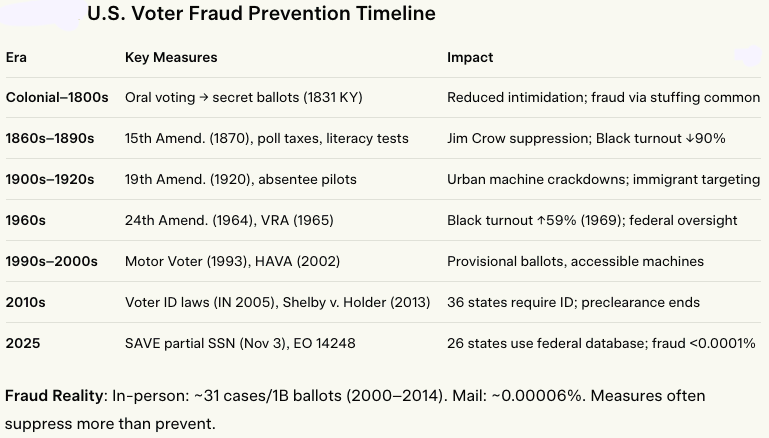
As of October 2025, SAVE had processed more than 205 million status-verification queries—up from 25 million in 2024—including over 46 million related to voter verification, with ~80% post-August 15 partial-SSN upgrade. Currently, 26 U.S. states—such as Texas (TX), Louisiana (LA), Indiana (IN), South Carolina (SC), Wyoming (WY), Alabama (AL), and Idaho (ID)—have signed or are negotiating Memoranda of Agreement (MOAs) to use the system for maintaining voter rolls, up from 10 in early 2025, amid pilots showing 3-5% initial non-matches resolvable via manual review.
The announcement comes amid heightened debate over the Trump administration’s handling of electoral integrity both domestically and abroad. Only weeks earlier, President Trump had drawn controversy for publicly linking a $20 billion U.S. financial support package to Argentina’s October 26 midterm elections. At a joint White House appearance with Argentine President Javier Milei on October 14, Trump called Milei a “great leader” and said, “If he loses, we are not going to be generous with Argentina. If he doesn’t win, we’re gone.” The comments were widely interpreted as conditioning U.S. assistance—a currency swap to bolster reserves amid $278 billion debt—on electoral outcomes in Buenos Aires, a claim the administration has not denied, framing it as support for Milei’s “pro-capitalist policies” to counter Chinese influence in lithium mining.
The juxtaposition of the SAVE expansion and the Argentina controversy has renewed focus on how Washington defines “election protection.” Critics argue that the same administration that vows to safeguard U.S. elections is selectively using economic leverage abroad—echoing historical U.S. interventions in Latin America, from the 1940s Perón era to Central Intelligence Agency (CIA)-backed coups, where aid often swayed regimes.
Also read: U.S. Cash, Argentine Victory!
Civil rights organisations, meanwhile, have raised concerns that the growing reliance on federal databases for citizenship verification could have unintended consequences for U.S. voters. The Brennan Center for Justice has warned that “the Social Security Administration’s central number database does not provide definitive citizenship information in every instance,” noting that “naturalised citizens may also not have updated citizenship information in SSA records.” It further cautioned that SAVE “may generate a large volume of non-matches because of missing, outdated, or inconsistent citizenship information in DHS and SSA records,” potentially flagging 21 million eligible voters lacking easy access to documents like passports or birth certificates—disproportionately affecting voters of color, low-income groups, and newly naturalized citizens, with pilots in states like Texas revealing up to 5% mismatches resolvable but delaying registrations.
The American Civil Liberties Union (ACLU) echoed these apprehensions, stating in an August 2025 Freedom of Information Act (FOIA) lawsuit that “without transparency and proof of reliability, relying on this system as the final authority on voter eligibility risks disenfranchising American citizens.” The group also criticised what it called the administration’s “first-ever nationwide citizenship database,” asserting that voters with incomplete documentation could be wrongly flagged for review or removal—exacerbated by partial SSN matches yielding false negatives, as seen in early pilots where <1% needed manual review but up to 5% mismatched due to data lags. Ongoing FOIA suits by ACLU and journalists seek details on SAVE’s accuracy and state data-sharing, amid DOJ demands for voter rolls in six states (e.g., California (CA), New York (NY), Michigan (MI)).
Under current federal law, only U.S. citizens may vote in federal elections, but states are responsible for maintaining voter rolls per the National Voter Registration Act (NVRA). The Department of Homeland Security said the SAVE update is intended to reduce data-entry barriers and accelerate verification while ensuring privacy compliance via MOAs and point-in-time responses—though critics note no federal proof-of-citizenship mandate exists, and SAVE’s expansion evades some Privacy Act notices per October 31 Federal Register.
The upgrade marks the latest in a series of moves by the Trump administration to expand the use of immigration and citizenship databases in domestic electoral processes—building on EO 14248’s May SSA linkage and August 15 partial-SSN rollout. While officials say the goal is to prevent voter fraud—citing Texas’s October 31 probe of 2,724 “potential noncitizens” (0.015% of rolls, with zero confirmed fraud to date)—advocacy groups and some election administrators caution that incomplete or outdated data could produce false negatives, particularly for newly naturalized citizens or those whose records predate digital conversion, with early non-match rates up to 5% in pilots—echoing post-Shelby County v. Holder (2013) surges in ID laws that affected 21 million voters without curbing the <0.0001% fraud rate.
As with its Argentina policy, the administration’s electoral tightening at home has reinforced a pattern of merging political messaging with administrative power—e.g., DOJ suits against six states (CA, NY, MI, Pennsylvania (PA), Minnesota (MN), New Hampshire (NH)) for voter data access. For now, the SAVE enhancement is framed as a technical efficiency measure, but its implementation—and the extent to which states adopt it—may determine whether it becomes a new fault line in America’s debate over who gets to vote, and who decides, especially with 2026 midterms looming and ongoing suits testing EO 14248’s reach amid rare but amplified fraud claims (e.g., 1,500 convictions since 1982 out of >1 billion ballots).
– global bihari bureau