 By Onkareshwar Pandey*
The New Dollar Wars
Vivekananda’s Warning Meets BRICS’ Dedollarisation Drive
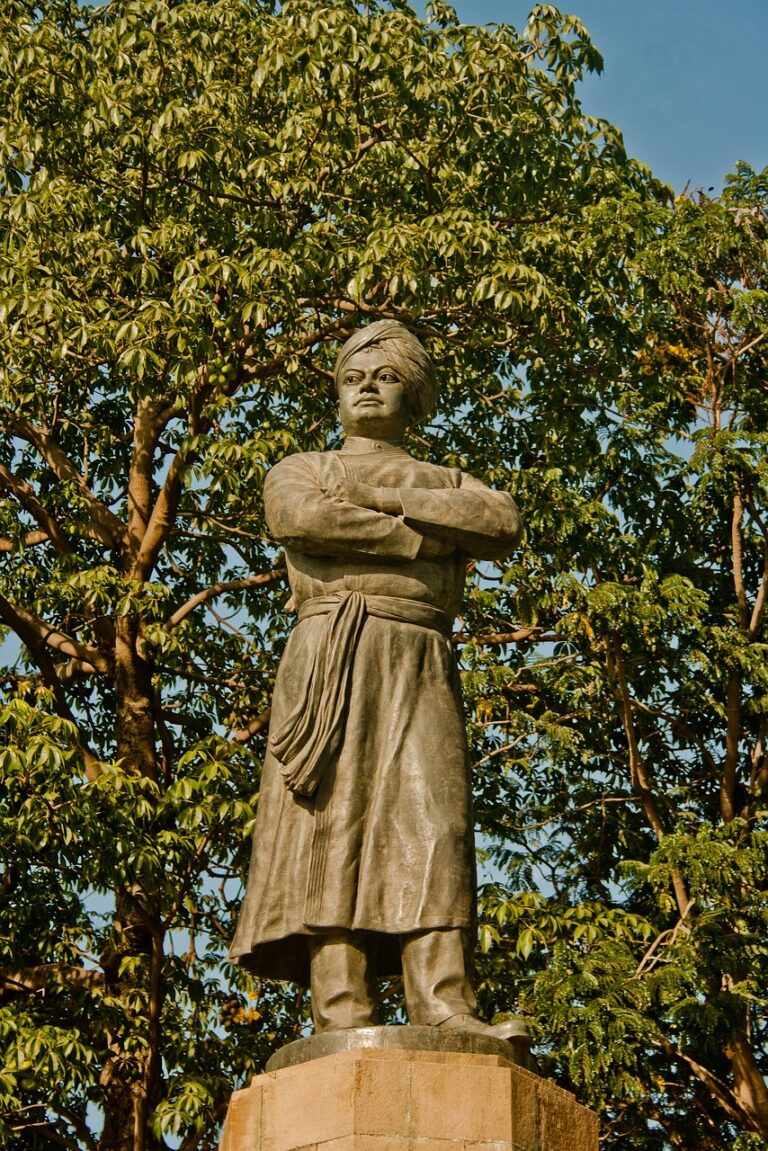
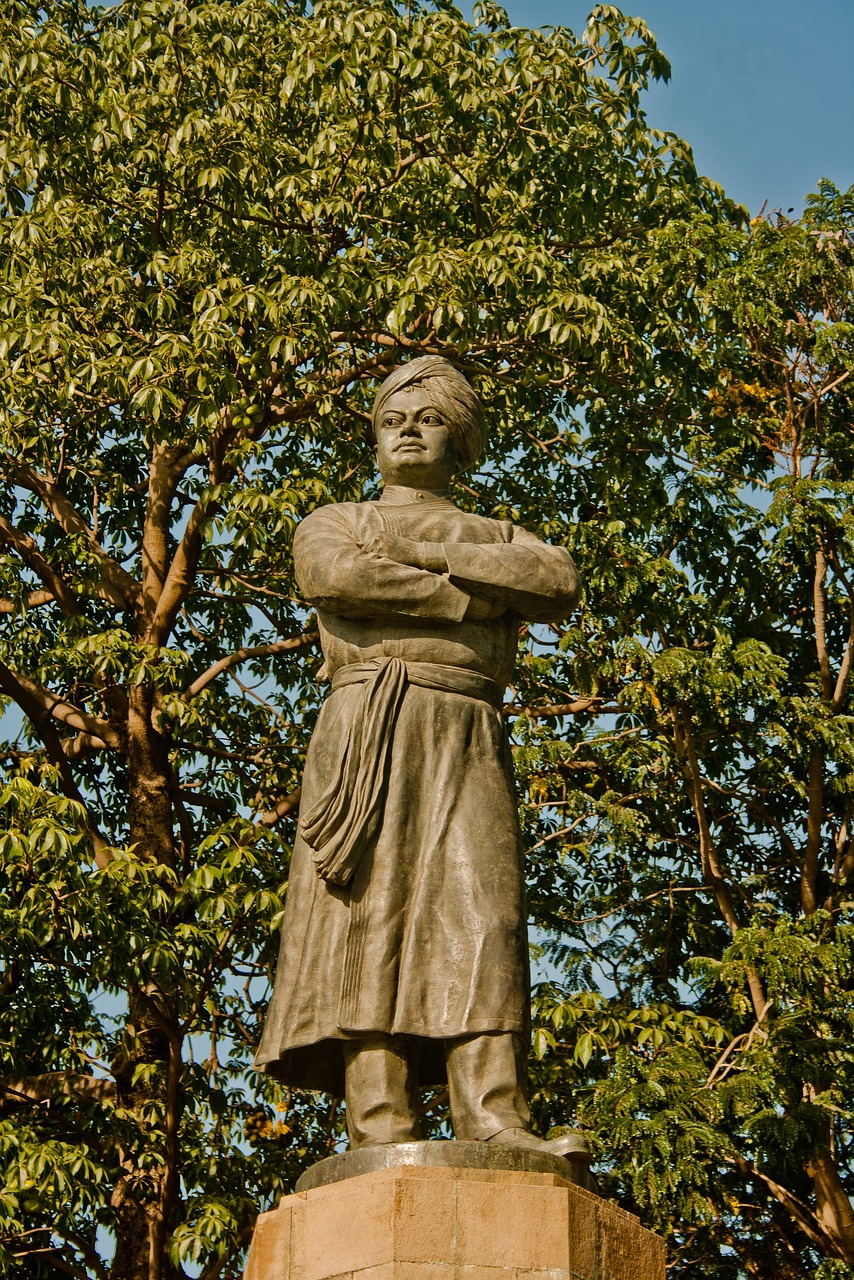
More than 130 years ago, Swami Vivekananda returned from the West with his early admiration for America deeply shaken. What had first appeared to him as civilisational confidence revealed, in his own assessment, a harsher reality. He described himself as having been “deceived by dollar imperialism,” a phrase later recorded and analysed by Chinese scholar Huan Xinchuan in Vivekananda on China (Congress History, Vol. 7, 1979, pp. 87 onwards). Vivekananda’s disillusionment was not emotional but analytical: he identified finance, not faith, as the true instrument of modern empire.
In the same writings, Vivekananda expressed what Huan characterised as a strikingly geopolitical insight for a monk of the 19th century. Observing China under feudal subjugation and imperial pressure during his 1893 travels, Vivekananda developed what he called an “infinite sympathy” for its masses. He predicted that China would rise again “like the phoenix,” breaking its chains and eventually challenging the very global systems that had reduced it to dependency. That prediction, once dismissed as mystical exaggeration, now appears increasingly grounded in material history.
In 2026, as India assumes the presidency of BRICS, that long arc of resistance is no longer abstract. The bloc has moved decisively from conceptual debate to institutional experimentation. BRICS Pay is being expanded to partner countries as a SWIFT-independent cross-border payments mechanism. Proposals for gold-backed BRICS Units are being advanced as settlement anchors to reduce exposure to dollar volatility. Interoperability frameworks linking central bank digital currencies—digital rupee, yuan, rouble and others—are under active discussion. Simultaneously, the New Development Bank has accelerated local-currency lending to shield member economies from exchange-rate shocks. The forthcoming New Delhi Summit is expected to prioritise financial resilience, AI integration, and sustainability as part of this broader architecture.
This shift has not gone unanswered.
The United States continues to wield the dollar not merely as a reserve currency but as an enforcement tool—through sanctions, control over financial messaging systems, and extraterritorial seizures. On January 3, 2026, U.S. authorities extradited Venezuelan President Nicolás Maduro to New York on narcotics-related charges, an action that has drawn comparisons in parts of the Global South to the 1989 capture of Panama’s Manuel Noriega. Washington maintains that such actions are matters of law enforcement; critics describe them as assertions of sovereign overreach enabled by financial dominance.
Days later, the Russian-linked oil tanker Marinera was seized in the North Atlantic over alleged sanctions violations connected to Venezuelan trade. Among the 28-member crew detained were three Indian nationals. Moscow has publicly demanded humane treatment for those held, while the incident has renewed debate in India over the vulnerability of its citizens amid intensifying sanctions enforcement. For critics of dollar hegemony, these episodes exemplify what Vivekananda once warned against: the coercive core concealed behind the moral language of financial order.
Global reactions to this pressure reveal a widening divide.
Russian President Vladimir Putin has openly mocked former U.S. President Donald Trump’s threats of punitive tariffs—including suggestions of penalties as high as 500 per cent on countries purchasing Russian oil—as economically self-defeating. China’s President Xi Jinping, responding to successive tariff escalations since 2025, has stated that China is prepared for “a tariff war, a trade war, or any other kind of war,” signalling a refusal to retreat under pressure. South Africa, meanwhile, is bracing for reported U.S. tariff threats of up to 30 per cent on certain exports, a move widely interpreted as linked to its BRICS alignment.
Against this backdrop of blunt rhetoric, India’s public posture has been notably restrained. Prime Minister Narendra Modi, despite leading BRICS during one of its most consequential phases, has offered no direct response to these developments. This silence has drawn attention in light of earlier personal overtures—popularly described as “hug diplomacy”—and the 2019 Houston rally slogan “Abki Baar Trump Sarkar,” once celebrated as symbols of closeness. Critics now argue that such personalised diplomacy has yielded limited leverage, as evidenced by continued sanctions pressure, delays in defence deliveries such as Apache helicopters, and the detention of Indian sailors on seized vessels.
The contrast with Jawaharlal Nehru’s approach is frequently invoked. Nehru’s doctrine of non-alignment was not equidistance for its own sake but a strategy to preserve decision-making autonomy. As he warned, if a country loses its freedom in foreign policy decision-making, it risks losing its sovereign status itself. Diplomatic relations, he insisted, endure when they are institutional rather than personal.
Vivekananda’s observations on China illuminate this logic further. He linked China’s eventual resurgence to what he termed “shudrahood”—the mobilisation of labouring masses long excluded from power. Huan Xinchuan later argued that Vivekananda saw in this condition the sociological engine of socialist revolutions, where suppressed majorities overturn systems of exploitation. This was not mysticism but structural analysis: economic subordination breeds organised resistance.
Today’s dedollarisation efforts follow a similar trajectory. They face formidable obstacles—entrenched dollar infrastructure, U.S. Treasury liquidity advantages, and internal asymmetries within BRICS itself. Yet momentum continues to build as non-aligned nations quietly diversify reserves, explore alternative settlement mechanisms, and seek insulation from sanctions volatility. Each seizure, each tariff threat, accelerates this search for autonomy.
The recent actions against Venezuela and the Marinera have polarised global opinion. Supporters frame them as enforcement of international norms; critics view them as evidence of financial imperialism operating beyond multilateral consent. Either way, they underscore a shifting reality: global authority is becoming more diffused, and coercive tools are provoking counter-architecture rather than compliance.
Vivekananda combined spiritual depth with an unsentimental reading of power. He warned that economic empires inevitably sow the seeds of their own resistance. As Trump-era tariffs collide with BRICS financial initiatives, as Putin and Xi speak with unvarnished candour while India hesitates, Nehru’s counsel on autonomy acquires renewed relevance.
History’s verdict is clear: leaders must learn from it humbly, not abuse it with selective memory or convenient falsehoods. Losing foreign policy autonomy, as Nehru cautioned, is the first step toward losing sovereignty itself.
From the shores of Calcutta to the currency storms of 2026, a monk’s warning endures—validated not by prophecy, but by power in motion.
*Onkareshwar Pandey is a senior columnist and political analyst focusing on geopolitics and economic policy. Views are personal.