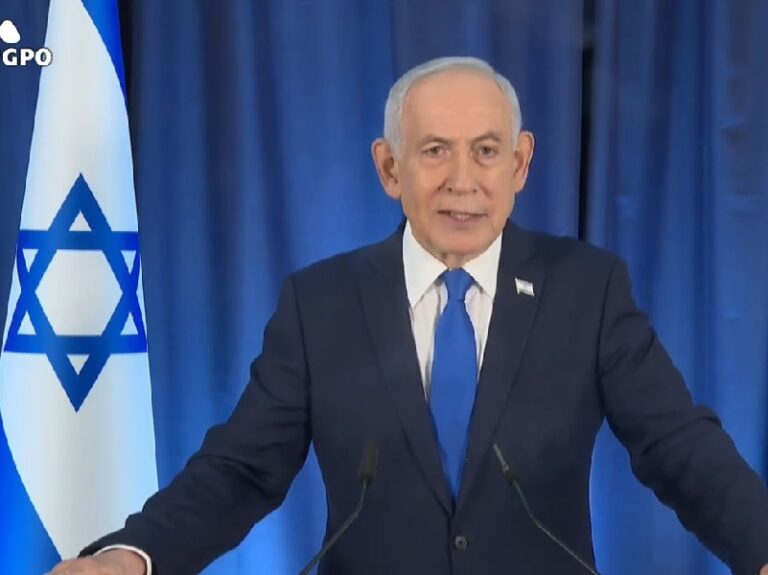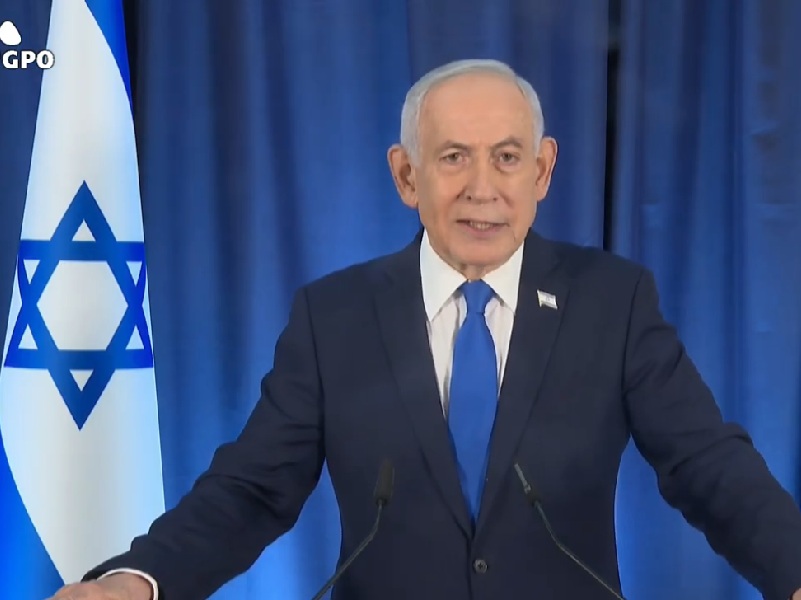
Benjamin Netanyahu at a press conference on March 12, 2026. This was his last public appearance.
War Fog and the Netanyahu Mystery
Netanyahu’s Silence Fuels Wartime Rumours
Six-Finger Frame Triggers Netanyahu Speculation
Jesusalem/Washington: Is Israeli Prime Minister Benjamin Netanyahu dead? The question began circulating across digital networks as the confrontation between Israel and Iran intensified, illustrating once again how quickly wartime information gaps can produce global speculation about political leaders.
The rumours focused on Benjamin Netanyahu, whose public visibility appeared to narrow during the opening days of the escalation. Netanyahu’s most recent confirmed public appearance was a televised press conference on March 12, 2026, where he addressed the developing confrontation. The recording, released through Israel’s Government Press Office and widely circulated online the following day, later became the unexpected trigger for the speculation that followed.
In the video, Netanyahu speaks about the conflict and Israel’s response. But attention soon shifted to a fleeting visual detail. In one frame of the clip, his hand appears to display six fingers. The image was rapidly extracted, shared and re-shared across social media as supposed proof that the video had been generated by artificial intelligence and that the Israeli leader himself might no longer be alive.
The claim drew on a familiar characteristic of generative imagery, which often struggles to render human hands accurately. Yet closer frame-by-frame examination of the circulating footage indicates that the apparent extra finger can be explained by motion blur, overlapping shadows and compression artefacts created as the video was repeatedly copied and uploaded across digital platforms. The full sequence shows a normal five-fingered hand.
Despite that explanation, the image spread quickly across platforms including X, Telegram and TikTok, where short clips and striking visual anomalies often circulate faster than their technical explanations. Within hours, the rumour had moved beyond the original video, merging with wider speculation circulating through online commentary channels about the direction of the Israel–Iran confrontation.
The Prime Minister’s Office later rejected the claims, telling Anadolu Agency that the reports of Netanyahu’s death were “fake news” and that the prime minister was fine. No official statement from the Israeli government has indicated that Netanyahu has been killed or incapacitated.
Alongside the video rumours, other narratives began circulating online. One widely shared claim alleged that an Indian journalist had been detained after revealing Netanyahu’s location during the conflict. Versions of the claim named a specific reporter and suggested that Israeli authorities had taken action after sensitive security information was disclosed. No confirmation of such an arrest has emerged from Israeli authorities, and the journalist named in the rumour has continued to appear publicly and online.
The rumour cycle expanded further when a separate video from Washington entered the same online discussions. In the clip, Scott Bessent is seen speaking during a live broadcast interview about the economic implications of the Middle East crisis when an aide approaches and informs him that Donald Trump wants to speak with him immediately. Bessent is then escorted away from the interview to meet the president.
The interruption itself quickly became part of the speculation, with some online posts suggesting that the urgent summons might have been triggered by dramatic developments concerning Netanyahu. No evidence has emerged connecting the meeting to the rumours about the Israeli leader. Sudden consultations between senior officials are common during rapidly evolving international crises, particularly when military events, diplomacy and global markets intersect.
Meanwhile, the broader security environment continued to generate official advisories and emergency updates reflecting the escalating confrontation between Israel and Iran. Israel’s National Security Council issued a warning to Israeli citizens in the United Arab Emirates after Iranian UAV and missile attacks against countries in Iran’s periphery heightened regional risks.
The advisory urged Israelis in the Emirates to avoid gatherings associated with Israel, including visits to synagogues, businesses clearly identified with Israeli ownership and public events linked to Israeli institutions. Israeli citizens were advised not to congregate unnecessarily at airports and to arrive only when holding valid flight tickets. Employees of Israeli companies were also asked not to report to offices or facilities publicly associated with Israeli operations.
Travellers were further advised not to take flights involving layovers in the UAE because the aviation situation remained unstable and subject to frequent changes. Special flights arranged to return Israelis from the Emirates to Israel were expected to conclude on March 15.
The guidance also included instructions for potential drone-attack scenarios based on recommendations from Israel’s Home Front Command. Israelis were advised to follow the instructions of local security forces and respond to alerts immediately. If possible, they should enter nearby buildings and move to the second floor to reduce exposure to blast and shrapnel, avoiding ground floors where fragments are more likely to strike. Shelter should be taken in internal rooms with multiple walls and minimal windows, sitting below window level and away from doors. If caught outdoors during an explosion, individuals were advised to lie flat on the ground and protect their heads with their hands. Those travelling in vehicles were instructed to stop safely, exit the vehicle and take cover on the ground in the same manner.
The scale of the crisis was also reflected in updates issued by Israeli health authorities under Operation “Roaring Lion,” the emergency framework activated during the confrontation. According to the health system’s emergency divisions, by 7:00 a.m. on March 15, a total of 3,195 people had been evacuated to hospitals since the operation began. Of those, 81 remained hospitalised: one in critical condition, nine in serious condition, ten in moderate condition, sixty with mild injuries and one under medical evaluation.
During the previous twenty-four hours alone, from 7:00 a.m. the day before to 7:00 a.m. Today, 108 affected individuals were admitted to hospitals. Among them were two suffering moderate traumatic stress, ninety-six with mild traumatic stress and nine undergoing medical evaluation.
Health authorities noted that many injuries occur while civilians rush toward shelters during missile alerts rather than from direct strikes. A public awareness campaign issued by Israel’s Ministry of Health, therefore, emphasises early preparation and safe arrival in protected spaces. The campaign features emergency medicine specialist Dr Daniel Truzky, deputy medical director at Ichilov Medical Centre, explaining how timely entry into safe rooms can prevent avoidable injuries.
Diplomatic activity from Israel also continued during the same period. On March 14, Isaac Herzog held calls with leaders of the Jewish community in the Netherlands after two antisemitic attacks there within two days: an explosion at a synagogue in Rotterdam and another at a Jewish school in Amsterdam.
Herzog spoke with Chanan Hertzberger, chairman of the Centraal Joods Overleg; Chris den Hoedt of the Jewish Community of Rotterdam; Rabbi Yehuda Vorst of the Rotterdam synagogue; and Professor Chaim Loonstein, head of the board of the Cheider school in Amsterdam. Israel’s ambassador to the Netherlands, Zvi Aviner Vapni, also participated in the calls.
The Israeli President expressed shock at the attacks on Jewish institutions and conveyed a message of solidarity from Israel. He called on Dutch authorities to intensify efforts to combat antisemitism, incitement and violence against Jewish communities and warned that the rise in antisemitic attacks across Europe demanded a strong response.
Israel’s presidency performs largely ceremonial and diplomatic functions, while executive authority rests with the prime minister and cabinet. Herzog’s international outreach, therefore, did not necessarily reflect the operational status of Israel’s wartime leadership, though the contrast between his visible diplomatic engagement and Netanyahu’s limited public appearances became another detail highlighted in online speculation.
Placed in sequence, the verifiable signals form a narrow but continuous timeline: Netanyahu’s televised press conference on March 12, the circulation of the video online on March 13, diplomatic engagement by Israel’s president on March 14, and continued security advisories and emergency updates from Israeli authorities through March 15. The timeline does not support the dramatic claims circulating online, but it illustrates how quickly a single ambiguous video frame combined with a temporary gap in public appearances can produce a global rumour cycle.
In modern conflicts, rumours about the fate of national leaders often become part of the wider information struggle surrounding the battlefield. The episode surrounding Netanyahu demonstrates how digital platforms can amplify speculation during periods when governments reduce public communication for security reasons.
The available evidence so far remains consistent. Israeli authorities continue issuing operational advisories and emergency updates, and no official announcement has indicated that Benjamin Netanyahu has been killed or incapacitated. The visual anomaly in the viral video can be explained by distortion within the footage rather than artificial generation, and the interruption of Scott Bessent during a broadcast interview has not been linked to any confirmed development involving Netanyahu. Verified bottom line: despite the speculation, official confirmation indicates that Benjamin Netanyahu is alive, and the viral claims about his death and the “AI video” have been debunked by fact-checking organisations.
– global bihari bureau