China Flags Global Supply Risks Amid Venezuela Crisis, Tanker Seizures
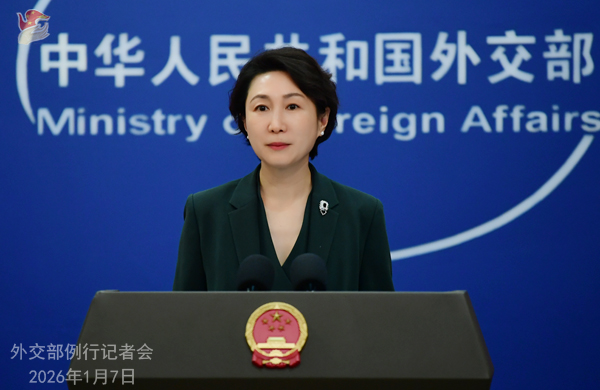
Beijing/Moscow: China today highlighted potential risks to global industrial and energy supply chains as the crisis surrounding Venezuela deepens, with the United States continuing enforcement actions and exerting political pressure on the oil-producing country. Speaking at a regular press briefing, Foreign Ministry spokesperson Mao Ning reiterated Beijing’s opposition to unilateral sanctions and the use of force, warning that such measures have already damaged Venezuela’s economy and could have wider implications beyond the country itself.
Those concerns were sharpened by developments in the maritime domain. Today, U.S. authorities seized two oil tankers linked to Venezuelan crude exports during separate operations in international waters in the North Atlantic and the Caribbean. One of the vessels was sailing under a Russian flag at the time of its interception. U.S. officials described the seizures as part of sanctions enforcement targeting Venezuelan oil shipments, extending pressure on Caracas beyond financial and commercial restrictions into direct action affecting shipping and logistics.
Moscow responded by condemning the interception of the Russian-flagged vessel, focusing on the legal status of ships operating under a national flag in international waters. Russian officials said such actions violate established principles of international maritime law and called for the protection of the crew, emphasising that disputes should be resolved through legal and diplomatic channels rather than unilateral enforcement measures.
While Mao did not explicitly refer to the tanker seizures, her remarks at today’s briefing repeatedly highlighted the cumulative impact of long-standing sanctions and more recent actions involving the use of force. She said these measures had dealt a severe blow to Venezuela’s economic and social order and now threatened the stability of global industrial and energy supply chains. Cooperation between China and Venezuela, including in the energy sector, she added, is conducted between sovereign states and is protected by international law and the domestic laws of both countries.
Responding to questions about Washington’s reported demands that Venezuela sever economic ties with China, Russia, Iran, and Cuba while aligning its oil production more closely with U.S. interests, Mao said Venezuela retains full and permanent sovereignty over its natural resources and economic activities. She described such pressure as an infringement on Venezuela’s sovereignty and the rights of its people and stressed that the lawful rights and interests of countries engaged in cooperation with Venezuela must be respected and protected.
Mao also reiterated China’s position on the seizure of Venezuelan President Nicolás Maduro and his wife, Cilia Flores, describing the action as a violation of international law, basic norms governing international relations, and the purposes and principles of the United Nations Charter. She again called on the United States to release the couple and to resolve differences through dialogue and negotiation rather than coercive measures.
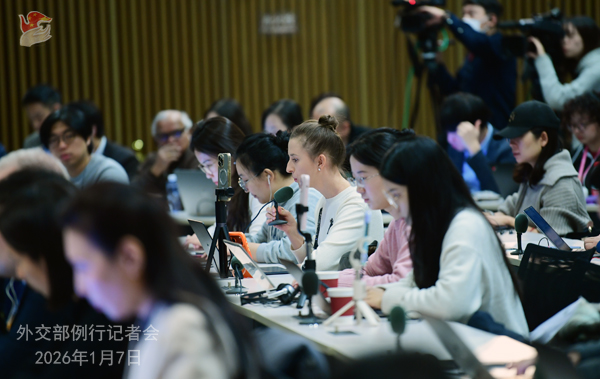
The range of questions raised at the briefing reflected broader concern about whether similar enforcement approaches could be extended to other countries in the Western Hemisphere. Mao said China maintains friendly exchanges and cooperation with Latin American and Caribbean countries and would continue to support them on issues bearing on sovereignty, security, and development paths suited to national conditions. Any specific financial or economic cooperation, she said, would be jointly decided by China and the countries concerned.
Russia addressed the political situation in Venezuela separately on January 6. In a statement issued by the Russian Foreign Ministry, Moscow welcomed the swearing-in of Delcy Rodríguez as acting president following a ruling by Venezuela’s Supreme Court, describing the move as an effort to preserve constitutional order, mitigate the risk of a crisis, and maintain stability amid what it characterised as external pressure. The statement reaffirmed Russia’s support for Venezuela’s government and people and called for de-escalation, constructive dialogue, and respect for international law, particularly the principles of the United Nations Charter. It also reiterated Moscow’s position that Latin America and the Caribbean should remain a zone of peace and sovereign development.
Beyond the immediate diplomatic exchanges, the seizure of Venezuelan-linked oil tankers marks a significant expansion of sanctions enforcement into the maritime sphere. Unlike financial restrictions or port-based controls, interceptions in international waters raise complex questions of jurisdiction and the limits of unilateral action at sea. Even when limited in scope, such actions can introduce legal uncertainty for shipping operators, insurers, and flag states, particularly when vessels registered under third countries are involved.
For Russia, the interception of a tanker sailing under its flag has elevated the issue beyond a dispute centred on Venezuela’s oil exports to one engaging broader principles of maritime law and freedom of navigation. Moscow has framed its response around the legal status of vessels operating under a national flag in international waters, emphasising principles and precedent rather than immediate commercial impact. This approach is consistent with Russia’s past handling of similar disputes, where the priority has been to contest unilateral actions that, in its view, risk eroding established international norms.
China’s response reflects a parallel but distinct concern arising from the same enforcement actions. While Beijing has repeatedly stressed sovereignty, non-interference, and adherence to international law, its emphasis on the stability of global industrial and energy supply chains highlights the wider economic consequences of unilateral measures. Chinese officials have warned that disruptions affecting a single producer can have cascading effects across interconnected shipping, insurance, and energy markets, with uncertainty over cargo movements and contractual performance gradually reshaping trade patterns even in the absence of immediate supply shortages.
North Korea also responded to the unfolding Venezuela crisis through military signalling. On January 4, Pyongyang conducted hypersonic missile tests, the day after U.S. forces captured Venezuelan President Nicolás Maduro and his wife, Cilia Flores. State media described the launches as measures to reinforce the country’s strategic deterrent amid a “recent geopolitical crisis” and “complicated international events,” without explicitly naming Venezuela or U.S. actions. Analysts and external observers have noted the timing of the tests in the context of heightened international tensions following the U.S. operation in Caracas, framing them as part of Pyongyang’s broader strategic signalling. While Kim Jong Un is personally sanctioned by the United States for human rights abuses and North Korea’s nuclear and missile programmes—distinct from the criminal indictments against Maduro—these missile tests illustrate how unilateral U.S. actions in Venezuela can resonate beyond the Western Hemisphere, highlighting wider strategic and global implications.
Taken together, the expansion of sanctions enforcement into international waters, the diplomatic responses from China and Russia, and the military signalling from North Korea illustrate how the Venezuela crisis has moved beyond a bilateral dispute. It increasingly intersects with questions of energy security, maritime governance, and the reach of unilateral power in international spaces, with implications extending well beyond Venezuela’s borders.
– global bihari bureau