Far-Left Words, Full-Speed Deeds
US warns politics driving rise in vehicle assaults
Washington: A surge of vehicle ramming attacks on federal immigration officers has prompted the United States Department of Homeland Security (DHS) to issue one of its most sharply worded statements in recent years, warning that nearly 100 assaults since January 20 have created an increasingly volatile enforcement environment along American streets and in cities far from the border. The announcement reports a doubling of incidents against Immigration and Customs Enforcement (ICE) and Customs and Border Protection (CBP) personnel compared to the same period last year, but it is the tone of the release—overtly attributing the rise to political hostility—that marks a significant departure from DHS’s normally restrained public posture.
DHS said its officers have been the targets of 99 vehicular attacks this year, up from 47 during the same months in 2024. CBP personnel faced 71 assaults, compared to 45 last year, while ICE recorded 28 incidents, a dramatic jump from two. In each instance, DHS described suspects using their vehicles to flee or resist arrest, often accelerating toward officers during operations. The tally, the department argued, reflects an increasingly dangerous operational landscape in which vehicles are being deployed not merely as means of escape but as weapons aimed directly at federal agents.
The list of incidents provided by DHS spans multiple states and several operational contexts, illustrating what the department characterises as a continuing escalation in both frequency and aggression. The most recent case, on November 13 in Adelphi, Maryland, involved Ever Gabriel Alvarez-Campos, identified by DHS as an El Salvador national with pending second-degree assault charges. According to the department, Alvarez-Campos intentionally rammed his vehicle into an ICE car during an enforcement operation, then fled, striking another vehicle in the community before abandoning his car and running on foot. He was later apprehended by ICE personnel.

Just days earlier, on November 8 in Chicago, DHS said Border Patrol agents faced four separate vehicular ramming attempts in one day. Four suspects were arrested; one attempt was foiled when officers deployed a Controlled Tire Deflation Device, and another suspect escaped. DHS added that similar patterns had emerged repeatedly in Chicago. On October 22, agents encountered three separate vehicular attacks in a single day, with several suspects possessing criminal histories, including one identified as a Latin Kings gang member with convictions for firearms possession, destroying evidence, and driving under the influence.

A separate incident on October 14, during an enforcement operation also in Chicago, involved what DHS described as an “illegal alien from Venezuela” who rammed CBP vehicles and attempted to flee before being stopped using an authorised precision immobilisation technique. The driver and his passenger, also a Venezuelan national, were arrested on charges of assault on a federal agent and accessory to assault. Earlier that month, on October 2, ICE reported two vehicular assaults against its officers in Illinois—one in Bensenville and another in Norridge—both allegedly carried out by non-citizens whom the department labelled “criminal illegal aliens.” In both cases, the suspects were arrested after allegedly using their vehicles to forcefully push through enforcement attempts.
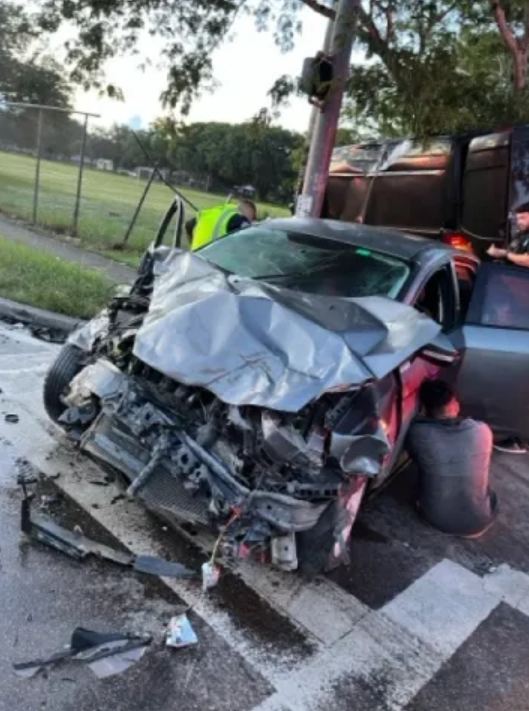
The release also cited a September 14 incident in Homestead, Florida, where an ICE officer was injured after a Guatemalan national allegedly reversed his vehicle into the officer during a traffic stop. The driver then reportedly rammed multiple ICE vehicles and sped into incoming traffic, colliding with a utility van. DHS said the driver and three other non-citizens present in the vehicle were arrested following the incident.

While the incidents themselves reflect operational risks familiar to federal officers, the release links the increase in attacks to the broader climate surrounding immigration enforcement. DHS, ICE, and CBP statements typically adhere to institutional, neutral language that confines itself to facts, charges, and ongoing investigations. This release instead singles out “sanctuary politicians,” “leftist activists,” “the mainstream media,” and “criminal illegal aliens,” with lines such as “Driven by far-left rhetoric” and “Left’s constant demonisation.” Such language is unusual in official DHS communication and indicates that the department is framing the surge not simply as a law-enforcement challenge but as an outgrowth of public and political tensions surrounding immigration debates.
The shift in tone is notable because DHS does not provide an investigative explanation for the rise in assaults, nor does it detail whether operational activity levels, suspect profiles, or reporting classifications changed over the past year. What it emphasises instead is the environment in which its officers now operate. By attributing the climate of confrontation to external rhetoric, the department appears to be signalling that the hostility faced by its officers is part of a wider conflict in which political discourse, local government positions, and public attitudes toward federal enforcement intersect directly with field operations. That framing positions the rise in vehicular attacks not only as a criminal challenge but as a symptom of deeper divisions over immigration and the role of federal enforcement agencies.
The unusually direct language suggests DHS is preparing to place officer safety more prominently in the national conversation, presenting the surge in ramming incidents as evidence of a more confrontational landscape for immigration enforcement. The numbers point to a clear upward trend; the tone of the release indicates that the department now views that trend as inseparable from the broader political climate in which its officers work. By issuing a message that blends statistics, specific incidents, and a political critique, DHS appears to be marking the incident spike as both a law-enforcement concern and a sign of the deteriorating public environment that surrounds its mission.
– global bihari bureau