 By Kaushal Kishore*
A Nation’s Song Under Relentless Scrutiny
At 150, Vande Mataram Tests the Republic
The recurring argument over Vande Mataram is not about melody or protocol. It is about conviction — about whether India is at ease with the civilisational vocabulary that shaped its freedom struggle.
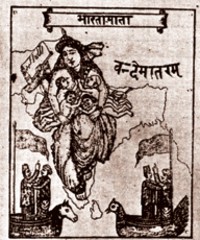
When Bankim Chandra Chatterjee wrote Vande Mataram in the late nineteenth century, he did more than compose a patriotic hymn. He articulated a metaphor that fused geography with reverence — the land as Mother. During the Swadeshi movement, the song became a cry of resistance. Revolutionaries invoked it without hesitation. Congress sessions opened with it as a matter of pride. In that period, there was no ambiguity about its place in the nationalist imagination.
Objections emerged before Independence, particularly from sections of the Muslim League who viewed its theological imagery as incompatible with their religious doctrine. In 1937, the Congress Working Committee adopted a compromise, limiting public use to the first two stanzas. The decision was framed as an accommodation. But it also marked the beginning of a long political unease with overt civilisational symbolism.
After 1947, the new republic institutionalised a balance — Jana Gana Mana as the National Anthem, Vande Mataram as the National Song. The arrangement was pragmatic. Yet it quietly established a hierarchy of expression: one universal, the other emotionally charged.
Over the decades, that discomfort surfaced periodically. The debate never fully disappeared; it merely shifted tone. Each controversy returned to the same underlying question: is India prepared to own the imagery that energised its anti-colonial struggle, or must it constantly dilute it to avoid friction?
Under Prime Minister Narendra Modi, national symbols have been brought back to the foreground with unmistakable emphasis. The naming of semi-high-speed trains as Vande Bharat was not accidental branding. It deliberately linked technological ambition with cultural memory. Developmental modernity and civilisational affirmation were presented as complementary, not contradictory.
Yet even this fusion has faced resistance. In several instances, Vande Bharat trains were subjected to stone-pelting and vandalism. These were criminal acts, and law enforcement has treated them as such. But they were also symbolically charged episodes. When infrastructure carrying the name Vande Bharat becomes a target, it is difficult to ignore the political undertone. Symbols are no longer confined to ceremony; they travel on steel tracks and into contested public space.
The latest debate surrounding Vande Mataram and the Union Home Ministry’s decision to formalise its ceremonial protocol has once again exposed ideological fault lines. The government’s position signals clarity: the National Song forms part of the republic’s ceremonial grammar and is to be accorded defined decorum. Opposition parties have responded with caution, emphasising voluntarism and warning against compulsion.
The caution deserves consideration. Patriotism cannot be legislated into emotion. But the persistence of suspicion invites a harder question: why does a song that once united disparate strands of the freedom movement still generate unease?
If invoking the nation as Mother is now considered exclusionary, is that a reflection of the metaphor — or of a political culture that has grown wary of its own historical idiom?
Nations rarely fracture because of a single dispute. They erode when shared affirmations are repeatedly problematised until they appear burdensome. The memory of Partition stands as a reminder that symbolic estrangement, when normalised, can deepen civilisational fissures. No contemporary disagreement is equivalent to that rupture. Yet history cautions against dismissing symbolic contention as trivial.
This is not an argument for coercion or uniformity. A confident republic accommodates dissent. But it cannot indefinitely defer clarity about its foundational markers. When every inherited symbol is subjected to recurring ideological suspicion, the civic atmosphere grows brittle.
The debate over Vande Mataram is therefore not procedural; it is psychological. It tests whether India possesses the composure to integrate its poetic, spiritual and political inheritance without apology.
The song has survived colonial bans, pre-Partition objections, parliamentary compromise and periodic political discomfort. Its endurance suggests that it occupies a deeper register in India’s consciousness than contemporary disputes can erase.
The real issue is not whether Vande Mataram will endure. It will. The issue is whether India’s political class — across party lines — can treat its own civilisational memory with steadiness rather than nervous calculation.
A republic secure in its pluralism should not fear its own invocations. Nor should it allow them to become perpetual battlegrounds.
The measure of national confidence is not how loudly it asserts its symbols, but how calmly it stands by them.
*Kaushal Kishore is the author of The Holy Ganga (Rupa 2008). The views published here are personal.