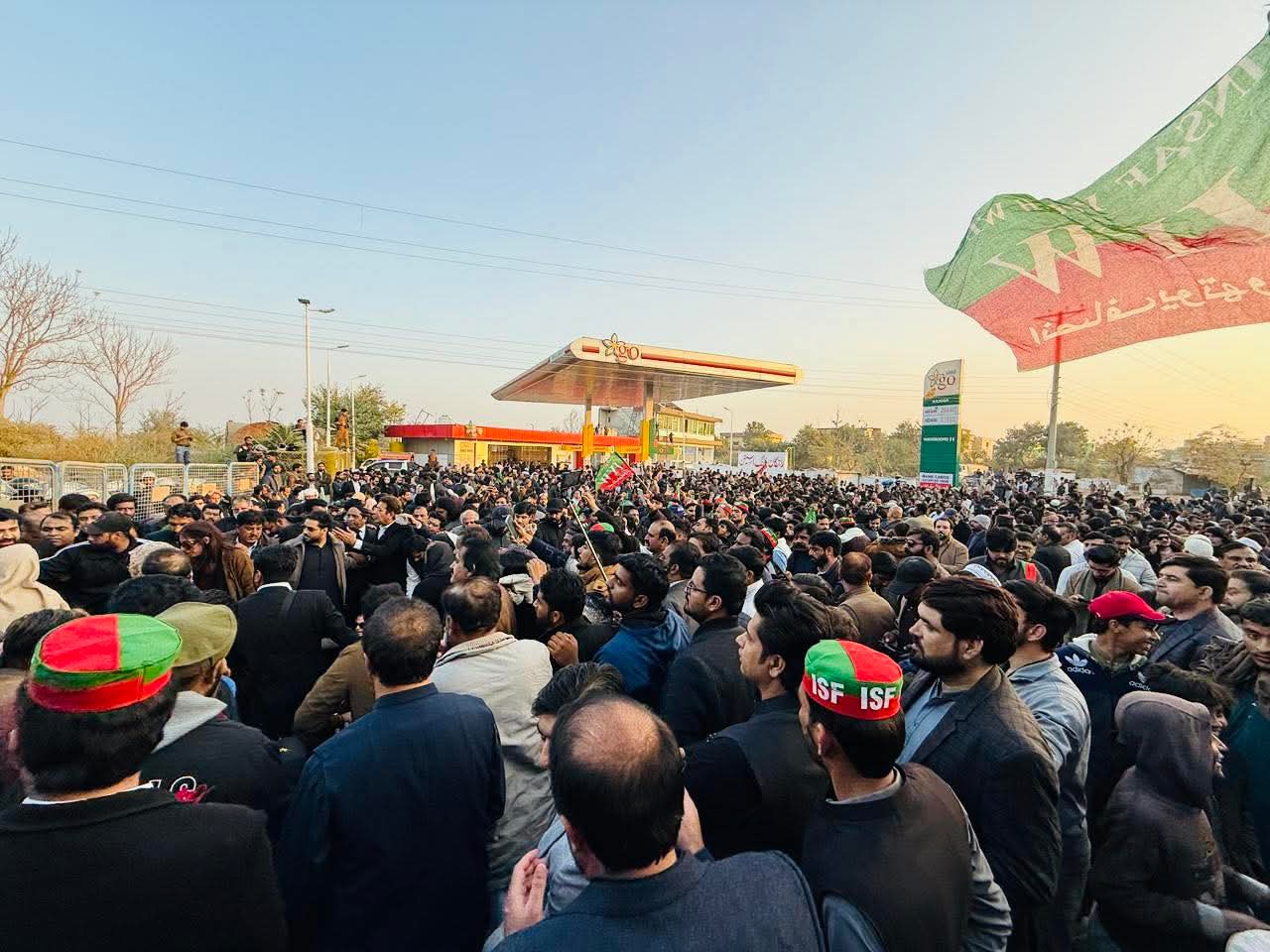
Scenes outside Adiala Jail before the before the Imran-Uzma meeting today. Section 804 was enforced outside Adiala Jail. Photo credit: @PTIKPOfficial
Imran Khan’s Sister Uzma Khanum Holds Conditional Meeting in Adiala Jail
Sisters Assaulted in Adiala Clash
Section 144 Locks Down PTI Rally
Rawalpindi/Islamabad: In a significant breakthrough, Imran Khan’s sister Uzma Khanum, a medical doctor, was granted permission for a closely supervised meeting with the jailed former Prime Minister inside Rawalpindi’s high-security Adiala Jail, today.
This marked the first confirmed family contact in 25-29 days following repeated denials that provoked widespread protests by Pakistan Tehreek-e-Insaf (PTI) supporters at the jail gates and Islamabad High Court (IHC). Uzma entered via Gate 5 in a special vehicle, accompanied by one pre-vetted lawyer, under stringent conditions including a gag order barring any social media posts, public disclosures about Khan’s health or the meeting content, and real-time monitoring by jail staff; PTI leaders hailed it as a direct result of sustained public and legal pressure, though they decried it as insufficient since broader access for other family members, lawyers, and party officials remains blocked despite IHC directives for twice-weekly visits reinstated after earlier suspensions.
عمران خان کی صحت بلکل ٹھیک ہے لیکن وہ بڑے غصے میں تھے انھوں نے کہا کہ یہ ذہنی ٹارچر کررہے ہیں…سارا دن کمرے میں بند رکھتے ہیں ۔۔۔
عظمی خان pic.twitter.com/5Ap3G4Pp84— PTI Khyber Pakhtunkhwa (@PTIKPOfficial) December 2, 2025
The visit coincided with massive security deployments—over 3,000 personnel, including women police units, anti-riot squads, razor-wire barricades, multiple checkpoints, and shipping containers sealing Adiala Road and approaches to IHC—as authorities enforced Section 144 prohibitions through December 3 across Rawalpindi and parts of Islamabad. These measures, ordered by Deputy Commissioner Hassan Waqar Cheema, citing “imminent threats to public order,” banned all rallies, sit-ins, processions involving five or more people, pillion riding on motorcycles, use of loudspeakers, and possession of potential weapons such as petrol bombs, spikes, or sticks. Minister of State for Interior Talal Chaudhry warned of indiscriminate enforcement against violators, including PTI lawmakers, while PTI senior leader Asad Qaiser declared the December 2 demonstrations a non-negotiable response to jail authorities’ alleged defiance of court orders, with supporters vowing to gather despite the clampdown.
Volatile Week of Family Protests and Police Clashes Preceding the Visit
This concession followed an intensely charged week of agitation led by Khan’s three sisters—Aleepa Khan (also spelt Aleema), Uzma Khanum, and Noreen Niazi—who conducted multiple peaceful sit-ins at the Gorakhpur checkpoint outside Adiala Jail, demanding immediate meetings with Khan and his wife Bushra Bibi on scheduled visitation days. The sisters alleged systematic brutality by Punjab police, including being physically dragged through streets under cover of darkness, having their chaddors (headscarves) ripped off, brief detentions, and manhandling during an overnight vigil; Noreen Niazi formally filed complaints accusing officers of orchestrated violence, while Aleema Khan submitted a detailed contempt petition to IHC targeting jail superintendent Abdul Ghafoor Anjum, SHO Raja Aizaz Azeem, Interior Secretary Capt (retd) Khurram Agha, and Punjab Home Secretary Noorul Amin for flouting binding court mandates on visitation rights dating back to March 2025. Khyber Pakhtunkhwa Chief Minister Sohail Afridi’s eight consecutive failed entry attempts, including one marred by reported physical scuffles, further underscored claims of deliberate obstruction as political retribution. “The meeting will happen through resistance, and the release will happen through resistance,” a PTI supporter, Aftab Alam, posted on X. Crowds of PTI workers rallied in solidarity during these episodes, amplifying calls for transparency on Khan’s whereabouts and well-being.
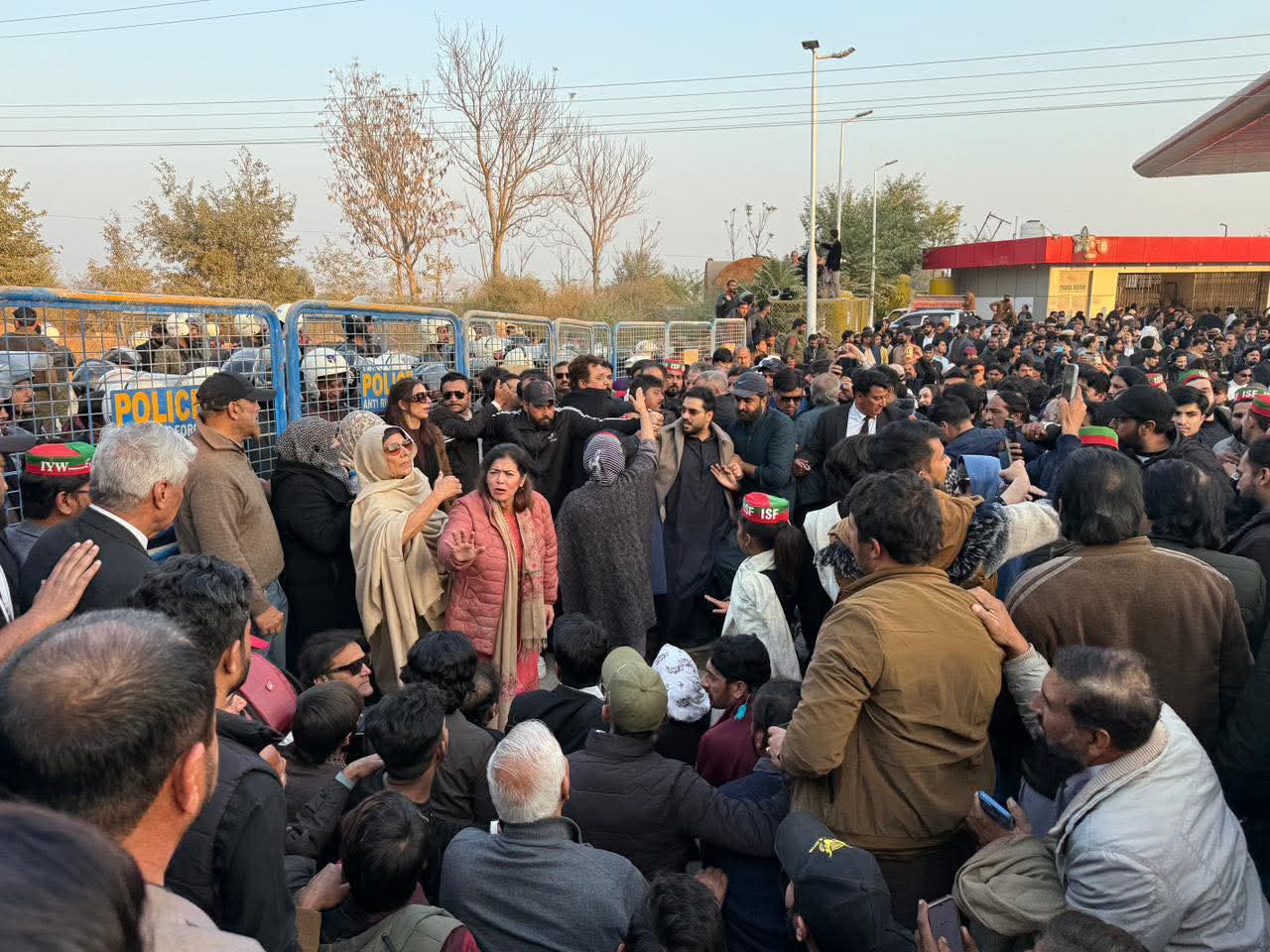
Pakistani newspaper Dawn reported Uzma’s entry “while numerous PTI supporters gathered outside in solidarity,” with The Express Tribune noting the meeting “is currently underway” under jail protocols limiting solo access post a 29-day blackout. Samaa TV framed it as resolving PTI’s “major grievance” via sisters and legal team meetings, though The News International clarified Aleema was denied while two sisters (Uzma and possibly Noreen) were permitted, highlighting selective enforcement amid the chaos.
Timeline of Khan’s Arrest, Convictions, and Incarceration
Imran Khan’s current predicament stems from a cascade of events beginning with his May 9, 2023, arrest inside the Islamabad High Court premises by paramilitary Rangers and the National Accountability Bureau (NAB) on corruption charges linked to the Al-Qadir Trust—a charitable foundation he established with his wife, Bushra Bibi. The dramatic detention sparked nationwide riots by PTI backers, which subsided only after Pakistan’s Supreme Court ruled it unlawful the following day and ordered his temporary release on bail. Khan’s subsequent escalation of accusations against Army Chief General Asim Munir and foreign powers (including the U.S.) for orchestrating his April 2022 ouster via a no-confidence vote in parliament provoked institutional backlash, unleashing over 186 legal cases his allies describe as fabricated to prevent his political resurgence.
Key convictions include an August 5, 2023, three-year term in the Toshakhana case for illegally profiting from state gifts received during his tenure, thrusting the then-70-year-old (now 73) into Adiala Jail, where he has remained. The overriding penalty is a January 2025 14-year sentence in the Al-Qadir Trust case—mirroring Bushra Bibi’s concurrent seven-year term—despite an August 2025 bail grant in eight May 9 riot-related matters, as overlapping sentences keep him confined in solitary conditions.
Persistent Health Concerns and Denied Medical Access
Family and PTI alarms over Khan’s welfare have mounted since February 2025, citing solitary confinement, irregular heartbeat, uncontrolled diabetes with spiking blood sugar levels, and other ailments exacerbated by over a year of denied access to his personal physician, Dr Asim Yousaf. UK-based sons issued stark “no proof of life” alerts, warning of “irreversible harm” due to the communication blackout. Legal petitions to the IHC sought independent medical examinations by doctors of Khan’s choice and regular proof-of-life updates; April 2025 court approvals for video calls with sons and routine checkups saw minimal follow-through until Uzma’s visit, which PTI touted as protest efficacy despite its scripted limitations.
Official Denials and Jail Protocols
Adiala Jail authorities issued no statements post-November 26-30, 2025, but earlier categorically reaffirmed Khan’s presence, describing him as “fully healthy” with regular supervision by doctors from Pakistan Institute of Medical Sciences (PIMS), proper diet, exercise facilities, and compliance with protocols like signal jammers preventing phone/internet use. November 24-25, IHC filings explicitly denied operation of Khan’s X (Twitter) account from inside, countering speculation. Government figures, including Prime Minister’s advisor Rana Sanaullah on November 27, dismissed health/death rumours as opposition tactics designed to incite unrest.
Judicial interventions have been incremental: orders for periodic PIMS health reports, recognition of medical custody rights, and family meeting schedules—but consistent deferral of private physician access or unrestricted visits on security and procedural grounds. No specific case numbers, involved lawyers, or NGOs have been publicly detailed, reflecting deep opacity at the politics-judiciary nexus.
Broader Political and Human Rights Context
This episode traces to Khan’s 2018 election triumph, 2022 parliamentary removal he attributes to military-U.S. collusion, and subsequent arrest wave PTI frames as democratic subversion. Human rights organisations have flagged potential misuse of detention powers; protests span Khyber Pakhtunkhwa (Peshawar to Swabi) and Punjab, signalling national polarisation. As of December 2, with no post-visit health disclosures and standoffs ongoing, the familiar cycle endures: rumours (death/transfer, repeatedly debunked), stonewalling, tentative court prods, and grudging access under duress—positioning Khan’s plight as a litmus test for Pakistan’s institutional power struggles.
– global bihari bureau