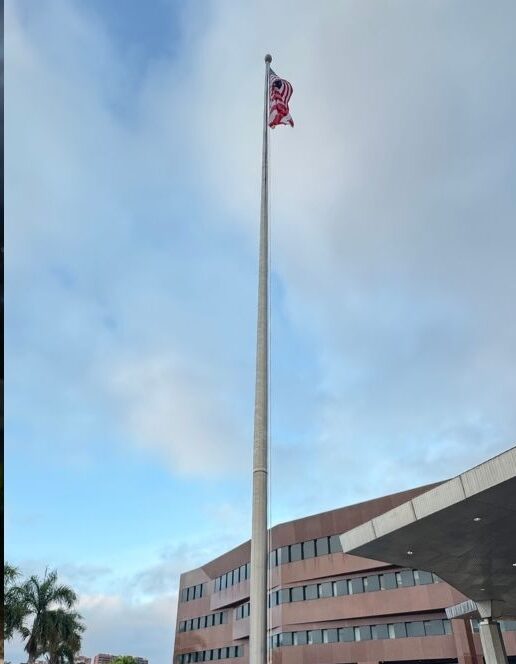
US Reopens Caracas Embassy After Maduro Exit
Embassy Return Tied to Oil, Power Shift
Caracas/Washington: The United States has reopened its embassy in Caracas, ending seven years of complete diplomatic absence after the 2019 rupture under Nicolás Maduro, with the move following his removal and arrest along with his wife Cilia Flores earlier this year in a U.S.-led military operation and marking a decisive shift in both political engagement and control over Venezuela’s economic levers.
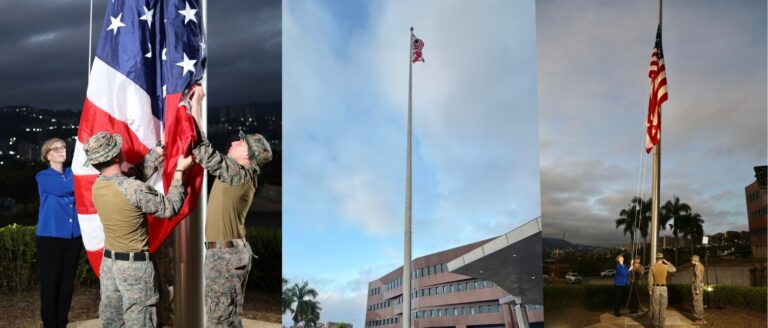
The resumption of operations, announced on March 30, 2026, restores a physical U.S. presence in Venezuela for the first time since all American personnel were withdrawn in March 2019 amid a breakdown in relations and escalating security concerns. For seven years, formal diplomatic ties remained frozen even as strategic contestation continued, with Washington operating remotely through the Venezuela Affairs Unit (VAU) at the U.S. Embassy in Bogotá, which functioned as a substitute channel for political outreach and coordination.
The rupture in 2019 followed Washington’s rejection of Maduro’s legitimacy after the disputed 2018 presidential election and its recognition of Juan Guaidó as interim president. Maduro responded by expelling U.S. diplomats, severing relations and forcing a complete shutdown of embassy operations. Over time, the Guaidó-led parallel structure that underpinned U.S. policy lost international backing and was formally dissolved by opposition groups in 2023, leaving Washington without a clear internal counterpart and reinforcing its reliance on external diplomacy.
The situation shifted abruptly on January 3, 2026, when U.S. forces carried out coordinated airstrikes and special operations across multiple sites in Caracas, resulting in Maduro’s capture. He was subsequently transferred to the United States, where he faces long-standing charges including narcoterrorism and drug trafficking. His removal triggered a reconfiguration of Venezuela’s political structure, with Delcy Rodríguez—Maduro’s former vice president—assuming leadership of a transitional governing arrangement that has since engaged with U.S. officials.
The operation and its aftermath have drawn mixed international reactions, including criticism in multilateral forums over questions of legality, sovereignty, and the use of force, even as Washington has framed the action within the context of law enforcement tied to longstanding indictments. The political transition remains fluid, with ongoing discussions around governance reforms and the potential pathway toward future electoral processes.
At the same time, the transition has been accompanied by rapid policy moves in the energy sector, which remains central to Venezuela’s recovery strategy. Within weeks of assuming office, Rodríguez signed into law a sweeping overhaul of the country’s hydrocarbon framework, easing decades-old state control and opening the oil industry to private and foreign participation. This marked a significant departure from the Chávez-era model that had concentrated production within state structures.
Her government has since actively courted international investors, holding meetings with major energy companies and presenting revised terms aimed at attracting capital into underdeveloped oil fields. At global forums and investment summits, Venezuelan officials have promoted a restructured sector offering private operational control, international arbitration mechanisms, and regulatory changes designed to reassure investors about legal protections and continuity across political cycles.
However, the reform process has also exposed underlying tensions. Investors and industry leaders have called for deeper fiscal and legal guarantees, warning that existing frameworks may not yet provide sufficient certainty for large-scale capital commitments. At the same time, domestic political actors and segments of the ruling establishment have raised concerns that loosening state control could dilute national sovereignty over strategic resources, reflecting broader debates over the direction of the post-Maduro transition.
Subsequent contacts between U.S. officials and Venezuelan authorities led to an agreement to restore diplomatic relations and begin reopening embassies. Ambassador Laura F. Dogu arrived in Caracas in January 2026 as Chargé d’Affaires to lead the return of U.S. operations. Her team has since worked to restore the embassy’s chancery building, inactive since 2019, and prepare for the phased return of personnel. While the embassy has now resumed operations, it is not yet fully functional. Consular services, including visa processing, remain unavailable in Caracas, requiring Venezuelans to continue relying on third-country locations such as Bogotá.
Washington has positioned the reopening as a key step in a three-phase plan for Venezuela, beginning with the restoration of a diplomatic presence, followed by expanded engagement with state institutions, civil society, and the private sector, and culminating in full normalisation, including the eventual resumption of consular services.
The broader significance of the reopening lies in the convergence of political change and economic strategy, particularly around Venezuela’s oil sector. The sequence from rupture to remote diplomacy to Maduro’s removal has placed control over oil resources at the centre of U.S. policy. Under Donald Trump, Washington has moved from sanctions and isolation toward direct influence over how Venezuela’s oil wealth is managed, accessed, and distributed.
U.S. authorities have asserted oversight over Venezuelan state oil-linked assets and revenues within their jurisdiction, restricting their use and effectively controlling the terms under which those funds can be released. This shift has been operationalised through a series of Treasury-issued general licenses, including General License 46 and its subsequent amendments, which authorise established U.S. entities to engage in transactions involving Venezuelan-origin oil under defined conditions. These measures allow activities such as the sale, transport, and marketing of Venezuelan crude while ensuring that financial flows—particularly proceeds payable to the Venezuelan state—remain subject to U.S. regulatory control and oversight.
While U.S. officials describe these mechanisms as safeguarding Venezuelan resources and ensuring they are directed toward stabilisation and reconstruction, they also position Washington as a decisive gatekeeper over a significant share of Venezuela’s external oil income, a dynamic that intersects directly with questions of jurisdiction and economic sovereignty.
At the same time, the post-Maduro phase has triggered efforts to restructure the oil sector itself, centred on PDVSA, the backbone of the country’s hydrocarbon economy. Policy discussions have included reopening production to foreign participation, including the return of U.S. energy companies, and revisiting regulatory frameworks that had long concentrated control within the Venezuelan state. With Venezuela holding the largest proven oil reserves in the world, these shifts carry implications not only for its domestic recovery but also for global energy markets.
Earlier sanctions had already redirected Venezuelan crude toward alternative buyers, particularly China, often at discounted rates, illustrating how geopolitical alignment shaped market access during the years of isolation. The current phase marks a transition away from that model. Instead of merely restricting Venezuela’s oil flows, U.S. policy is now positioned to influence their direction, the structure of production, and the pathways through which revenues circulate.
In that context, the reopening of the U.S. Embassy in Caracas is not simply the return of diplomatic infrastructure. It marks the end of a prolonged period of externalised engagement and the beginning of direct, on-ground involvement at a moment of institutional flux, giving Washington immediate proximity and leverage as political authority, legal accountability, and control over one of the world’s largest oil reserves are being renegotiated simultaneously.
– global bihari bureau