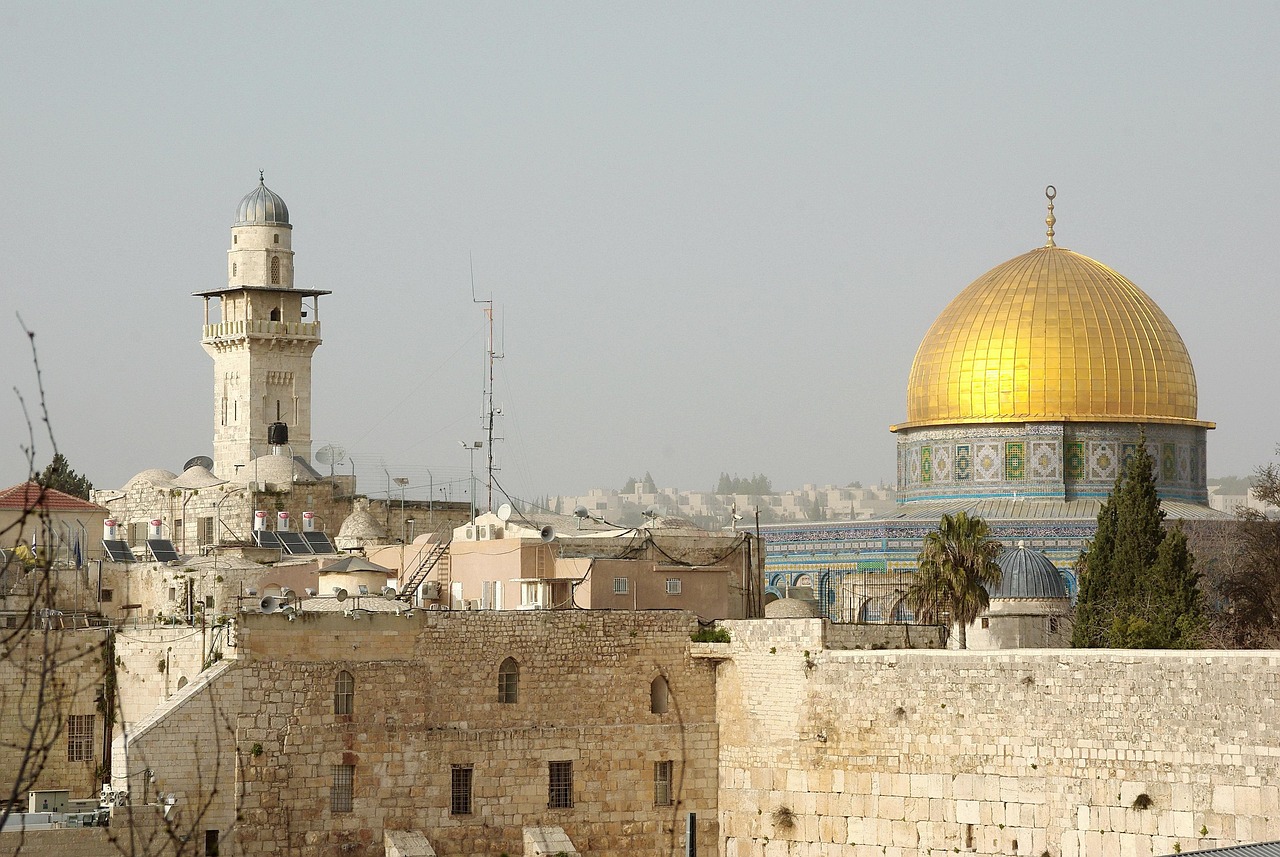
The Israel-Palestine Wall
Washington/New York: As the United Nations hosts a high-profile international conference in New York this week aimed at reviving the two-state solution for Israel and Palestine, the United States has firmly rejected both the timing and premise of the gathering, calling it “an unproductive and ill-timed publicity stunt” that risks derailing fragile efforts toward peace.
In a strongly worded statement issued today, the U.S. State Department announced that Washington would not participate in the conference, accusing it of prolonging the war, emboldening Hamas, and rewarding terrorism in the wake of the October 7, 2023, attacks. Secretary of State Marco Rubio said the event insults the victims of those attacks and undermines the ongoing, behind-the-scenes diplomacy aimed at freeing hostages and ending hostilities. “This effort is a slap in the face to the victims of October 7th and a reward for terrorism,” Rubio said. “It keeps hostages trapped in tunnels. The United States will not participate in this insult.”
The conference, co-hosted by France and Saudi Arabia, aimed to consolidate international consensus around the two-state solution—an idea that has long been the cornerstone of global efforts to resolve the Israeli-Palestinian conflict. However, the U.S. sees it as little more than theatrics at a time when real diplomacy is needed. “Our focus remains on serious diplomacy,” the U.S. statement asserted, “not stage-managed conferences designed to manufacture the appearance of relevance.”
UN Secretary-General António Guterres struck a sharply contrasting tone as he addressed delegates at the conference’s wrap-up session on Monday morning. He urged the international community to treat the moment as a “decisive turning point,” warning that the two-state solution was “farther than ever before” but remained the only viable path to peace.
Guterres acknowledged the complexity of the crisis but laid out a grim reality. He condemned both Hamas’s attacks and the devastating toll of Israel’s military operations in Gaza. “Nothing can justify the horrific 7 October terror attacks by Hamas… and nothing can justify the obliteration of Gaza that has unfolded before the eyes of the world,” he said. He cited the starvation of the population, the deaths of tens of thousands of civilians, the expansion of Israeli settlements, and the Israeli Knesset’s recent declaration in favour of annexing the West Bank as signs of a “systemic reality” eroding the foundations of peace.
His comments came amid increasing global polarisation over the issue. While the U.S. distances itself from multilateral platforms on Palestine, other powers such as France appear to be shifting course. French President Emmanuel Macron recently announced his country’s recognition of a Palestinian state, a move Washington criticised sharply for “emboldening Hamas” and obstructing ceasefire efforts.
The contrast in approaches reflects a deeper divergence between U.S. and European strategies in the Middle East. Washington, still reeling from the repercussions of the October 7 attacks and the complex hostage diplomacy that followed, prioritises quiet negotiations and security guarantees for Israel. European nations, meanwhile, are increasingly vocal in their criticism of Israeli military actions and are urging the recognition of Palestinian statehood as a step toward de-escalation.
Despite the geopolitical impasse, Guterres stressed that the conference should not become “another exercise in well-meaning rhetoric.” He reaffirmed the two-state solution as the only internationally recognised path forward—one that envisions Israel and Palestine living side by side, with Jerusalem as the capital of both states, based on pre-1967 borders. “It is the sine qua non for peace across the wider Middle East,” he stated, adding, “Bold and principled leadership will be required on all sides.”
While the U.S. remains resolute in rejecting the conference’s legitimacy, the divide on the international stage continues to deepen. Whether this week’s proceedings prove to be the catalyst Guterres hopes for—or the diplomatic distraction Rubio fears—may depend less on what is said at podiums and more on what unfolds in the backrooms of negotiation, far from the cameras.
– global bihari bureau