Asia’s ‘Cyber Scam Networks’ Targeted
Trump Hits Burma, Cambodia ‘Fraud’
Washington: The Trump administration has launched a fierce offensive against what it claims are Southeast Asia’s sprawling cyber scam networks, which “swindled Americans out of over $10 billion in 2024 through deceit, forced labour, and violence”.
The United States Department of the Treasury’s Office of Foreign Assets Control (OFAC), under the leadership of President Donald Trump and Secretary of State Marco Rubio, today imposed sanctions on 19 targets—nine in Burma’s Shwe Kokko and ten in Cambodia—aiming to dismantle criminal hubs that exploit trafficked workers to perpetrate virtual currency scams.
“These operations don’t just steal Americans’ savings; they enslave thousands in modern-day bondage,” declared Under Secretary of the Treasury for Terrorism and Financial Intelligence John K. Hurley. “We’re deploying every tool to crush these networks and protect our citizens.”

In Burma’s Shwe Kokko, which the U.S. called a notorious scam epicentre in Karen State along the Thai border, the OFAC-designated Karen National Army (KNA) shields a web of illicit activities. Led by Saw Chit Thu and his sons, Saw Htoo Eh Moo and Saw Chit Chit, the KNA, the United States claimed, has transformed this border town into a haven for cyber fraud, human trafficking, and smuggling.
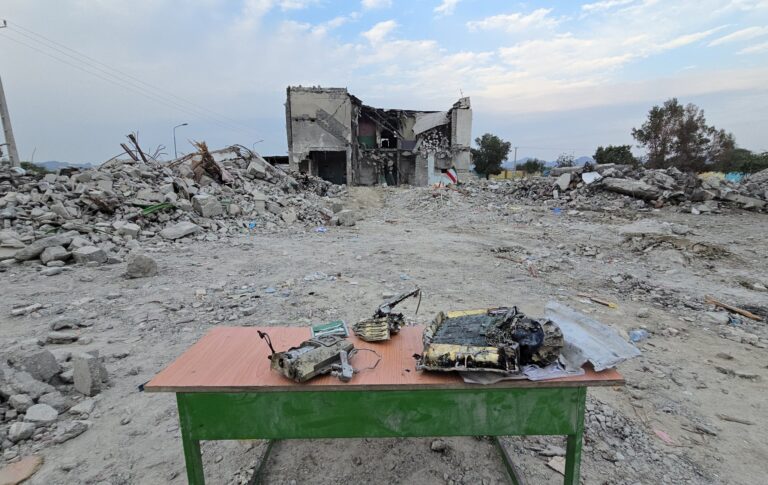
According to the U.S. Treasury Department, the Yatai New City compound, spearheaded by Chinese-born She Zhijiang, epitomises this criminal empire. What began as a small village on the Moei River has morphed into a resort city built for gambling, drug trafficking, prostitution, and scams targeting Americans. Workers, lured globally with false job promises, face captivity, beatings for missing scam quotas, and forced prostitution, with some held until families pay ransoms. OFAC has sanctioned She Zhijiang, his Yatai International Holdings Group Limited, and Myanmar Yatai International Holding Group Co., Ltd. for serious human rights abuses under Executive Order (E.O.) 13818.
Key KNA figures like Tin Win and Saw Min Min Oo, “who manage scam-supporting properties and provide security for illicit money flows”, are also targeted. The U.S. charged that Tin Win’s Shwe Myint Thaung Yinn Industry & Manufacturing Company Limited powers Shwe Kokko’s scam operations, while Saw Min Min Oo, a former KNA colonel, oversees entities like Chit Linn Myaing Co., Ltd., Chit Linn Myaing Toyota Company Limited, and Chit Linn Myaing Mining & Industry Company Limited. These entities, designated under E.O. 13581 (as amended) and E.O. 14014, profit from the KNA’s collaboration with Burma’s military, which grants territorial control in exchange for criminal proceeds.
Thailand’s attempts to disrupt Yatai New City by cutting power in 2023 and 2025 fell short, underscoring the need for U.S. financial sanctions to choke these operations, the Treasury Department stated.
In Cambodia, former casinos in Sihanoukville have become hotbeds for virtual currency scams, often mislabeled as “pig butchering” schemes, where scammers pose as romantic partners to lure victims into fake cryptocurrency investments, the U.S. Treasury Department claimed. OFAC targeted T C Capital Co. Ltd., which owns the Golden Sun Sky Casino and Hotel, and K B Hotel Co. Ltd. The Trump administration charged both as housing scam compounds where trafficked workers are coerced into defrauding victims across the U.S., Europe, and China. These complexes, “doubling as money-laundering fronts”, are led by figures like Dong Lecheng, a convicted money launderer, and Xu Aimin, a naturalised Cambodian citizen previously jailed in China for running a billion-dollar illegal gambling ring. Xu’s K B X Investment Co. Ltd. and Chen Al Len’s Heng He Bavet Property Co. Ltd., which operates the Heng He Casino in Bavet, also face sanctions for supporting cyber-enabled activities under E.O. 13694 (as amended). Su Liangsheng, a co-director of Heng He Bavet and M D S Heng He Investment Co. Ltd. in Pursat, joins Cambodian tycoon Try Pheap, previously sanctioned by OFAC, in profiting from these “forced-labour scams”. Chen and Su also control HH Bank Cambodia plc,” a financial node in the scam ecosystem”.
The $10 billion loss to Americans in 2024, a 66% spike from the prior year, reflects the scale of these scams, which exploit English-speaking workers trafficked under false pretences to target U.S. victims, the Treasury Department stated. A September 2023 FinCEN alert detailed how scammers use fake friendships or romances to trick victims into investing in fraudulent platforms controlled by criminals.
Treasury’s actions build on prior moves: in May 2025, OFAC sanctioned the KNA and Funnull, a firm supplying IP addresses for scam websites, while FinCEN flagged Cambodia’s Huione Group as a money-laundering hub for cyber heists, including those by North Korea.
Authorised under E.O. 13851, 13694, 13818, and 14014, these sanctions freeze all U.S.-based assets of the targeted individuals and entities, prohibiting American transactions with them. Violators risk civil or criminal penalties, a warning to financial institutions and others dealing with these networks. The measures aim to disrupt the financial backbone of “scam operations, from Shwe Kokko’s Yatai New City to Sihanoukville’s casino-turned-fraud hubs”.
For the “trafficked workers” enduring abuse and the Americans losing life savings, these sanctions, according to the Trump administration, signal Washington’s resolve to uproot a scourge that threatens both human dignity and global financial security.
– global bihari bureau