Ethical investment crucial for net-zero minerals
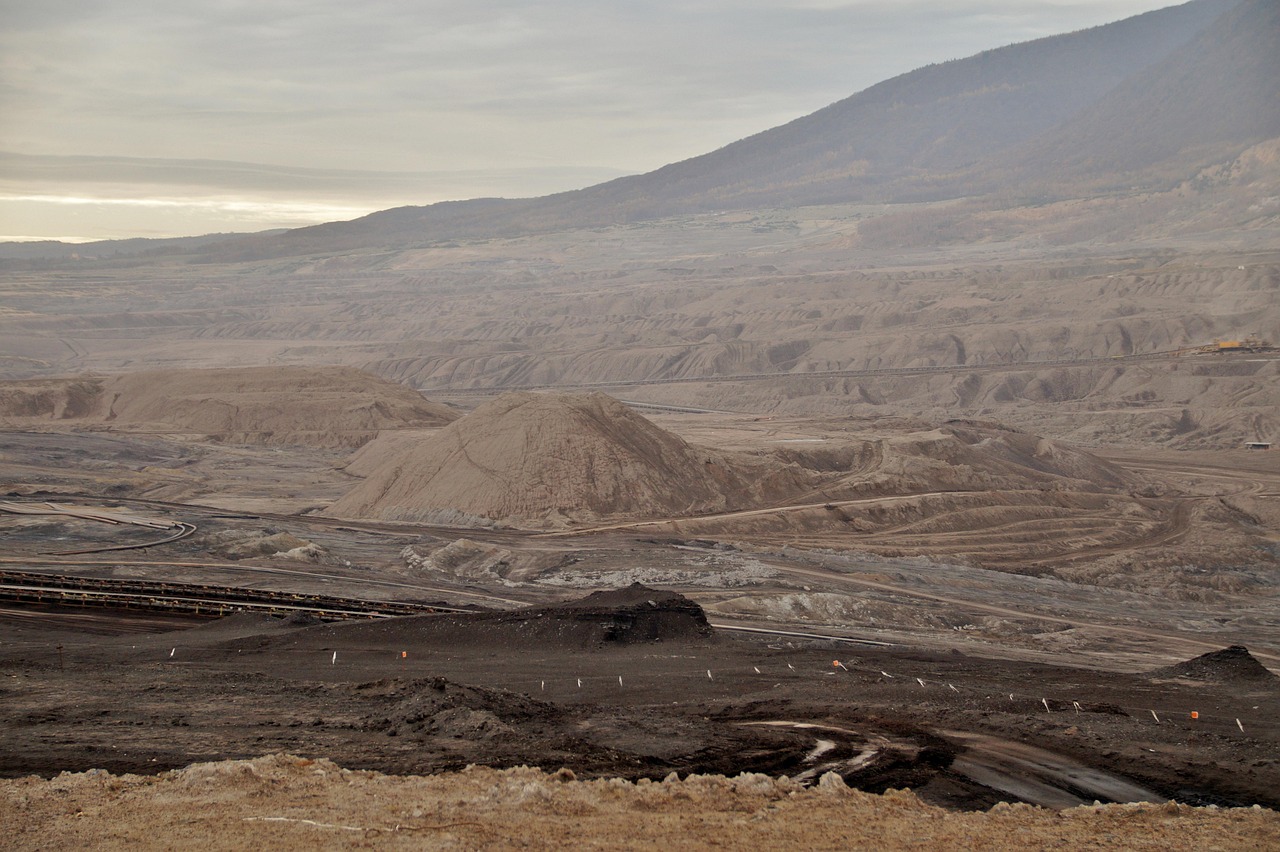
Nairobi: In a world racing to meet climate targets, the materials that power clean energy—nickel, cobalt, lithium, graphite, and rare earth elements—have become both enablers and potential stumbling blocks. These minerals form the backbone of solar panels, wind turbines, batteries, and other technologies essential for a net-zero future. Yet their extraction carries profound environmental, social, and governance challenges that, if unaddressed, could undermine the very sustainability the world seeks. These issues are at the heart of a new report by the United Nations Environment Programme (UNEP)-hosted International Resource Panel, titled Financing the Responsible Supply of Energy Transition Minerals for Sustainable Development.
The report paints a stark picture: global mineral extraction has increased fivefold since 1970, rising from 31% to nearly 50% of total raw material extraction. This growth is driven largely by the energy transition, which demands unprecedented quantities of critical minerals. Nickel, cobalt, graphite, and rare earth elements saw 8–15% increases in demand in 2023 alone. Lithium, crucial for battery technology, is expected to see demand by 2050 equivalent to nine times the world’s production in 2022. The challenge is clear: without responsible financing and governance, the extraction of these essential resources could create new environmental crises and social inequities even as the world seeks to combat climate change.
Mining is inherently capital-intensive and high-risk, requiring diverse financing—public, private, or a combination—for each stage of a project. These stages include exploration, construction, operation, mineral processing, metallurgical refinement, and mine closure. While implementing high environmental standards is often seen as costly, the survey underpinning the report shows that most large-scale mining companies believe environmental, social, and governance (ESG) compliance increases operational costs by less than 25%. Critically, companies also recognise that robust ESG reporting—detailing environmental, social, and governance performance—attracts new investors, positioning the financial sector as a key driver of responsible mining.
Recommendations to integrate ESG considerations into finance
- Strengthen the capacity of financial institutions to recognise and fund mining operations meeting high ESG standards.
- Develop digital product passports for mineral commodities, embedding ESG information across value chains.
- Ensure site-specific reporting of financial and ESG outcomes, incorporating gendered impacts, shared value, and indigenous rights.
- Include ESG-compliant mining in ‘sustainable’ and ‘climate finance’ taxonomies.
- Tie mining investments to climate- and nature-positive requirements, excluding protected areas.
- Permit companies with verified ESG transition plans to access sustainable finance.
- Use fiscal, financial, and monetary instruments to promote responsible mining and circular use of metals.
- Implement a global ad valorem levy to fund a Mining Sustainable Development Fund supporting training, capacity-building, legal aid, research, innovation, and technology transfer.
- Create a global database of mine tailings and track minor or companion metals.
- Forge partnerships between host communities, producing nations, and importing or processing countries.
The report emphasises that circularity—recycling and reuse of minerals—can substantially reduce the need for virgin materials. Measures such as recycling targets, government-backed financing and tax incentives for recycling infrastructure, promotion of eco-design in manufacturing, and green bonds to fund recycling facilities are highlighted as practical steps. Additionally, public-private partnerships, awareness campaigns, and the creation of a global database of former and operational mining tailings facilities can strengthen sector transparency. Despite these measures, the report stresses that the scale of investment required for a full energy transition is enormous. According to the International Energy Agency, achieving net zero emissions by 2050 will require investment of up to 450 billion US dollars in mining energy transition minerals by 2030, rising to 800 billion US dollars by 2040.
Artisanal and small-scale mining—often informal and highly localised—requires specific attention. The report recommends formalising labour through locally tailored licensing procedures, building capacity, providing technical support, offering tax incentives, increasing local participation, and granting access to geological and geospatial data. An international sustainability framework could help manage environmental and social risks in this sector and improve access to formal sources of finance.
Communities hosting mines also need to benefit directly from responsible mining. ESG initiatives, while implemented by companies, often fail to translate into tangible gains for local populations. Government-backed certification and incentive schemes, including favourable fiscal policies and improved market access, are proposed to ensure that both companies and communities are rewarded for sustainable practices. Partnerships between mining countries, importing nations, and local communities are essential to balance economic, environmental, and social outcomes.
Financial institutions, the report argues, must be equipped to recognise and support mining operations that meet high ESG standards. A digital product passport for all mineral commodities and their value chains, detailing ESG information according to a standard reporting protocol, could enhance transparency. Companies should report financial and ESG outcomes on a site-by-site basis, considering gender, indigenous rights, and shared value principles. Mining operations that meet stringent ESG criteria should qualify for sustainable and climate finance, and projects must be excluded from protected areas unless ESG transition plans are validated. Fiscal, financial, and monetary policies can further encourage responsible investment, while a proposed global ad valorem levy could fund a Mining Sustainable Development Fund to support training, capacity-building, legal assistance, research, and technology transfer in developing countries.
Beyond finance, the report underscores the need to strengthen environmental stewardship in mining-intensive regions, particularly Africa, China, and South America. Deforestation, water contamination, loss of biodiversity, and the encroachment of mining infrastructure into sensitive ecosystems all pose risks. Measures to control human activity, protect water sources, and preserve biodiversity are essential. The report also stresses the importance of climate action plans integrated with mining projects, community engagement, and public awareness to prevent ecological degradation.
The UN panel highlights the social dimension of mining, emphasising that responsible practices must respect human rights and foster equitable development. Investments in mining should align with climate-positive and nature-positive outcomes, ensuring that the energy transition does not reproduce patterns of environmental degradation or social injustice. Policies and financial instruments must incentivise sustainable practices while holding companies accountable for their ecological footprint.
The report also notes that enhanced circularity alone will not meet global demand; substantial investment in mining infrastructure remains necessary. Efficient mineral processing, metallurgical plants, and environmentally sound mine closure procedures are critical. Governments, corporations, and financial institutions must collaborate to ensure that these investments adhere to ESG principles and advance the objectives of sustainable development.
Finally, the report links its recommendations to ongoing global governance initiatives, including the work of the Panel on Critical Energy Transition Minerals convened by the UN Secretary-General, the 2024 commitment by the International Council on Mining and Metals for nature-positive mining, and resolutions from the seventh session of the UN Environment Assembly concerning mineral resource management. Collectively, these initiatives provide a framework for sustainable, equitable, and responsible mineral extraction that can underpin the global energy transition.
The pathway outlined by the report shows that the energy transition’s success depends not merely on deploying clean technologies, but on securing the raw materials for these technologies in ways that respect ecosystems, human rights, and community well-being. Only by integrating financial discipline, scientific oversight, regulatory rigour, and local participation can mining become a genuine enabler of a sustainable, net-zero future.
– global bihari bureau