Amman
Flagships: Land’s Superheroes
Rome: The United Nations has unveiled four groundbreaking World Restoration Flagships, spanning 18 countries across four continents, as part of the UN Decade on Ecosystem Restoration. These initiatives are already rejuvenating more than 500,000 hectares – an area nearly five times the size of Rome, where the Food and Agriculture Organization of the UN (FAO) is marking its 80th anniversary this week. By the decade’s end, they aim to bring under restoration almost 500,000 additional hectares of forests, mountains, farmlands, grasslands, shrublands and savannahs, as well as coastal and freshwater ecosystems.
Recognising global efforts to heal degraded ecosystems, boost community incomes and support food security, the announcement was made during a high-level side event at the World Food Forum in Rome, ahead of World Food Day.
The World Restoration Flagship awards, led by FAO and the UN Environment Programme (UNEP), spotlight some of the most ambitious and promising large-scale restoration efforts to halt land degradation and ensure healthier, more resilient agrifood systems.
The awards track and celebrate initiatives that contribute to global commitments to restore one billion hectares – an area roughly the size of China. In 2022, the inaugural 10 World Restoration Flagships were recognised, followed by seven initiatives in 2024 and three ocean-related initiatives in 2025.
“Restoring ecosystems is not just an environmental imperative – it is a cornerstone of global agrifood systems and resilience for the climate, for biodiversity, and for millions of people who depend on healthy ecosystems for food and livelihoods,” said QU Dongyu, Director-General of FAO.
“These flagships show what is doable when people come together to reverse the impacts of climate change, biodiversity loss, pollution, and waste,” said Inger Andersen, Executive Director of UNEP. “As a fierce thunderstorm can end with birdsong, degraded ecosystems can be revived. At scale, these efforts deliver multiple benefits, including food security and livelihoods.”
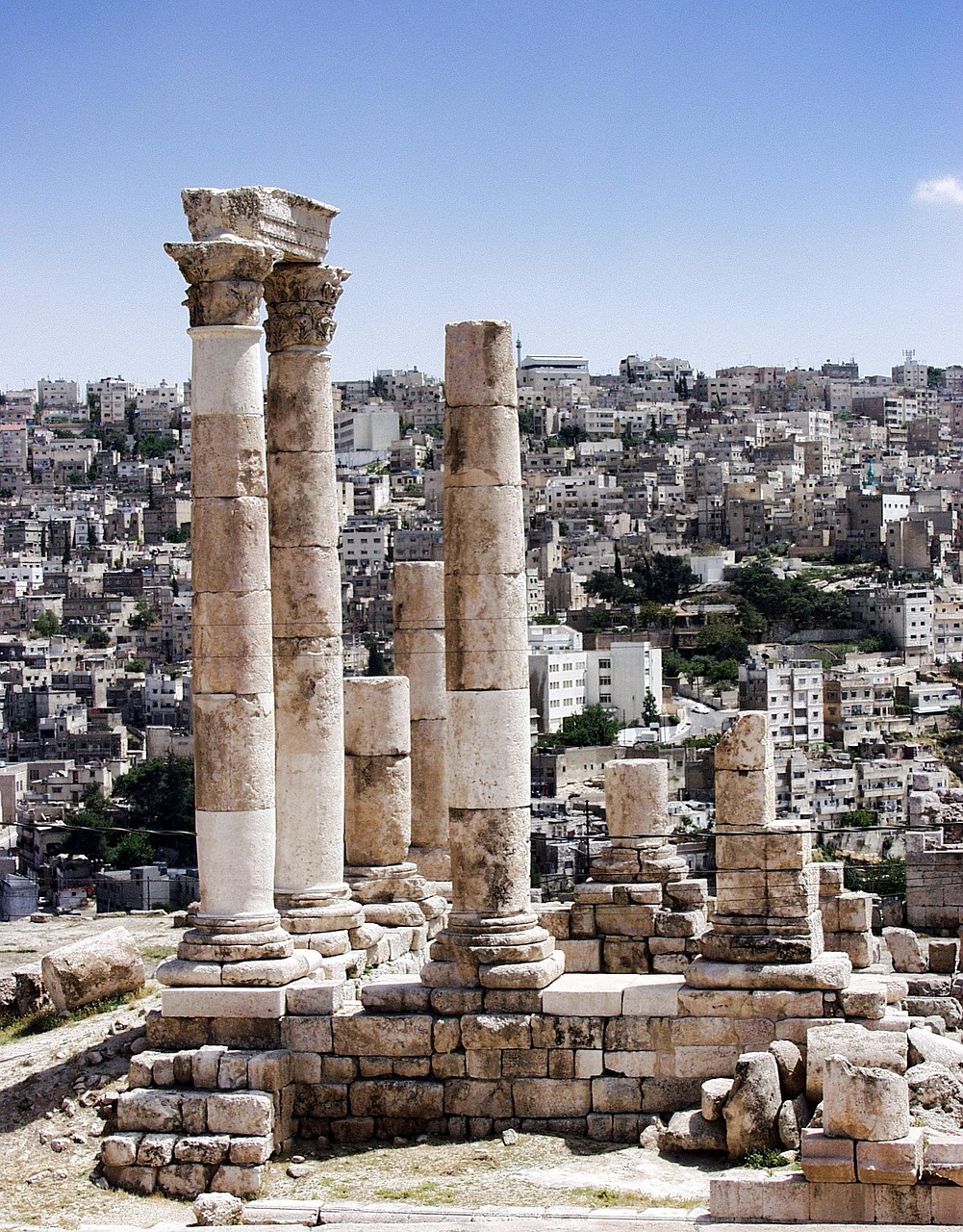
In Jordan’s Collaborative Rangelands Restoration, Tel al-Rumman, north of Amman, is an open mountainous forest area which had been severely degraded due to illegal overgrazing. When Jordan set out to establish its first botanic garden, instead of unclaimed forest land, ecologists met 4,500 sheep and the communities tending to them. What could have led to conflict resulted in partnership instead. The Royal Botanic Gardens is now working together with traditional herders on reviving sustainable practices, and 180 hectares are being restored to showcase all of Jordan’s unique plants and ecosystems. Biomass production is already growing more than eightfold, benefiting local herders. Communities can now make use of seven times more grazing days, lower feed costs, and income that has more than doubled. The number of herding families has also grown more than 10 times over. The program’s participatory model demonstrates that restoring biodiversity can strengthen food production and community trust, using both scientific methods and traditional knowledge on range practices, livestock management and ecological restoration.
South Korea’s Revitalising Korea’s Forests after Fire targets the Uljin forest fire, remembered as one of the Republic of Korea’s worst ecological disasters, burning through over 20,000 hectares in about ten days. This World Restoration Flagship in Uljin-gun is restoring the country’s valuable forests while prioritising community livelihoods and post-fire resilience. This includes reviving native plant species such as the endangered spike rosebay and the habitat of the long-tailed goral, a small goat-like mammal. The entire fire-damaged area is expected to be restored by 2030. The Republic of Korea took a unique approach to post-fire restoration, focused on bringing back biodiversity over economically viable tree species, and involving communities along the way. The country is home to one of only two major doomsday seed vaults worldwide. Complementing the Svalbard Global Seed Vault in Norway, which focuses on crop species, the Republic of Korea’s Baekdudaegan vault at the Native Plant Seed Supply Centre was established in 2023 in response to the forest fire. It saves and researches wild tree and plant seeds, supporting efforts to bounce back from fires.
The Restoration Initiative works across Africa and Asia, bringing together nine countries: Cameroon, China, Democratic Republic of Congo, Central African Republic, Guinea-Bissau, Kenya, Pakistan, Sao Tome and Principe, and Tanzania. Supported since 2018 by the International Union for Conservation of Nature (IUCN), FAO, UNEP and the Global Environment Fund (GEF), this initiative aims to overcome barriers to large-scale restoration, sharing know-how on improving awareness, monitoring, supporting businesses, and drawing investments. The initiative has brought to date over 310,000 hectares under restoration and 717,000 under improved management practices, and it plans to bring under restoration over 160,000 additional hectares by 2030. To date, over 420,000 people have directly benefited from the programme, while mitigating over 30 million tonnes of CO₂ equivalent – equivalent to emissions from eight coal-fired power plants in one year. The Restoration Initiative is designed to translate global restoration goals to local contexts – for example, by boosting local restoration economies, such as nurseries, training smallholder farmers and pastoralists, removing invasive species and informing government policies.
The Bamboo-based restoration initiative operates across nine countries in Africa, Asia and Latin America, where bamboo is being harnessed as a fast-growing, sustainable plant for land restoration, reversing the impacts of intense agriculture, logging, demand for fuelwood and charcoal and climate change. Bamboo-based restoration supports poverty reduction, creating livelihoods, carbon storage, land degradation and biodiversity loss, including iconic bamboo lemurs, gorillas and the giant panda. The initiative, led by the International Bamboo and Rattan Organisation (INBAR), has already restored about 200,000 hectares and benefited a similar number of people from improved livelihoods and incomes. By 2030, the initiative aims to attract investments to restore an additional 300,000 hectares. This is being achieved through knowledge development and capacity building of governments and local communities. Key enabling factors for this initiative include the harmonisation of policies, the participation of multiple sectors in the economy, respecting Indigenous Peoples’ rights and cultural considerations, and scientifically choosing appropriate bamboo species, out of 1,600 existing species and building appropriate value-chains.
It may be mentioned that the UN General Assembly has declared 2021–2030 a UN Decade on Ecosystem Restoration. Led by the UN Environment Programme and the Food and Agriculture Organization of the UN, together with the support of partners, it is designed to prevent, halt, and reverse the loss and degradation of ecosystems worldwide. It aims at reviving billions of hectares, covering terrestrial as well as aquatic ecosystems. A global call to action, the UN Decade draws together political support, scientific research, and financial muscle to massively scale up restoration.
Countries have already promised to restore 1 billion hectares – roughly the size of China – as part of their commitments to the Paris climate agreement, the Aichi targets for biodiversity, the Land Degradation Neutrality targets and the Bonn Challenge. However, little is known about the progress or quality of this restoration. With the World Restoration Flagships, the UN Decade on Ecosystem Restoration is honouring the best examples of large-scale and long-term ecosystem restoration in any country or region, embodying the 10 Restoration Principles of the UN Decade. Progress of all World Restoration Flagships will be transparently monitored through the Framework for Ecosystem Restoration Monitoring, the UN Decade’s platform for keeping track of global restoration efforts.
– global bihari bureau