UN Women: Systematic sexual violence worsening in Sudan
Geneva / Nairobi / Port Sudan: Women and girls fleeing the fall of El Fasher in North Darfur are reporting widespread sexual violence, starvation, and the collapse of healthcare as the conflict in Sl Fasherudan widens, the United Nations Entity for Gender Equality and the Empowerment of Women (UN Women) warned today. The Rapid Support Forces (RSF) seized the city in late October after more than 500 days of siege, triggering a large-scale flight of civilians and exposing them to extreme risks. “There is mounting evidence that rape is being deliberately and systematically used as a weapon of war,” said Anna Mutavati, UN Women Regional Director for East and Southern Africa. “Women’s bodies have become a crime scene in Sudan. There are no safe spaces left.”
El Fasher had been the last major urban centre in Darfur not under RSF control, with communities trying to preserve networks of clinics, food collection points and informal women-led shelters despite shrinking supplies. By mid-2025, displaced mothers, adolescent girls and grandmothers described measuring every movement to avoid armed groups—timing water collection to dawn hours, walking in pairs, rotating responsibility for food queues. Yet even these strategies dissolved under the siege’s final intensification. “We heard the shelling every morning,” said a 22-year-old displaced woman now in Tawila. “The maternity ward had closed. Women gave birth on blankets in the street. When we ran, we carried only the children.”
The conflict traces back to April 2023, when a fragile transition to civilian rule collapsed and fighting erupted between the Sudanese Armed Forces and the Rapid Support Forces in Khartoum. The violence extended into Darfur, reviving patterns of displacement familiar to older generations but with a sharper edge of targeted brutality. Women’s networks that once provided some stability—grain-sharing groups, communal kitchens, midwife collectives—broke down as movement became dangerous and supply chains severed. “This time, hunger is being used against us,” said a mother of four now sheltering near Malit. “If we go out to find food, we risk being taken. If we stay, we starve. It is the same danger in a different form.”
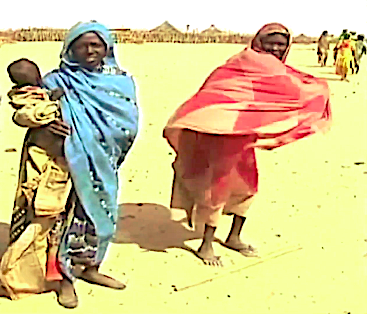
When the RSF advance reached the city’s outlying neighbourhoods, thousands fled toward rural towns and the Sudan-Chad border. The United Nations Office for the Coordination of Humanitarian Affairs reported yesterday that nearly 89,000 people have left the immediate vicinity of El Fasher in the past weeks. The journey itself has become another site of violence. A teacher travelling with her mother and sister described the moment armed men appeared near a dry river crossing: “We hid among the trees. Later, we counted ourselves. We were fewer.” Another woman from the Abu Shouk camp district recalled the strategic calculations families made under siege: “Who goes for water? Who returns? At what hour do you run? Even with caution, some never return.”
Food insecurity has entered catastrophic levels. Early November assessments by the UN-backed Integrated Food Security Phase Classification confirmed famine conditions in El Fasher and in Kadugli, the capital of South Kordofan. Women report boiling wild leaves and bitter seeds to feed children. A community health worker in Tawila said infants show signs of severe acute malnutrition linked to their mothers’ inability to breastfeed due to starvation. “The babies cry without sound,” she said. “Their mothers shake. This is hunger when it reaches the bone.”
The collapse in dignity compounds the crisis. A single packet of sanitary pads now costs the equivalent of US$27 in parts of North Darfur. Humanitarian cash assistance, when it reaches families at all, rarely exceeds US$150 per month for households of six. “We choose between blood and bread,” a woman said. “Either we bleed without protection, or we eat less. Dignity is something we can no longer afford.”
Health services have disintegrated. The last functioning maternity hospital in El Fasher was looted in the final weeks before the city fell. Midwives report delivering babies with thread scraps and improvised cloth. Women describe giving birth on roadsides and in empty courtyards during flight. “Every day that the world delays to act on Sudan, another woman gives birth under fire, or buries her child in hunger, or disappears without justice,” Mutavati warned.
Attempts to negotiate humanitarian access have sputtered through multiple rounds of collapsed talks since 2023. In the absence of secure corridors, women-led soup kitchens, neighbourhood protection committees, and local health workers continue to operate at great risk. UN Women has urged prioritising support to these local responders, who are often the only remaining lifeline.
The path forward depends on whether international pressure can halt attacks on civilians, secure safe movement for humanitarian aid, and bring armed actors to enforceable agreements. Until such conditions shift, displacement will continue, famine will deepen, and the threats to women and girls will multiply.
For now, the testimonies carry the clearest record of the present: “We ran because there was no place left that was safe,” said the young mother from El Fasher. “But the danger followed us. We are still running.”
– global bihari bureau
<