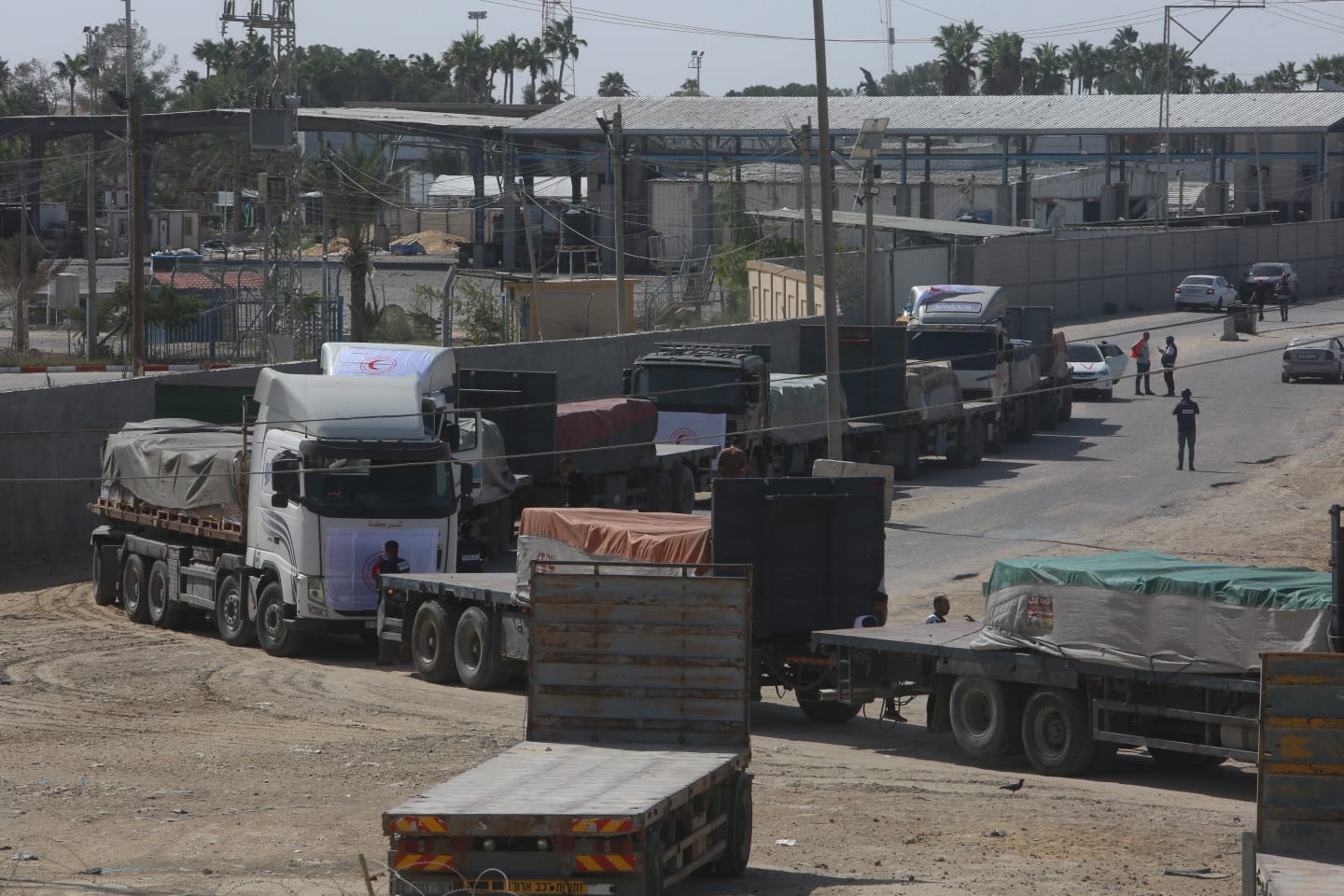
File photo of Four trucks carrying WHO health supplies from the Rafah border crossing, on their way to Gaza in October 2023. Photo credit WHO
Gaza’s Humanitarian Needs Overwhelm Limited Aid Efforts
Geneva: For the more than 2 million people in Gaza, hunger and desperation mount as humanitarian aid trickles in at levels far below what is needed to prevent famine. Despite Israel’s recent tactical pauses to allow some safe passage for aid convoys, UN trucks face persistent obstacles, leaving families struggling to survive. The United Nations Office for the Coordination of Humanitarian Affairs (OCHA) reports that only 200,000 litres of fuel were collected on Monday through the Kerem Shalom crossing, a fraction of the 70,000 litres needed daily for critical water, sanitation, and hygiene operations. So far, just 29,000 litres have been received, severely hampering these efforts.
OCHA spokesperson Jens Laerke voiced frustration at the gap between Gaza’s dire needs and the limited aid reaching its people. “Everybody expects me to clap and say thank you,” he told reporters, referring to the small fuel deliveries, “but the difference between the very small amount of aid that has now come in and the massive needs where people are literally dying on a daily basis, it’s really out of proportion.” He stressed that Gaza requires “hundreds and hundreds” of aid trucks daily, not just for weeks but for months or possibly years, to address a crisis that has pushed the region to the brink of famine. “This is not something that happens overnight,” Laerke added.
The United Nations Agency for Palestine Refugees (UNRWA) estimates that at least 600 trucks per day are needed to meet basic humanitarian needs for Gaza’s population. In response to global outcry over the crisis, Israel has announced it will allow controlled entry of commercial goods, such as food, baby formula, fruits, vegetables, and hygiene items, through Gaza-based traders. These traders face strict security screenings, and payments must be made via bank transfers, with distribution handled by centres run by the Gaza Humanitarian Foundation, which the UN has deemed “inherently unsafe.” Laerke welcomed the commercial supply plan but noted it cannot replace free aid, saying, “Aid is free of charge, and we have thousands of tons of aid, including food aid, standing just outside of Gaza, which has already been paid for by donors.” With most Gazans unemployed, commercial goods, which cost money, are out of reach for many.
UNICEF reports that while some nutrition supplies, including high-energy biscuits for pregnant and breastfeeding women, infant formula, and hygiene kits, have reached Gaza, these are far from sufficient. Malnutrition among children is surging to catastrophic levels, with severe cases outpacing aid delivery. UNICEF warns that severely malnourished children are 10 times more likely to die from diseases like pneumonia or measles, and most cannot access hospitals. Spokesperson James Elder highlighted the crisis’s toll, noting that since the Hamas attack on October 7, 2023, a child has been killed every hour on average in Israel’s military operations, with over 50,000 children reportedly killed or injured. “The nutritional situation we see in children and in mothers and in women and in the elderly” demands urgent action, Elder said, pointing to growing international pressure to address these deprivations.
For Gaza’s families, each day without adequate aid deepens their struggle to feed their children and maintain basic hygiene. The UN underscores that free, donor-funded aid must flow unimpeded to prevent further loss of life in a population already devastated by conflict and deprivation.
– global bihari bureau