Photo ©UNICEF
Attacks Trigger a Huge Exodus in Mozambique
Nampula Violence Triggers Second and Third Wave Displacement
Children form 67% of Mozambique’s Latest Mass Displacement
Geneva/Pemba/Maputo/Nampula: The morning light barely touches the dust-streaked roads of Nampula, yet the settlement already hums with the quiet tension of thousands of families who have fled violence in their villages. Northern Mozambique is once again engulfed in a humanitarian crisis of unprecedented scale. The violence, which began in Cabo Delgado province in 2017, has spread into previously less-affected provinces such as Nampula and Niassa, creating ripple effects across northern Mozambique’s fragile social and economic fabric.
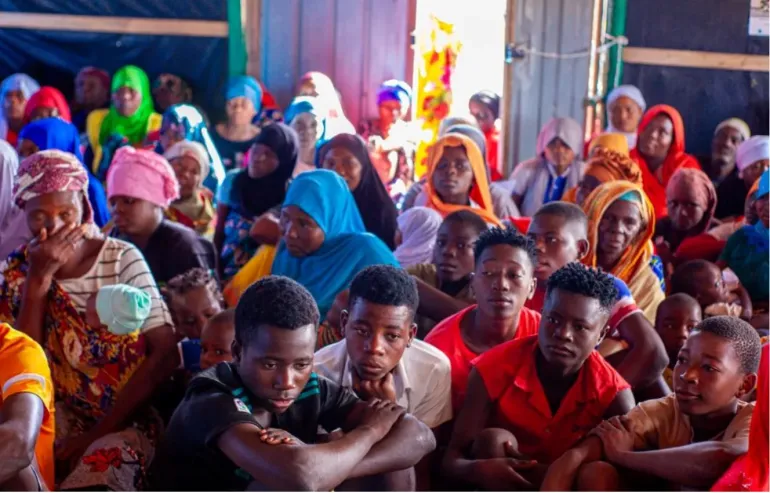
In just the past two weeks, over 107,000 people have fled their homes, fleeing attacks by non-state armed groups. The total number of displaced over the past four months has reached roughly 330,000, marking one of the largest and fastest waves of displacement recorded in recent years. Children, who make up about two-thirds of those affected, shuffle past temporary shelters in schoolyards, where chalkboards and desks have been pushed aside to make room for blankets and mats. They crowd into damaged school buildings, sleeping on classroom floors. In several districts, annual examinations have been suspended because classrooms now house families fleeing violence. One teacher in Eráti district recounted the dilemma plainly: “Children are sleeping in the same rooms where they were supposed to write exams.” Schools, once places of stability and learning, have been transformed into crowded shelters, underscoring the deep social impact of repeated displacement.
“They barely had time to recover when they again had to leave, due to attacks or fear of attacks,” said Paola Emerson, Head of the United Nations Office for the Coordination of Humanitarian Affairs (OCHA) in Mozambique, describing the exhaustion of families who had already fled earlier in 2025. Emerson emphasised that the latest displacement represents a departure from past patterns: attacks are no longer limited to short, hit-and-run raids but can extend over days or weeks, sustaining pressure on communities that had hoped for a respite.
In many temporary shelters, the human cost of this crisis is starkly visible. Children bear a particularly heavy burden. Beyond the immediate danger of displacement, they face disruptions to education, risk of separation from families, and exposure to protection threats, including abduction or forced recruitment. The UN Children’s Fund (UNICEF) has highlighted what it calls “staggering” levels of displacement among children, reflecting the severe psychosocial and physical risks faced by the youngest victims of the crisis.
Health services, already stretched thin by prior crises, are now overwhelmed. Access to clean water, sanitation, and medical care is severely limited in overcrowded shelters, compounding the risk of disease.
Food insecurity compounds the crisis. OCHA reports that only around 40 per cent of displaced families have received any food assistance, and even that is limited to approximately two weeks’ worth of rations. With supplies dwindling and stockouts becoming common, some families are forced to return to insecure areas to find sustenance. Emerson noted: “In some instances, it’s also forcing returns as people are not receiving assistance where they are currently.” Families face the impossible choice between hunger in temporary shelters and the risk of renewed violence at home.
The conflict itself has deep roots and long-term consequences. Insurgent activity began in 2017, with attacks on villages, state institutions, and economic installations in Cabo Delgado province. Over the years, the insurgency aligned with the Islamic State of Mozambique, demonstrating resilience despite multiple military operations by Mozambican forces and regional partners. In 2021, militants attacked the Palma district, forcing international energy companies to suspend a multibillion-dollar liquefied natural gas (LNG) project and evacuate staff. While offshore LNG development continues and a second floating LNG unit has been approved, onshore projects, local infrastructure, and livelihoods remain highly vulnerable.
Even as the insurgency shifts its operational footprint, clashes continue on multiple fronts. In the Meluco district, recent engagements between local security forces and armed groups resulted in fatalities among militants and injuries among paramilitary personnel, reflecting the persistent insecurity across rural areas. Analysts note that even when counter-operations temporarily clear zones, civilians rarely regain a sense of permanent safety. The cycle of displacement and return has become a defining pattern, disrupting livelihoods, farming, and the local economy.
The timing of the current surge exacerbates the humanitarian toll. Northern communities had not yet recovered from three cyclones earlier in 2025, which destroyed homes, washed away crops, and eroded food reserves. Families who survived the storms found their shelters and farms already under threat from violence. The repeated shocks — climate and conflict combined — have stripped households of resilience, leaving them dependent on inadequate humanitarian aid.
Amid these pressures, families have learned to live with constant uncertainty. Many arrive at temporary sites with minimal possessions and limited documentation, and find themselves repeatedly uprooted. A woman arriving in Nampula captured the pervasive despair: “I don’t know if home still exists.” Aid workers note that such statements are common, reflecting the erosion of a sense of safety and continuity in daily life.
Economic livelihoods have also suffered. Agriculture, small-scale trade, and local markets have been disrupted by repeated displacements, leaving families without income or access to basic resources. Livestock is lost or looted during flight, farmland lies fallow, and savings are exhausted, reducing families’ ability to recover even in temporary reprieves. For communities that had hoped the resumption of development projects, such as LNG investment, would provide stability and opportunity, the return of violence has dampened expectations.
The combination of sustained insurgent activity, climate shocks, and constrained humanitarian capacity has created a scenario where displacement is no longer a temporary disruption but the organising principle of life in northern Mozambique. Families pack and unpack their belongings repeatedly, moving between insecure villages and temporary shelters with little notice, and facing hunger, disease, and the constant threat of violence at every turn.
As of December 5, 2025, northern Mozambique remains precarious. Tens of thousands of people continue to live in displacement, aid flows are insufficient, and essential services such as health, education, water, and child protection are stretched beyond capacity. Emerson’s words underscore the fragility of the situation: “There are people fleeing because their villages are attacked and destroyed, and others leave nearby villages for fear of attacks.”
The human story is clear: for families across northern Mozambique, displacement is no longer an exceptional event but a recurring, destabilising reality. Survival — the ability to find shelter, food, and relative safety — has become the central focus of daily life. The cycles of flight, return, and renewed flight continue, leaving communities trapped between fear and hunger, and challenging the capacity of humanitarian agencies to respond. Without rapid and substantial intervention, northern Mozambique risks entrenching a pattern in which repeated displacement, insecurity, and deprivation define the everyday lives of its people.
– global bihari bureau