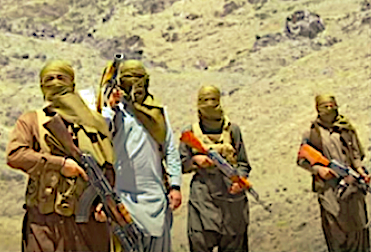
BLA fighters
Majeed Brigade Joins BLA’s FTO Tag
Washington/Islamabad: The U.S. Department of State today designated the Balochistan Liberation Army (BLA) and its Majeed Brigade as a Foreign Terrorist Organisation (FTO), while also formally recognising the Majeed Brigade as an alias to the BLA’s 2019 Specially Designated Global Terrorist (SDGT) designation.
This action, set to take effect upon its publication in the Federal Register, responds to a series of attacks claimed by the BLA in Pakistan. In 2024, the group – a separatist militant group operating in Pakistan’s Balochistan province – took responsibility for suicide attacks targeting areas near Karachi’s international airport, a vital transportation hub, and the Gwadar Port Authority Complex, a key centre for Pakistan’s maritime and trade activities. In March 2025, the BLA claimed the hijacking of the Jaffar Express train, which was travelling from Quetta to Peshawar, resulting in the deaths of 31 civilians and security personnel and the holding of over 300 passengers as hostages.
The FTO designation is enacted under Section 219 of the Immigration and Nationality Act, as amended, and Executive Order 13224, as amended. These legal authorities enable the U.S. to freeze any assets the BLA holds in U.S. jurisdictions, prohibit the group from receiving any material support, and impose travel restrictions on its members. The BLA’s 2019 SDGT designation had already established sanctions following earlier terrorist attacks. Still, the FTO status introduces stricter legal consequences, making it a criminal offence for U.S. persons to provide any form of support to the group. The State Department pointed to the BLA’s activities since 2019 as justification for the designation, specifically citing the 2024 suicide attacks near Karachi’s international airport and the Gwadar Port Authority Complex, as well as the March 2025 hijacking of the Jaffar Express train, which caused significant loss of life and disruption.
The 2024 suicide attacks near Karachi airport and Gwadar Port, both claimed by the BLA, targeted critical infrastructure in Pakistan. The Karachi airport attack struck a major transportation node, disrupting operations at one of the country’s busiest hubs. Similarly, the Gwadar Port attack targeted a facility central to Pakistan’s economic and trade activities, highlighting the BLA’s focus on strategic locations. The March 2025 Jaffar Express hijacking further underscored the group’s capacity for large-scale violence. During this incident, the BLA attacked the train travelling from Quetta to Peshawar, killing 31 individuals, including civilians and security personnel, and holding over 300 passengers hostage, an event that paralysed a key rail route and drew significant attention to the group’s actions.
The Majeed Brigade, identified as an alias in the FTO designation, has been linked to these and other attacks, reinforcing its role as a key component of the BLA’s operations. The State Department emphasised that the FTO and updated SDGT designations are intended to curtail support for terrorist activities, stating, “Terrorist designations play a critical role in our fight against this scourge.” By imposing these measures, the U.S. seeks to limit the BLA’s access to resources and operational capabilities. The designations address the group’s pattern of violence, as evidenced by its claimed responsibility for the 2024 attacks and the 2025 train hijacking. Upon publication in the Federal Register, the FTO status will formalise restrictions on the BLA and its Majeed Brigade alias, targeting their ability to carry out further attacks in Pakistan, where their actions have caused significant casualties and disrupted critical infrastructure.
BLA-India Ties: Accusations and Denials
The BLA has long been at the centre of allegations involving Indian support, though India consistently denies any involvement. Pakistani officials and media have frequently accused India of funding, arming, and providing logistical aid to the BLA, viewing it as part of a broader strategy to destabilise Pakistan. These claims gained prominence in the early 2000s, coinciding with the BLA’s emergence as a key insurgent force seeking independence for Balochistan, Pakistan’s largest but most underdeveloped province, rich in natural resources but plagued by grievances over marginalisation and exploitation.
Pakistan’s accusations often point to India’s Research and Analysis Wing (RAW) as the alleged orchestrator, claiming RAW offers financial backing, training, and safe havens to BLA militants. In 2019, Pakistani authorities arrested a BLA operative who reportedly confessed to receiving Indian support, though no concrete evidence was publicly presented. Reports from Pakistani sources suggest BLA commanders have sought medical treatment in Indian hospitals under disguise, with one leader reportedly staying in Delhi for six months in 2017 for kidney ailments. Another commander, Aslam Baloch, is alleged to have received treatment in New Delhi. Pakistani military spokespersons have repeatedly linked BLA attacks to Indian sponsorship, especially following incidents like the 2019 Pulwama attack, where Pakistan claimed India used Baloch insurgents as proxies in retaliation.
The BLA’s activities, including suicide bombings and ambushes, have intensified since 2024, with the group claiming responsibility for attacks on Pakistani security forces and infrastructure. In May 2025, the BLA launched over 50 assaults, killing dozens and declaring Balochistan independent, prompting Pakistani officials to reiterate accusations against India. The group’s spokesperson, Jeeyand Baloch, has publicly urged India to take decisive action against Pakistan, warning that inaction could lead to global ruin, as Pakistan harbours groups like Lashkar-e-Taiba. In a statement following a series of attacks, the BLA described Pakistan as a “breeding ground for global terrorists” and called for it to be declared a terrorist state. These statements have fueled speculation about ties, but BLA leaders like Hyrbyair Marri, operating from exile, have denied direct Indian control, though some reports claim personal connections with Indian political figures.
India has categorically rejected these allegations, labelling them baseless and part of Pakistan’s propaganda to divert attention from its internal issues. The Indian Ministry of External Affairs, in 2009 and 2024 statements, dismissed claims of supporting the BLA as unfounded. Analysts like David Wright-Neville note that while some Western observers have echoed Pakistani accusations, U.S. officials like Richard Holbrooke in 2013 described them as “somewhat exaggerated,” acknowledging limited infiltration but lacking solid proof. Human Rights Watch and Amnesty International have documented Pakistani state abuses in Balochistan, including enforced disappearances, which BLA uses to justify its struggle, but these reports do not substantiate Indian involvement.
The controversy over BLA-India ties intersects with regional geopolitics, particularly the China-Pakistan Economic Corridor (CPEC), which the BLA targets as foreign exploitation. Pakistan accuses India of using the BLA to sabotage CPEC, a $62 billion initiative linking China to the Arabian Sea through Gwadar Port. Incidents like the 2022 suicide bombing killing Chinese tutors and the 2024 Gwadar attack have heightened tensions, with Pakistan blaming Indian consulates in Afghanistan for aiding militants. India denies this, emphasising its non-interference policy.
Scepticism persists due to a lack of conclusive evidence. Pakistani claims often lack public proof, as noted by scholars like Selig Harrison, while BLA’s exile leaders like Marri have formed groups like the Baloch Council of North America, advocating democratic rights without confirmed Indian links. The insurgency’s roots lie in Baloch grievances since Pakistan’s 1948 annexation of Kalat, with multiple rebellions (1970s, 2000s) driven by resource exploitation and political marginalisation. Balochistan’s vast area (44% of Pakistan) and small population (6%) exacerbate these issues, with militants like the BLA demanding independence.
The relationship remains a point of contention in India-Pakistan ties, with Pakistan’s military chief General Asim Munir downplaying the insurgency as involving only 1,500 people, while human rights groups report thousands disappeared. Without verifiable evidence, accusations continue to poison bilateral relations, underscoring the need for dialogue to address Balochistan’s underlying issues.
– global bihari bureau