Venezuela Military
Venezuela at Crossroads Amid U.S., India, China Moves
Energy and Geopolitics Drive Venezuela–U.S. Standoff
Washington/Caracas: Tensions between the United States (U.S.) and Venezuela have escalated sharply following the U.S. Department of State’s formal designation of the Cartel de los Soles as a Foreign Terrorist Organization (FTO), effective November 24, 2025.
The move targets networks headed by President Nicolás Maduro Moros and his inner circle, exposing their assets to freezes and constraining financial operations while signalling Washington’s intent to prosecute narco-terrorist activities and protect U.S. national security interests. The administration has argued that Maduro’s regime, in coordination with other regional criminal networks such as Tren de Aragua and Mexico’s Sinaloa Cartel, has perpetuated terrorist violence and drug trafficking into the United States and Europe, claims Maduro vehemently rejects as defamatory.
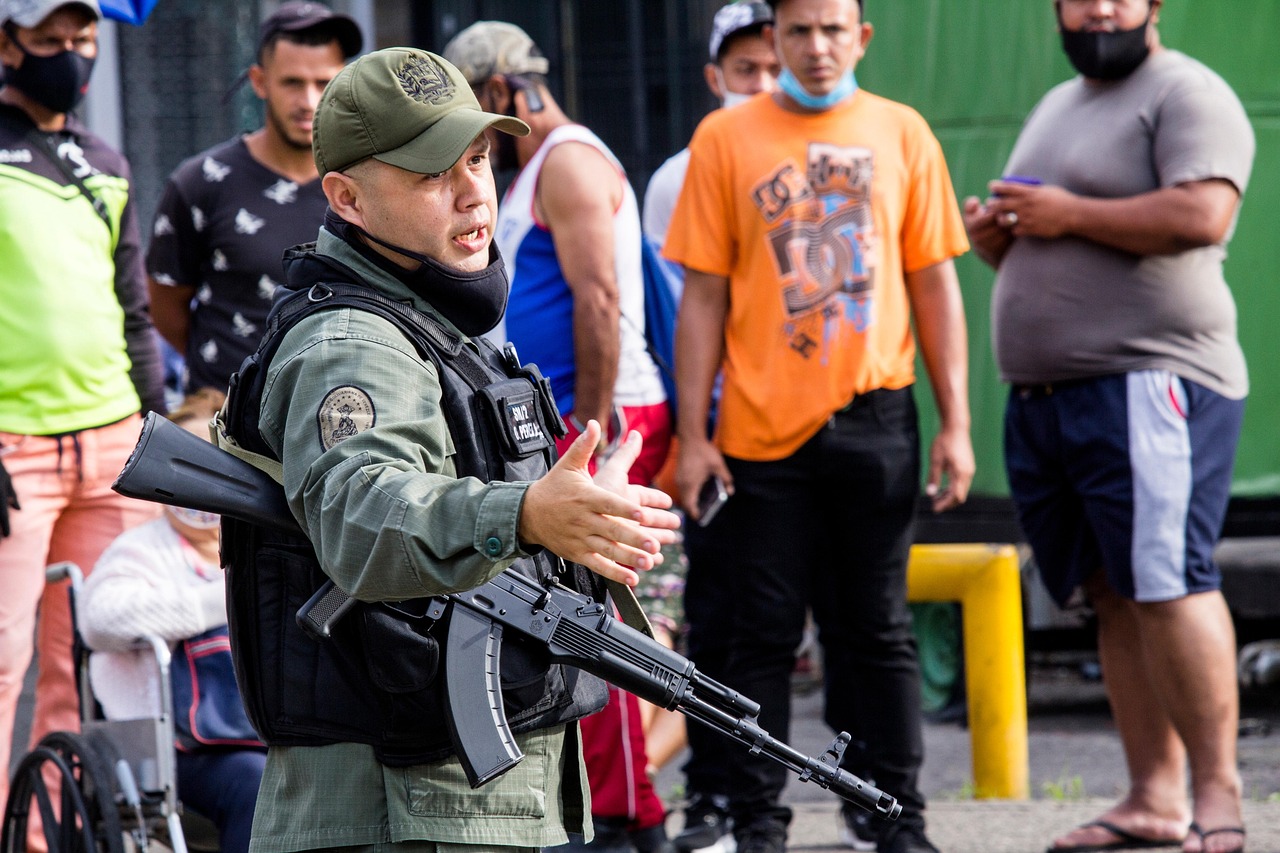
The designation comes against the backdrop of a continued U.S. naval presence off Venezuela’s Caribbean coast. Since August 2025, approximately 7–13 U.S. vessels, including Aegis-class guided-missile destroyers such as USS Gravely and USS Jason Dunham, amphibious ships like USS San Antonio and USS Iwo Jima carrying roughly 4,000–4,500 Marines and sailors, a nuclear-powered fast-attack submarine, and P-8 Poseidon maritime patrol aircraft have patrolled international waters. The deployment, originally set to span several months, aims to disrupt alleged narcotics operations and serves as a strategic lever against Caracas. Since November 16, the U.S. Navy has conducted over 21 targeted strikes on suspected drug trafficking vessels in Caribbean waters, the latest killing six crew members linked to cartel operations. Venezuela has responded by mobilising over four million militia members in “Plan Independencia 200,” bolstering coastal defences, imposing temporary drone restrictions along key maritime zones, and petitioning the United Nations (UN) to halt U.S. operations, framing the presence as an existential threat to sovereignty.
Also read: Maduro Mobilises Militia as U.S. Warships Near Venezuela
Energy and economic considerations remain central to the standoff. Venezuela’s oil reserves, estimated at over 303 billion barrels, underpin both domestic revenue and the calculations of external actors. Chinese companies, led by China Concord Resources Corporation, hold long-term production-sharing agreements to restore critical oil fields and deploy floating drilling rigs, gradually increasing output for export to Chinese refineries while providing loans and technical support. Chinese imports constitute roughly 62 per cent of Venezuela’s non-U.S. oil exports, and investments include restoring the Lago Cinco and Lagunillas fields with a projected 60,000 barrels per day by 2026. India has deepened its engagement as well: Commerce and Industry Minister Piyush Goyal met with Venezuela’s Minister of Ecological Mining Development Hector Silva at the 30th Confederation of Indian Industry (CII) Partnership Summit in Visakhapatnam on November 14–15, 2025, to reactivate the decade-dormant India–Venezuela Joint Committee Mechanism. Discussions focused on expanding cooperation beyond oil into critical minerals such as lithium and cobalt, pharmaceuticals with potential Indian Pharmacopoeia adoption, and automotive investment. State-owned Oil and Natural Gas Corporation (ONGC) provides an operational base for exploration and mining, enhancing Caracas’s options for foreign investment and moderating U.S. leverage through sanctions and naval posturing. India’s ONGC Videsh Limited’s 40 per cent stake in the San Cristobal project, together with these engagements, signals a strategic long-term presence in Venezuela’s energy and mineral sectors.
Internally, Venezuela’s dynamics remain fraught. Maduro projects both practical and symbolic authority by mobilising militias and security forces, while opposition leaders remain split: some, like exiled 2024 election candidate Edmundo González Urrutia, support U.S. pressure as a means to challenge Maduro, whereas others, including Henrique Capriles, warn that foreign intervention could worsen instability and erode sovereignty. Public sentiment is similarly divided: thousands respond to Maduro’s call to defend the “sacred soil,” yet scepticism persists regarding the likelihood of U.S. strikes and the effectiveness of militia mobilisation. Military and logistical strain is evident, though Maduro continues to frame the confrontation as a matter of national pride and survival.
The geopolitical and economic stakes are significant. U.S. legal and operational measures, including the FTO designation, naval deployments, and targeted strikes, aim to constrict narco-terror networks and signal strategic leverage over a resource-rich state. Caracas, by diversifying partnerships with China and India, strengthens its resilience, maintains domestic authority, and secures alternative energy and investment flows. Any disruption in Venezuelan production could ripple across global markets, affecting creditors and trading partners, particularly China, India, and Latin American allies, while influencing oil prices worldwide.
The escalation traces back to Trump’s first term (2017–2021), when sanctions and secondary sanctions were first imposed, and Maduro was declared illegitimate. A 2020 U.S. federal indictment specifically charged Maduro and top officials, including Diosdado Cabello and Vladimir Padrino López, with narco-terrorism, cocaine trafficking, and material support to international criminal organisations. The February 2025 U.S. Department of the Treasury designation of regional cartels as Specially Designated Global Terrorists (SDGTs), ongoing naval deployments, and the disputed July 2024 election — in which Maduro claimed a third term amid allegations of fraud — have compounded tensions. The Organization of American States (OAS) issued an August 16, 2025, resolution not recognising the election results, further isolating Maduro internationally. Exports and domestic production have been bolstered by China, while India’s strategic engagement in minerals, pharmaceuticals, and industrial investment provides additional support against U.S. pressure.
For the region, the stakes remain high. Miscalculation could spark confrontations in the Caribbean, disrupt migration and trade flows, and test alliances. Colombia and Brazil have signalled caution, urging diplomacy and warning against intervention, while the Bolivarian Alliance for the Peoples of Our America–People’s Trade Treaty (ALBA-TCP) bloc and Cuba continue to back Maduro’s sovereignty claims. The U.S. operation has emboldened opposition elements but risks alienating moderates, deepening internal divisions. Analysts note that the confrontation exemplifies the intersection of energy, crime, law enforcement, and international diplomacy, with resource wealth, alliances, and domestic legitimacy inseparable in contemporary power struggles.
At its core, the confrontation is a geopolitical chess game where oil, minerals, narco-crime, and international alliances converge. The Maduro regime seeks to leverage energy and diversified partnerships to withstand sanctions and assert autonomy, while the United States balances pressure with legal designations, military signalling, and targeted maritime action. The next moves — whether through negotiation, escalation, or a prolonged standoff — will shape both Venezuela’s internal stability and regional dynamics.
For strategic actors, the crisis holds distinct implications: the United States seeks to tighten financial and operational pressure to contain narco-terrorism and maintain influence over a resource-rich state, while managing domestic political optics and signalling deterrence without provoking full-scale conflict. India’s deepening footprint in Venezuela’s energy and critical minerals sectors positions it as a key alternative partner, securing supply chains and demonstrating strategic autonomy in Latin America. China, with decades of investment in oil, infrastructure, and loans, continues to underpin Maduro’s resilience, ensuring that Beijing’s energy security and geopolitical interests are preserved even amid escalating U.S. pressure. The interplay of these three powers illustrates how resource wealth, multilateral partnerships, and legal-military instruments converge to shape influence over Venezuela and the wider region.
– global bihari bureau