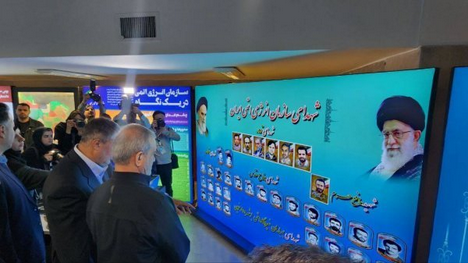
Iranian President Masoud Pezeshkian at site of the Atomic Energy Organization of Iran (AEOI)
Washington/ Tehran: Will the Rome nuclear talks between the United States and Iran yield a deal? As negotiators from the United States and Iran prepare to convene in Rome for the fifth round of nuclear talks, the issue of Iran’s uranium enrichment programme remains the focal point of a complex diplomatic endeavour. Led by U.S. special envoy Steve Witkoff and Iranian Foreign Minister Seyed Abbas Araghchi, the discussions carry profound implications for global security, regional stability, and the future of U.S.-Iran relations.
The U.S. is resolute in its aim to terminate Iran’s enrichment activities to eliminate any pathway to nuclear weapons, a position articulated by State Department spokesperson Tammy Bruce during a May 22, 2025, briefing in Washington. “This additional meeting wouldn’t be happening if we didn’t think there was potential for it,” Bruce stated. “And so I would say that clearly we believe that we are going to succeed.” She addressed concerns raised by unnamed Iranian sources about the U.S. commitment to the talks, asserting that the presence of both delegations in Rome signals a mutual interest in finding a resolution.
In Tehran, the perspective is one of steadfast commitment to national sovereignty, tempered by a willingness to engage diplomatically. At the Tehran Dialogue Forum on May 18, Araghchi outlined Iran’s stance, emphasising its adherence to the Non-Proliferation Treaty (NPT) and rejection of nuclear weapons based on religious and ethical grounds. “We seek a just and balanced agreement that fully respects Iran’s nuclear rights and guarantees the comprehensive and verifiable lifting of sanctions,” he declared, underscoring Iran’s openness to transparency to address international concerns. However, speaking at a Pugwash Conferences meeting hosted by Iran’s Atomic Energy Organisation on May 17, Araghchi drew a firm line, stating, “The Islamic Republic of Iran cannot compromise on the Iranian nation’s legitimate and legal right to peaceful nuclear energy, including enrichment.” He described the preservation of Iran’s enrichment infrastructure as “non-negotiable,” referencing four prior rounds of indirect talks with the U.S. conducted with “seriousness and goodwill.” Araghchi also expressed frustration with inconsistent U.S. statements and the influence of lobbies led by Israel, which he argued obstruct the negotiation process.
The historical context of these talks is marked by sacrifice and suspicion. Araghchi highlighted the significant costs Iran has borne—decades of sanctions and the assassination of nuclear scientists—to maintain its nuclear program, framing it as a symbol of national resilience. This sentiment was reinforced in a May 15 statement from Iran’s Foreign Ministry, which condemned U.S. President Trump’s May 13 remarks accusing Iran of destabilising the region as “false, divisive, and misleading.” The ministry contended that such statements deflect attention from U.S. support for Israel’s actions in Palestine, Lebanon, Syria, and Yemen, while sanctions infringe on the human rights of Iranians. The U.S. withdrawal from the 2015 Joint Comprehensive Plan of Action (JCPOA) under Trump’s first administration further deepened this mistrust, casting a long shadow over the current negotiations.
For the U.S., the priority is clear: achieving a “significant structural change” to end Iran’s enrichment and ensure no nuclear weapon is developed, as Bruce emphasised. Other issues, such as Iran’s support for groups like Hamas, Hezbollah, or the Houthis, are deferred until the enrichment question is settled. This singular focus reflects the U.S. assessment of the existential risks posed by a nuclear-capable Iran, particularly in a region already fraught with conflict. Yet, Iran’s insistence on its NPT-entitled right to enrich uranium for peaceful purposes sets the stage for a challenging negotiation. The talks are likely to extend into further rounds, as evidenced by the four prior indirect discussions and the decision to hold a fifth. Both sides appear committed to avoiding an immediate collapse, with Iran’s engagement through the International Atomic Energy Agency (IAEA) and the U.S.’s expressed belief in potential success suggesting a foundation for continued dialogue.
A partial agreement remains within reach, though it would require navigating formidable obstacles. Such a deal might permit Iran to maintain limited, tightly monitored enrichment—perhaps at levels suitable for civilian use, like 3.67%—in exchange for phased sanctions relief and enhanced IAEA oversight. However, the legacy of the JCPOA’s collapse and Iran’s perception of U.S. unreliability, as voiced by Araghchi, complicate trust-building. The U.S. faces its own constraints, including domestic political pressures and concerns from allies like Israel, which view any Iranian enrichment as a security threat. A complete breakdown of the talks, leading to escalated tensions, is less probable given the investment in diplomacy, but it cannot be ruled out if either side perceives the other as intransigent or if external factors, such as regional conflicts, intervene.
The outcome of the Rome talks will depend on whether negotiators can reconcile robust verification mechanisms with Iran’s nuclear rights under the NPT and U.S. demands for absolute security guarantees. Bruce’s optimism, rooted in the U.S.’s belief in a viable path forward, contrasts with Araghchi’s concerns about U.S. consistency, encapsulating the delicate balance at play. The broader regional context adds urgency to these efforts. On May 22, the U.S. imposed sanctions on Sudan for alleged chemical weapons use in 2024, set to take effect around June 6, restricting exports and credit access. With 47,000 people displaced in West Kordofan this month and cholera spreading in Khartoum, Sudan’s humanitarian crisis underscores the volatility of the region, where missteps in the nuclear talks could have cascading effects.
The gravity of the nuclear issue extends beyond the negotiating table, touching on questions of sovereignty, security, and the human toll of prolonged sanctions. Iran’s determination to preserve its nuclear program reflects not only technical ambitions but also a narrative of resistance against external pressure, as Araghchi’s remarks about the nation’s sacrifices make clear. For the U.S., the talks are a test of its ability to enforce non-proliferation without triggering conflict, a challenge made acute by the memory of past diplomatic failures. As the Rome meeting unfolds, the world awaits an outcome that could either pave the way for a cautious détente or entrench a stalemate with far-reaching consequences.
– global bihari bureau