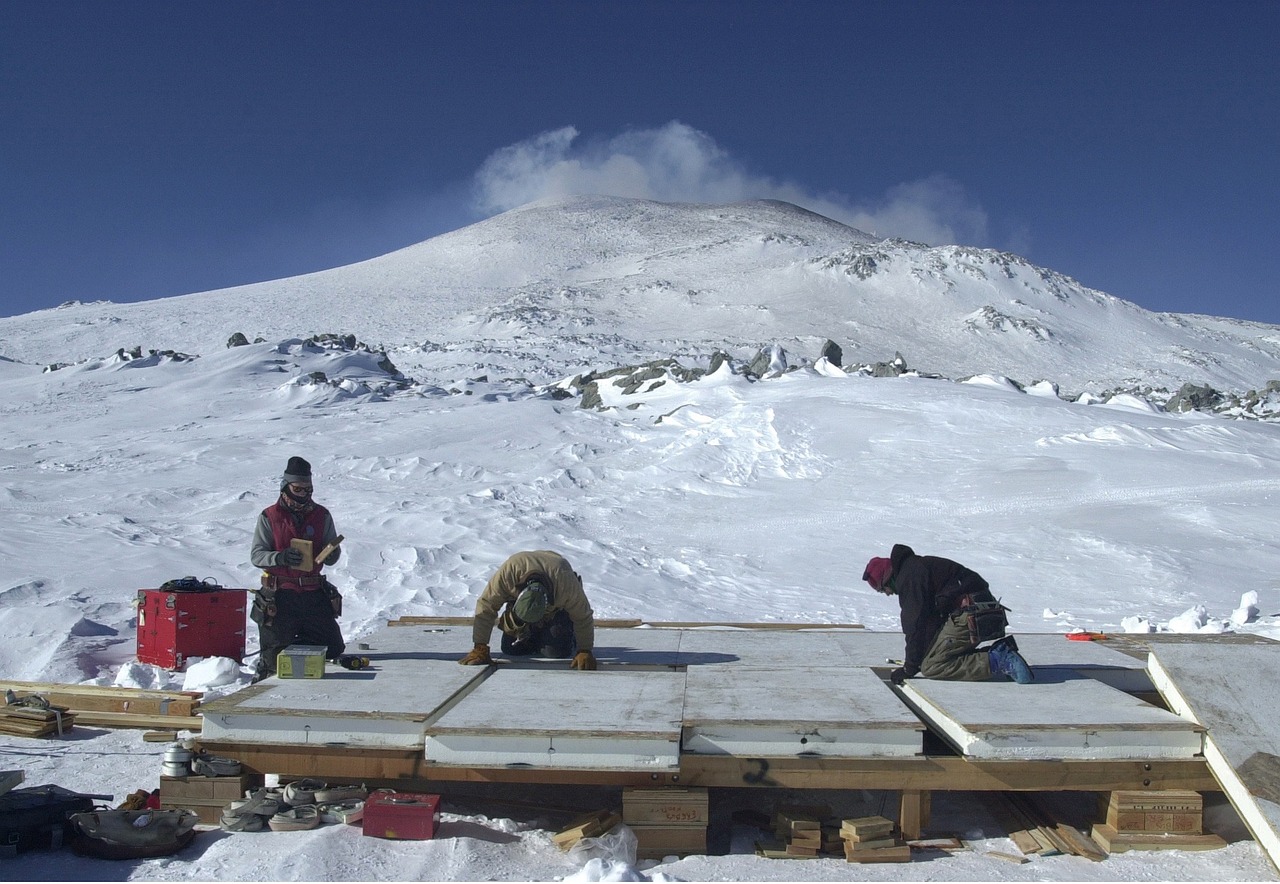
File photo
U.S. Invokes 1959 Treaty Powers to Inspect Antarctic Stations
Washington: Acting under the inspection provisions of the 1959 Antarctic Treaty, the United States has carried out a five-day inspection of foreign research stations in Antarctica, reinforcing its stated commitment to preserving the continent exclusively for peaceful purposes.
According to the U.S. Department of State, a team of U.S. government officials conducted inspections from January 16 to January 20, examining foreign research stations, installations, and equipment operated by several Antarctic Treaty Consultative Parties. The inspection team was led by the Department of State and included representatives from the National Science Foundation and the Department of War.
During the inspection mission, U.S. officials visited five research stations across East Antarctica. These included Australia’s Davis Station and Law Station, China’s Zhongshan Station, India’s Bharati Station, and Russia’s Progress Station. The United States acknowledged and expressed appreciation for the logistical support provided by the governments of Australia and New Zealand, as well as for the cooperation extended by personnel at all inspected facilities.
The Department of State said the inspections were conducted pursuant to the Antarctic Treaty, which grants all Consultative Parties the reciprocal right to observe and inspect stations, installations, equipment, ships, and aircraft in Antarctica to ensure compliance with the Treaty’s core principles. Chief among these principles is the requirement that Antarctica be used solely for peaceful purposes and not for military activity, weapons testing, or mineral resource exploitation.
Legal basis for inspections
The inspection regime is anchored in Article VII of the Antarctic Treaty, which allows any Consultative Party to designate observers who may carry out inspections “at any time” of all Antarctic stations, installations, and equipment, as well as ships and aircraft operating in the region. These inspections are conducted based on advance notice but do not require the consent of the state being inspected, reflecting the Treaty’s emphasis on transparency, confidence-building, and the prevention of militarisation. The right is fully reciprocal, enabling all Consultative Parties to inspect each other’s facilities, including those operated by the United States.
U.S. officials described the inspection as part of a broader effort to safeguard U.S. national security interests while demonstrating continued leadership within the Antarctic Treaty System. The mission marked the sixteenth time the United States has conducted inspections of foreign research stations in Antarctica since inspections began in 1963.
The Department of State noted that the inspection also reflected the current Administration’s commitment to upholding all provisions of the Antarctic Treaty System, including prohibitions on military activities and mining, as well as measures to promote safe station operations and advance international scientific cooperation.
Findings from the inspection will be formally presented at the next Antarctic Treaty Consultative Meeting, scheduled for May 2026 in Hiroshima, Japan, where Treaty parties are expected to review compliance issues and discuss governance of the Antarctic region.
The Department of State continues to lead U.S. policy on Antarctica in coordination with the National Science Foundation, which administers the U.S. Antarctic Program. Through this program, the United States supports scientific research that officials say can only be conducted in the Antarctic environment and which contributes to global scientific knowledge with long-term benefits for the American public.
Operational and logistical support for U.S. activities in Antarctica is provided by the United States Indo-Pacific Command, including military airlift, aeromedical evacuation, search and rescue, and other critical services necessary for sustaining scientific missions in extreme conditions.
– global bihari bureau