$6M Reward Offered for Russian Crypto Leaders
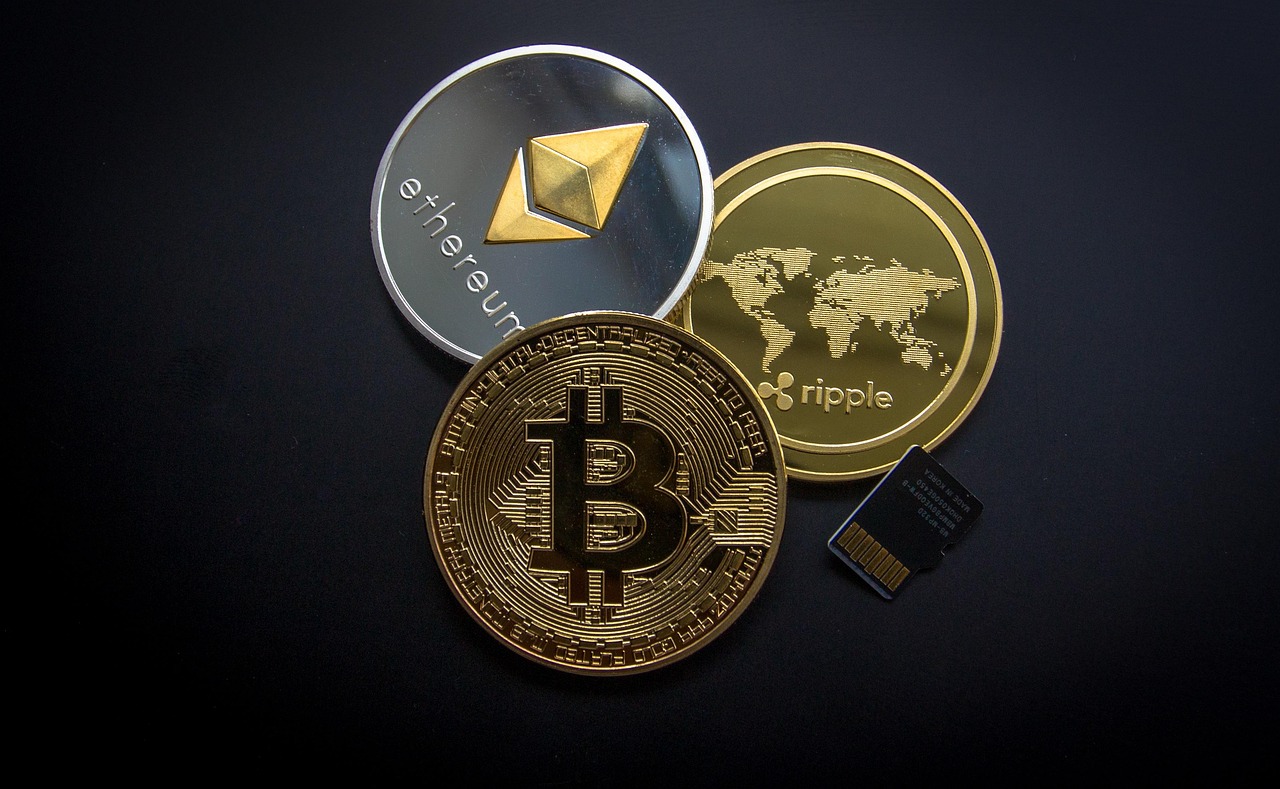
Washington: The U.S. Department of the Treasury’s Office of Foreign Assets Control (OFAC) today announced sanctions targeting Garantex, a Russian cryptocurrency exchange, its successor Grinex, three executives, and six affiliated entities in Russia and Kyrgyzstan. The measures, unveiled hours before a summit between United States President Donald Trump and Russian President Vladimir Putin on August 15, 2025, at Joint Base Elmendorf-Richardson in Anchorage, Alaska, address Garantex’s facilitation of over $100 million in illicit transactions since 2019, linked to ransomware, money laundering, and other cybercrimes. The Department of State bolstered these actions with rewards of up to $6 million, including $5 million for information leading to the arrest or conviction of Garantex executive Aleksandr Mira Serda and $1 million for other key leaders under its Transnational Organized Crime Rewards Program.
The sanctions’ timing, just before the Trump-Putin summit focused on the Ukraine conflict, suggests a strategic U.S. approach. The Anchorage venue, selected for its proximity to Russia and avoidance of International Criminal Court jurisdiction, facilitates high-level talks. The Treasury issued General License No. 125, authorising certain summit-related transactions, reflecting an intent to maintain diplomatic channels. Trump has described the summit as a “feel-out” session, warning of “severe consequences” like secondary sanctions if Putin does not engage constructively, while noting a 25% chance of failure. Putin, via Kremlin spokesperson Dmitry Peskov, confirmed no agreements are expected, but a joint press conference is planned for 1530 EST, with Putin praising Trump’s “sincere” efforts to end the war while prioritising sanctions relief.
The Garantex sanctions target Russia’s use of cryptocurrency to bypass Western restrictions, notably in trade with China and India, which have grown since 2022.
So, to what extent can the sanctions influence the summit? The $6 million rewards and prior actions, including the EU’s February 2025 sanctions and the March 2025 infrastructure takedown, have intensified economic pressure on Russia, contributing to inflation and a trade pivot toward Asia. This pressure could push Putin toward concessions, as sanctions have strained Russia’s economy, with a 20% ruble depreciation since early 2025. However, Putin’s consultations with China and India and his insistence on sanctions relief as a precondition for peace talks indicate potential resistance, which could complicate negotiations. USA’s European allies, wary of concessions undermining Ukraine, have urged stronger sanctions if no ceasefire is reached, aligning with the U.S. approach.
The Biden administration’s prior sanctions framework, which included over 4,000 designations since 2022, sets a precedent for using economic tools to influence Russia’s behaviour, a strategy Trump appears to continue. The Garantex sanctions may serve as leverage to press for de-escalation in Ukraine or risk escalating tensions if perceived as provocative, with analysts noting the summit’s outcome hinges on balancing these pressures against Putin’s need for diplomatic legitimacy.
The U.S. State Department notes that sanctions, including those on Garantex, have weakened Russia’s economy, with a 20% ruble depreciation in 2025 and increased reliance on Asian markets. The European Union (EU), which sanctioned Garantex in February 2025, has warned of further measures if Putin rejects a ceasefire, aligning with U.S. efforts to pressure Russia. The Washington-based Center for Strategic and International Studies (CSIS) suggests that such targeted sanctions strengthen U.S. leverage by highlighting Russia’s vulnerabilities, but Putin’s insistence on sanctions relief as a precondition could harden his stance, risking stalemate.
The Carnegie Endowment for International Peace notes that Russia views the summit as a diplomatic win, but new sanctions may signal U.S. resolve to maintain economic pressure, potentially pushing Putin toward concessions or prompting retaliatory rhetoric. The Treasury’s General License No. 125 indicates a pragmatic approach to keep talks viable, but the Garantex designations, following a March 2025 international operation, underscore ongoing U.S.-led efforts to disrupt Russia’s financial networks, which may shape discussions on Ukraine’s territorial disputes and ceasefire prospects. No unrelated administrative list updates were reported.
Garantex, registered in Estonia in November 2019 but operating primarily from Moscow and St. Petersburg, was re-designated under Executive Order 13694, as amended, for supporting cyber-enabled activities threatening U.S. national security, foreign policy, or economic stability. Between April 2019 and March 2025, Garantex processed at least $96 billion in cryptocurrency transactions, with over $100 million tied to illicit actors, including ransomware groups Conti, Black Basta, LockBit, NetWalker, Phoenix Cryptolocker, and Ryuk, and darknet markets. The exchange facilitated transactions for money launderer Ekaterina Zhdanova, designated by OFAC in November 2023. After losing its Estonian license in February 2022 for anti-money laundering deficiencies and facing OFAC sanctions in April 2022 under Executive Order 14024, Garantex developed infrastructure to obscure wallet addresses, sustaining operations.
On March 6, 2025, the U.S. Secret Service, with German and Finnish law enforcement, seized Garantex’s web domain and froze $26 million in cryptocurrency. On March 7, 2025, the Department of Justice unsealed indictments against executives Aleksandr Mira Serda (born May 31, 1984, dual Russian-Ghanaian nationality) and Aleksej Besciokov, with Besciokov arrested in India. Garantex employees then established Grinex, designated today under Executive Order 13694 for being owned or controlled by Garantex, to transfer customer funds using the A7A5 token, a ruble-backed digital asset issued by Kyrgyzstani firm Old Vector LLC to offset losses from the March disruptions. Grinex has facilitated billions in transactions since its inception.
OFAC designated three Garantex executives: Sergey Mendeleev (born November 2, 1976), a co-founder; Aleksandr Mira Serda, a co-owner and chief commercial officer; and Pavel Karavatsky (born January 25, 1983), a co-owner and regional director, all for acting on behalf of Garantex. Six entities were sanctioned under Ukraine-/Russia-Related Sanctions Regulations: A7 Limited Liability Company (established September 2, 2024, Moscow), A71 Limited Liability Company and A7 Agent Limited Liability Company (both established September 26, 2024, Moscow), Old Vector LLC (established December 13, 2024, Kyrgyzstan), Exved (established December 7, 2023, Russia), and Independent Decentralized Finance Smartbank and Ecosystem (InDeFi Smartbank, established 2020, Russia). These entities supported Garantex’s sanctions evasion or provided related financial services.
Under Secretary of the Treasury for Terrorism and Financial Intelligence John K. Hurley stated that the sanctions aim to safeguard the digital asset industry from exploitation by cybercriminals and sanctions evaders. The designations align with prior OFAC actions against exchanges like SUEX, Chatex, Bitpapa, NetEx24, AWEX, Cryptex, and PM2BTC.
– global bihari bureau