 By Vivekanand Jha*
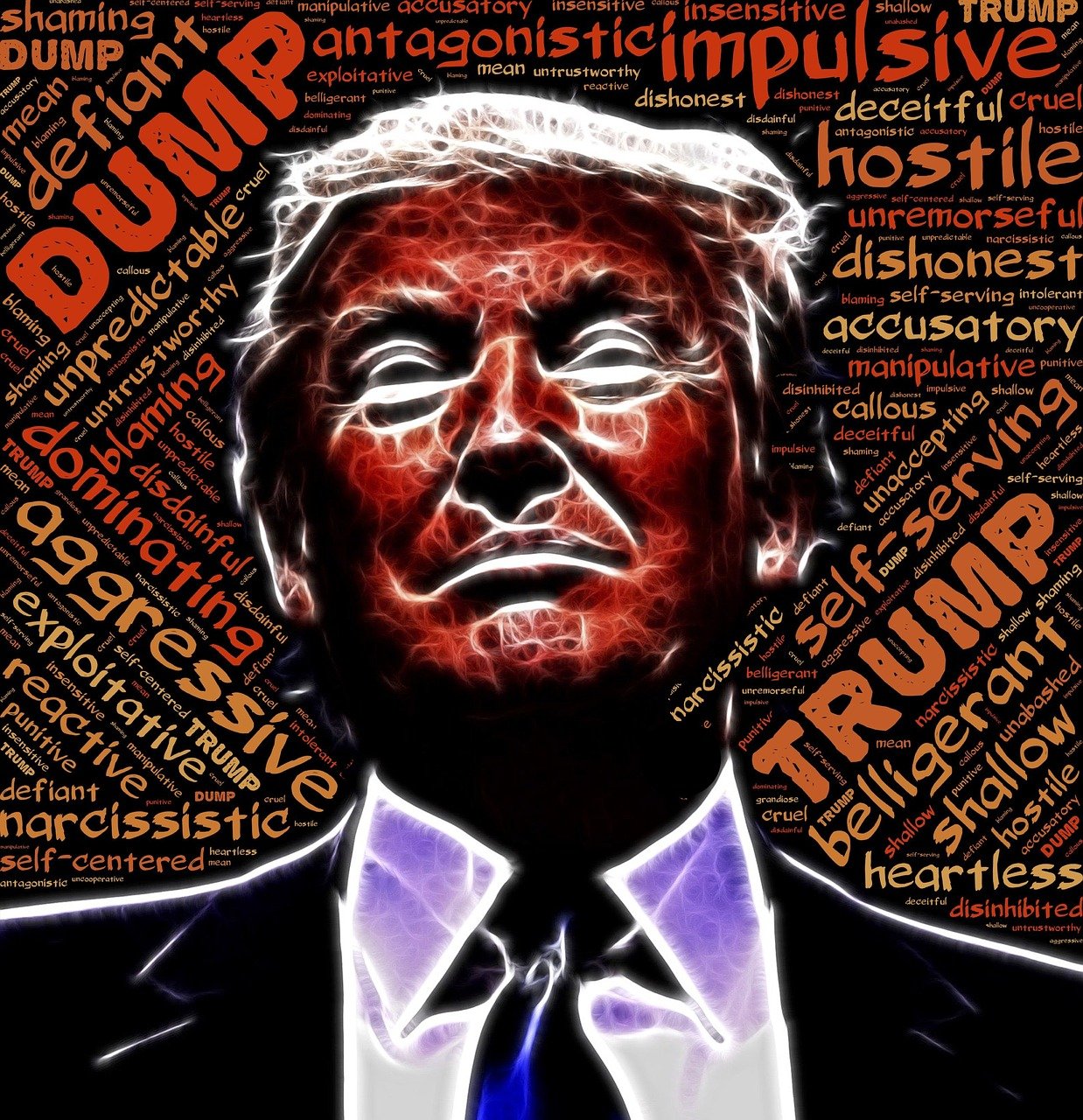
United States of America’s President Donald Trump’s provocative rhetoric has cast a shadow over India-US relations, with his recent statements escalating tensions.
In a post on X, @realDonaldTrump mocked, “Who knows Pakistan may be selling oil to India one day,” while further dismissing India and Russia’s economic ties with a dismissive quip: “They can take their dead economies down together for all I care.” These remarks signal a confrontational stance, undermining India’s diplomatic efforts and economic aspirations on the global stage.
As India navigates this turbulent landscape, with most of the Opposition parties, except the Leader of the Opposition, Rahul Gandhi, slamming Trump’s offensive statements, the echoes of past diplomatic challenges resonate, setting the stage for a critical examination of its leaders’ responses to international pressures.
India’s moving into the orbit of graduating into the world’s fourth largest economy– even though its per capita income is significantly low–it poses a direct threat to China in the short run, and the USA in the long, resulting in USA’s current bombshell: the raising of tariff to 25 percent India’s purchasing crude oil from Russia. However, in reality, it is to hobble India’s onward economic march, tantamount to bridling India’s economy, derailing it from its moorings.
Little wonder then, the latest imposition of tariffs by the USA throws a direct gauntlet at Narendra Modi from his “friend” Donald Trump, to whom Modi had overstepped the Laxman Rekha, by giving a clarion call, ‘Abkibar Trump Sarkar‘. The slogan has boomeranged on him. Modi’s diplomatic Agnipariksha awaits him, for he could seldom afford jettisoning Russian President Vladimir Putin, for Trump, who, as time passes, increasingly proves himself an untrustworthy fellow clamouring for the Nobel Peace Prize.
The challenges Modi faces today are not without historical precedent, as India’s leaders have long grappled with navigating complex international relations. Decades earlier, another Indian prime minister confronted a similarly dismissive US stance, yet managed to carve a path forward through resolute diplomacy.
Writing one of the finest books on diplomacy, The White House Years, in 1979, Henry Kissinger had emphasised the red lines in international relations and world diplomacy, where he had objectively analysed the tenure of President Richard Nixon in the White House. President Nixon, as it is a well-known fact, was negatively disposed towards Indira Gandhi, the then Prime Minister of India. She had sought an appointment with Nixon in the White House, with an obvious intent to discuss the volcanic scenario erupting in East Pakistan, the current Bangladesh. Significantly, Indira had sought US support to extinguish the fire which had been raging in East Pakistan, on humanitarian grounds: East Pakistan was smouldering, with the naked brutality and barbarianism imposed upon the populace by the Pakistani Army, to suppress the voice of independence emanating from there.
Indira Gandhi had seriously wished that US interference or its neutrality, without taking sides, was the best option to deal with the emerging scenario in East Pakistan. Richard Nixon had introduced his whimsicality in dealing with an international issue, which sought an objective analysis far nuanced in its approach, rather than falling victim to personal whims and fancy. Indira’s subsequent waiting in the White House, yet Nixon’s exhibition of prejudiced mindset, keeping her waiting, and finally, even though he had a cursory meeting with the Indian Prime Minister, nonetheless the rancourous attitude was ostensible from the scratch: Nixon’s pre-conceived mindset to torpedo Indira’s humanitarian perspectives to insulate the people of East Pakistan from the ongoing unleashing of violence, by an immediate military intervention, far from resonating with Nixon, had paranoid rebuttal from his end.
The meeting, which began with a whimper, finally ended in a cul-de-sac. Interestingly, Henry Kissinger, the then Secretary of State, a world-class diplomat as he was, thoroughly resented Nixon’s undiplomatic mannerisms, which Nixon had invested in dealing with Indira. Nixon’s antithetical mindset towards the Indian Prime Minister becomes all the more apparent – if Henry Kissinger is to be believed – the hurling of such invectives as ‘that witch’, beggars belief that everything was hunky dory in Nixon’s diplomatic manoeuvres.
Little wonder then, the USA, notwithstanding its misadventure in sending its 7th fleet, USS Enterprise, an aircraft carrier, to confront India if it sought to usurp the existing regional balance by interfering in Pakistan’s domestic affairs. However, this Machiavellian agenda of Nixon found its antidote in the Soviet Union, which deployed its warships in the Indian Ocean to counter any American misadventure. Be that as it may, Henry Kissinger had sought to put the facts in perspective when, exhibiting the sense of an underlying objectivity, he had only blamed Nixon, while praising Indira for all her grit and determination to ensure that humanity does not fall victim to the Pakistani military’s shenanigans.
While Indira’s era showcased resilience against personal biases, subsequent Indian leadership faced different but equally daunting challenges. The transition to the late 1990s brought new tests, as India sought to assert its strategic autonomy under global scrutiny.
Decades down the line, India under Atal Behari Vajpayee too faced the monumental challenge emerging from the USA’s imposing sanctions upon India, in the immediate aftermath of its conducting nuclear tests in Pokhran in the year 1998. The Vajpayee government was overwhelmingly strained when it had to negotiate with the ensuing volatility emanating from the series of sanctions from the USA and Europe.
Thus, Vajpayee, exhibiting the political masterstroke, penned one of the most facile letters ever written by the head of state – to his counterpart. Significantly, writing a letter to Bill Clinton, Vajpayee demonstrated his diplomatic depth, almost symptomatic of that of Bismarckian Vision, when he sought to highlight India’s stupendous concerns engendered by a powerful neighbour who is already a nuclear power and, therefore, poses a potential threat to India. Irreversibly, Atal Bihari Vajpayee was insinuating China, without explicitly mentioning its name.
Vajpayee was seeking to de-hyphenate India-Pakistan, while underscoring a new equation of India-China on the horizon of Asia. This is where Vajpayee had scored the brownie points – India had hitherto broken the jinx: it sought to elevate its stature and standing by equating itself with China, giving a decent burial to its hitherto fixation with Pakistan. A new diplomatic masterstroke of Bismarckian type: to de-hyphenate India from Pakistan, presuming the latter to be inconsequential, and seeking a fresh equation with the nation that genuinely matters.
China, the Asian giant, condescendingly disapproved of any such equation with any country, which it considered a far lesser nation, as it envisaged only its parallelism with the USA. Thus, Vajpayee’s drawing parallelism with China, notwithstanding the latter’s scoff and annoyance, significantly sought a new Indian focus towards dragons who were making rapid strides towards progressivism, to replace the USA as the next superpower. The several rounds of dialogues ensuing between Jaswant Singh, the then foreign minister, and Strobe Talbott, the Deputy Secretary of State, culminated in the rollback of a series of sanctions, although in gradual phases. Significantly, Vajpayee withstood the test of time through patience and perseverance in the face of adversity. India survived the crisis with a bang.
India’s diplomatic journey, from Indira Gandhi’s resolute stand against Nixon’s prejudices to Vajpayee’s strategic reorientation towards China, underscores a legacy of navigating complex global pressures with tenacity and vision. Today, as Modi faces the dual challenges of US tariffs and China’s aggressive posturing, he stands at a critical juncture. Here it may be pointed out that the famous “Howdy Modi” event in Houston in the United States of America (USA) was a bolt from the blue, where Indian Prime Minister Narendra Modi went overboard to appease the then-US President Donald Trump. Surprisingly, the Indian Prime Minister, notwithstanding India’s strategic symbiotism with the USA, interfered in US domestic policy: ‘Abki bar Trump Sarkar‘, an unwarranted slogan, whereas it sought to exhibit Modi’s courting of Trump in the most obsequious fashion, it unequivocally subordinated India to USA, as it was ostensible to one and all that Modi was going berserk to court a superior power, while subjugating himself to Trump’s persona. This was a bad diplomatic manoeuvre which, far from establishing India as an equal partner to the USA, irrefutably subjugated India to being a vasal state of the USA. Narendra Modi, much like an entertaining Rock Star, had gone to entertain the crowd in the best possible ways he could, where the spirit of diplomacy was completely amiss. Also, Modi’s burst of exuberance in hosting “Namaste Trump” event in Ahmedabad, in 2020, where Corona protocol too was put to abeyance, was more to please his so-called “personal friend” Trump, rather than focussing on advancing India’s strategic interest, for the cornerstone of international relations cannot be premised on avuncular hugs as the raison d’etre and summum bonum of real time hard diplomacy, which is institutionalised based on quid pro quo.
This pattern of prioritising personal rapport over strategic interests has not gone unchallenged, as global powers react to India’s rising economic clout. The current US administration’s policies, coupled with China’s aggressive manoeuvres, highlight the delicate balance India must strike to safeguard its economic and diplomatic trajectory.
The latest imposition of the unconscionable level of tariff of 25 per cent on Indian exports to the USA, tantamount to breaking the backbone of the Indian economy, which purportedly gives the semblance of a global ascendancy when other advanced economies are faltering. India’s economic rise, which poses challenges to China and the USA too, can seldom be tolerated by the aforesaid powers, whereas China’s villainous role in denying India the rare earth materials in the past was an instance of the dragon going all out to stop India’s economic juggernaut from marching ahead. It’s a diabolical plan to build the world’s largest dam in Tibet to contain the waters of the Brahmaputra, bearing a living witness to the fact that China will go to any extent to stop India’s economic prosperity.
Hence, against the backdrop, Modi’s Vajpayee moment confronts him today as to how he deftly negotiates the twin pressure from Uncle Sam and the dragon to avoid the Indian economy getting derailed.
The lessons of the past—Indira’s unwavering commitment to humanitarian principles and Vajpayee’s deft recalibration of India’s global image—offer a roadmap for Modi to steer India through this storm. By prioritising strategic autonomy over personal diplomacy and balancing relations with Russia, the US, and China, Modi has the opportunity to redefine India’s global stature. The path forward demands not just resilience but a bold reassertion of India’s economic and diplomatic sovereignty, ensuring that its rise as a global power remains unhindered by external machinations.
*Vivekanand Jha is an Author, Academician and a Public Intellectual.