Photo courtesy: @ali_naka|X
Ukraine Stands Firm, Trump Faces Summit Setback
Washington: U.S. President Donald Trump and Ukrainian President Volodymyr Zelenskyy concluded a series of White House meetings on August 18, 2025, without securing a ceasefire, peace agreement, or territorial resolutions in the Russia-Ukraine war. Both, however, expressed optimism about pursuing trilateral talks with Russian President Vladimir Putin to advance negotiations.
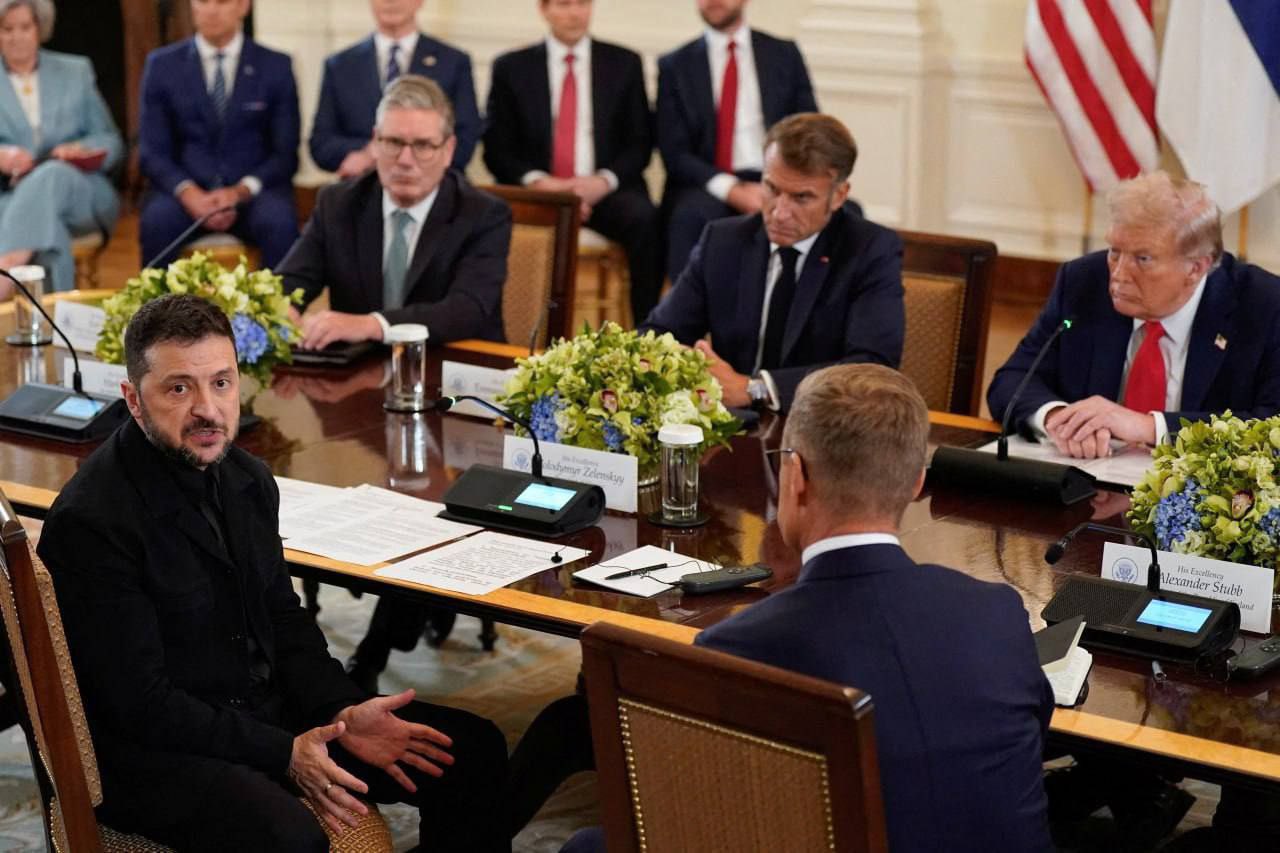
The day’s discussions, comprising a bilateral Oval Office session at 1:15 p.m. EDT and a multilateral East Room meeting at 3:00 p.m. EDT with European leaders, focused on security guarantees for Ukraine and diplomatic pathways to end the conflict. Trump highlighted a “reasonable chance” of ending the war through a trilateral format, hoping Russia might release over 1,000 Ukrainian prisoners as a goodwill gesture post-meeting.
The talks, attended by European leaders invited by Trump, underscored a united front for Ukraine’s sovereignty, though Russian drone strikes on Kharkiv that day, killing seven, including two children, highlighted Moscow’s ongoing aggression, condemned by Ukraine’s Foreign Minister Andrii Sybiha as undermining diplomacy.
Zelenskyy described the talks as his “best” with Trump, a stark improvement from their tense February 2025 meeting, thanking him for the invitation and U.S. First Lady Melania Trump’s letter to Putin on abducted Ukrainian children. He rejected Trump’s proposals to cede Crimea or Donbas or abandon NATO aspirations, citing Ukraine’s Constitution, which mandates a referendum for territorial changes and prohibits concessions under duress.
Insisting Russia, as the aggressor, must end the war, Zelenskyy called for a ceasefire to enable substantive negotiations and strongly endorsed trilateral talks with Trump and Putin, seeing the format as critical to positioning Ukraine as a central decision-maker, preventing U.S.-Russia bilateral deals from sidelining Kyiv as occurred during Trump’s August 15, 2025, Alaska summit with Putin. He noted U.S. envoy Steve Witkoff’s indication of Russia’s openness to NATO-like security guarantees, though specifics were vague, and stressed talks should start along current front lines, with territorial issues addressed directly among leaders.
Preparations for the summit were extensive: on August 17 in Brussels, Zelenskyy joined the seventh Coalition of the Willing meeting, co-chaired by French President Emmanuel Macron, U.K. Prime Minister Keir Starmer, and German Chancellor Friedrich Merz, with leaders from Finland, Lithuania, Romania, Cyprus, Japan, Italy, Norway, Denmark, Estonia, Canada, Ireland, Latvia, Australia, Luxembourg, the Netherlands, Portugal, Croatia, Sweden, Austria, Belgium, Bulgaria, the Czech Republic, Iceland, Montenegro, Türkiye, the EU, and NATO. They affirmed Ukraine’s sovereignty, rejected forced border changes, and supported practical security guarantees for land, air, and sea.
In a preparatory Brussels meeting with European Commission President Ursula von der Leyen ahead of the Trump talks, Zelenskyy emphasized European unity akin to 2022 levels, a ceasefire to address Russia’s demands without weapon pressure, NATO-style protections, a strong Ukrainian military, and EU membership, while von der Leyen pledged sustained EU support, discussed a 19th sanctions package against Russia for September, and aid for Ukraine’s school meal programme. On August 18, Zelenskyy met U.S. Special Presidential Envoy Keith Kellogg at the Ukrainian Embassy and European leaders in Washington to align positions, reinforcing U.S.-European collaboration.
Trump called the meetings “very important,” pledging “very good protection” for Ukraine without detailing commitments like troop deployments or Article 5 equivalents. He retreated from pushing an immediate ceasefire, citing strategic concerns, but planned to call Putin to organise trilateral talks, expressing confidence in Russia’s engagement based on Alaska summit concessions.
Trump hoped a prisoner release could spur progress, while reiterating social media calls for Ukraine to relinquish Crimea and NATO ambitions, aligning with Russian demands, and blaming Zelenskyy for prolongation if concessions are withheld.
European leaders, including Macron, Starmer, Merz, Italian Prime Minister Giorgia Meloni, Finnish President Alexander Stubb, von der Leyen, and NATO Secretary General Mark Rutte, praised Trump’s mediation but urged no concessions undermining Ukraine’s sovereignty.
Macron and Merz pushed for a ceasefire, Meloni saw Russia’s dialogue readiness as driven by battlefield stalemate and Western support, Starmer stressed a “fair and just” peace, and Rutte expressed excitement for prospects. Their presence ensured Zelenskyy faced no pressure to accept unfavourable terms.
Trump’s diplomatic push yields mixed views: supporters see it as a success in convening stakeholders post-Alaska, positioning the U.S. as a mediator and raising trilateral and prisoner release prospects, while critics note a lack of concrete agreements, marking a challenge after the inconclusive Alaska summit, with Zelenskyy’s rejections limiting Trump’s leverage and risking deals favoring Moscow.
The war leans toward intensified diplomacy, with trilateral talks offering a path to address security, prisoners, and a ceasefire, but gaps persist: Ukraine and Europe demand no forced concessions and enforceable guarantees, while Russia insists on neutrality and annexed territories.
Parallel Russian efforts saw Putin brief leaders like India’s Narendra Modi, Brazil’s Luiz Inácio Lula da Silva, South Africa’s Cyril Ramaphosa, Tajikistan’s Emomali Rahmon, Kyrgyzstan’s Sadyr Japarov, Belarus’s Alexander Lukashenko, and Kazakhstan’s Kassym-Jomart Tokayev on Alaska outcomes, agreeing to ongoing dialogue, with Putin offering condolences for India’s floods.
Russian Foreign Ministry spokesperson Maria Zakharova criticised British proposals for post-ceasefire Western troop deployments as provocative, accusing London of prolonging bloodshed and rejecting NATO contingents to avoid escalation.
Without swift progress, the conflict risks freezing or intensifying, though U.S.-European coordination and sanctions pressure offer cautious hope for stability.
– global bihari bureau