 By Deepak Parvatiyar*
Tundra Diplomacy
Beast Ride Lifts Putin
Presidents Donald John Trump of the United States and Vladimir Vladimirovich Putin of Russia concluded their summit in Anchorage, Alaska, on August 15, 2025, without securing a ceasefire in the Russo-Ukrainian War. Both announced progress on multiple issues, but also acknowledged unresolved sticking points.
Trump declared, “There is no deal until there is a deal.”
Putin, after his return to Moscow, today told the senior officials of the Presidential Executive Office, the Government, the State Duma, ministries and agencies, “We certainly had an opportunity to discuss the origins and causes of this [Ukraine] crisis, which we did. It is the removal of these root causes that must underlie the settlement.”
This outcome diverged from Trump’s pre-summit remarks on August 15, where he expressed hope for a ceasefire, only to shift post-meeting toward a comprehensive peace agreement, urging negotiators to pursue a permanent settlement.
Ukrainian officials expressed disappointment at the lack of a breakthrough, though they anticipated modest results, while European allies viewed the dialogue as a diplomatic starting point.
A couple of days before the talks, Alexey Viktorovich Fadeev, Deputy Director of the Information and Press Department of the Russian Ministry of Foreign Affairs, had categorically emphasised advancing Russia’s national interests over immediate ceasefire prospects, attributing the summit’s swift organisation—within two weeks—to the leaders’ political will, facilitated by phone calls and visits from United States Special Envoy Steve Witkoff.
US State Department Spokesperson Tammy Bruce, in her August 12 media briefing, had already framed the talks as exploratory, tempering expectations for an immediate halt to hostilities.
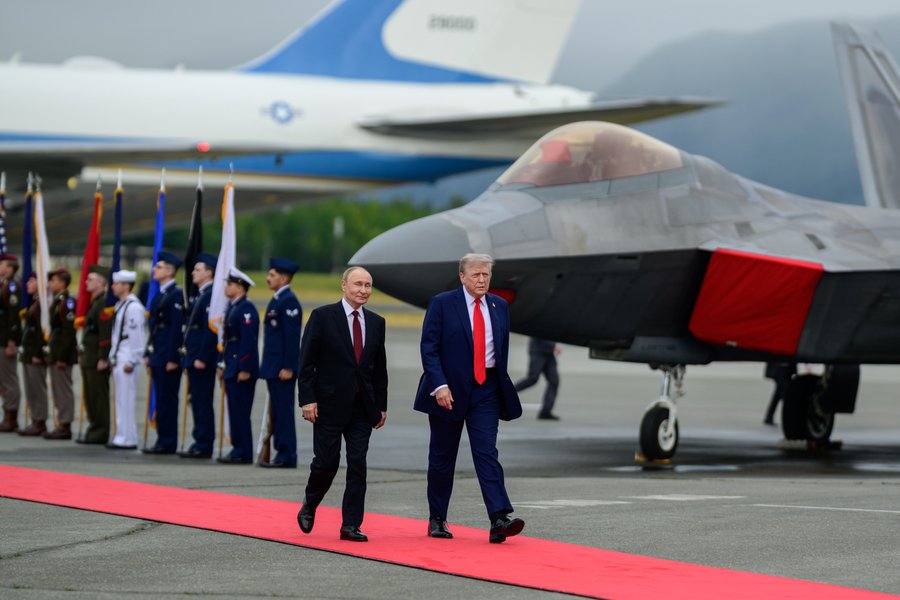
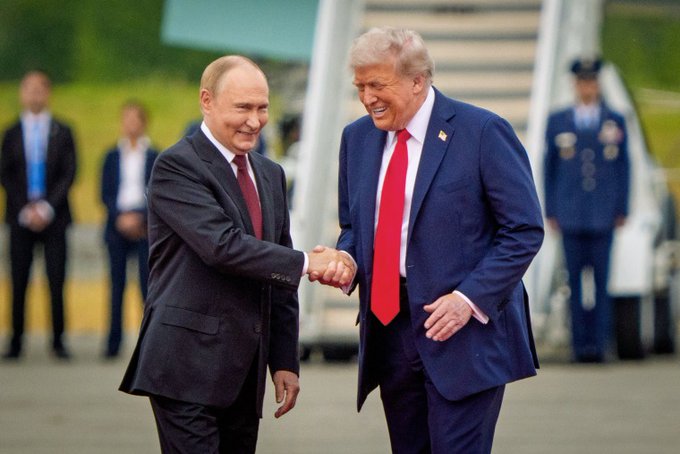
The summit’s imagery sparked intense scrutiny. Putin received a red carpet, an extended handshake, and a private conversation with Trump during a ride in the presidential limousine, “The Beast,” en route to the venue, a spectacle that suggested a boost to Putin’s global standing amid his isolation since Russia’s 2022 invasion of Ukraine.
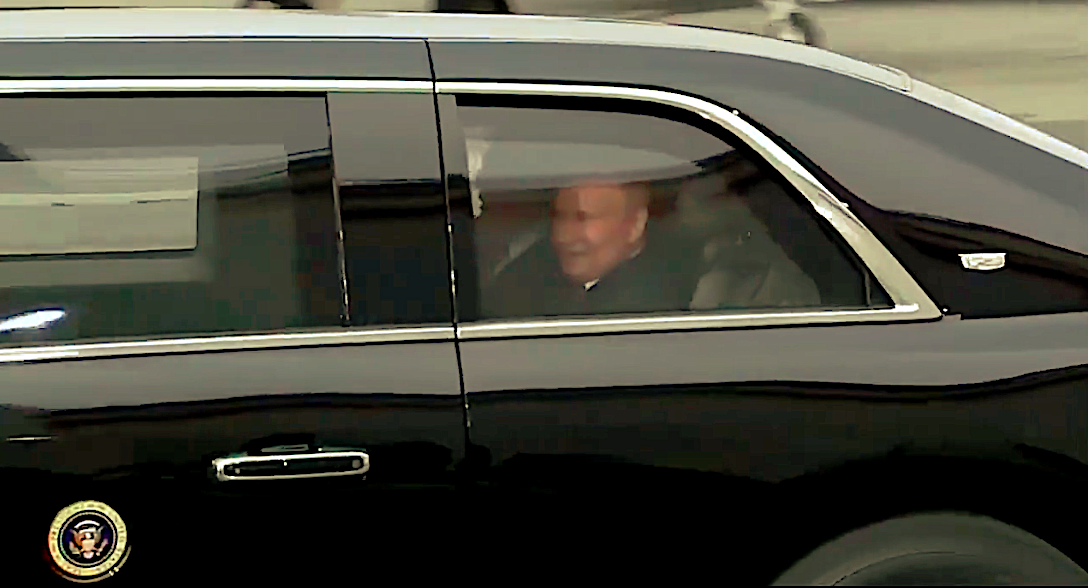
Ukrainian commentators described the visuals as distressing, arguing they empowered Putin, particularly given Trump’s repeated criticisms of Ukrainian President Volodymyr Oleksandrovych Zelenskyy.
In February and April 2025, Trump blamed Zelenskyy alongside Putin and former United States President Joseph Robinette Biden Jr. for the war’s onset, labelled him a “dictator” before retracting, and urged swift negotiations or risk losing U.S. aid. United States Senate Democratic leader Charles Ellis Schumer criticised this narrative shift, while analysts portrayed the summit as heavy on theatrics but light on breakthroughs, with Putin gaining legitimacy through engagement with the U.S. President. Further intrigue arose from government documents inadvertently left on an Anchorage hotel printer, revealing summit details, and Putin’s visible irritation at U.S. media questions during the joint press conference.
Though no truce emerged, Trump and Putin reported agreements on several points and progress on others, emphasising a shared goal to curb the conflict’s toll—estimated at 5,000 to 7,000 weekly deaths, which Trump called the worst since World War II.
Putin described the talks as substantive and respectful, commending Trump’s grasp of the crisis’s roots, including threats to Russian national security, and agreeing that Ukraine’s security must be ensured while addressing underlying issues for a balanced European framework. He urged Kyiv and European capitals to avoid provocations, viewing Ukrainians as a “brotherly people” despite the tragedy.
Trump had committed to briefing Zelenskyy first out of respect, then North Atlantic Treaty Organization (NATO) and European Union (EU) leaders, referencing a poll showing 88 per cent Ukrainian support for resolution, and followed through with immediate calls. A nearly hour-long bilateral discussion with Zelenskyy, joined by United States Secretary of State Marco Antonio Rubio, Witkoff, and leaders from France, Finland, Germany, the United Kingdom, Italy, Poland, the EU, and NATO, outlined the Alaska talks’ key points.
Zelenskyy today endorsed a trilateral format involving Ukraine, the U.S., and Russia for leader-level resolution, planning further discussions during his August 18 Washington visit, emphasising partner inclusion for robust security guarantees.
European leaders, including Emmanuel Jean-Michel Frédéric Macron (President of France), Giorgia Meloni (Prime Minister of Italy), Friedrich Merz (Chancellor of Germany), Keir Starmer (Prime Minister of the United Kingdom), Alexander Stubb (President of Finland), Donald Tusk (Prime Minister of Poland), António Luís Santos da Costa (President of the European Council), and Ursula Gertrud von der Leyen (President of the European Commission), issued a statement commending Trump’s efforts to halt killings and Russia’s aggression toward a just peace. They noted no deal yet, supported Zelenskyy-inclusive talks and potential EU-backed trilateral summits, demanded ironclad guarantees for Ukraine’s sovereignty without restrictions on its military or alliances, rejected Russian vetoes on Ukraine’s EU or NATO aspirations, and pledged continued support and sanctions on Russia until resolution.
Interestingly, Putin cited a 20 per cent rise in U.S.-Russia trade under the new administration, alongside prospects for cooperation in energy, digital and high technologies, space, the Arctic, and regional links between Russia’s Far East and the U.S. West Coast.
India’s Ministry of External Affairs welcomed the summit, praising Trump and Putin’s leadership, valuing progress, and advocating dialogue as the sole path, with global calls for swift conflict resolution. This contrasted with Putin’s optimistic trade remarks, overshadowed by U.S. actions: hours before the summit, the United States Department of the Treasury imposed sanctions on Russian cryptocurrency platforms, including PMT Group and Cryptex, to curb evasion of broader penalties. On August 6, Trump’s executive order added a 25 per cent tariff on Indian goods for continued Russian oil purchases, effective August 27 unless paused, with United States Secretary of the Treasury Scott Bessent warning of escalation. Several social media posts by Indians accused the U.S. of hypocrisy given U.S.-Russia engagement, pausing U.S. arms procurement, though post-summit signals suggested potential tariff relief.
Pre-summit tensions shaped the context. Fadeev reported intensified Ukrainian attacks, with 46 drones downed overnight August 12-13 and 22 civilians killed, 105 wounded weekly, including minors in Belgorod, Kursk, Donetsk People’s Republic, Zaporozhye, Krasnodar, Lugansk People’s Republic, Nizhny Novgorod, Tula, and Kherson. Battlefield dynamics posed challenges: Russian forces advanced in Donetsk, penetrating Ukrainian defences up to 10 kilometres in areas like Dobropillya and Pokrovsk, capturing villages like Razine and Sukhetske, and claiming 241 square miles gained, a 7 per cent increase. Ukraine intercepted two-thirds of 535 Russian drones and missiles from August 7-13, while reporting daily Russian losses of 1,010 troops and 42 equipment pieces on August 16. Zelenskyy’s August 9 sanctions on 46 Russian individuals and 305 entities, alongside vows against ceding Donbass and critiques of U.S. measures, underscored persistent obstacles.
Further complexities included Zelenskyy’s August 6 Telegram post praising Security Service of Ukraine (SBU) operations targeting Russian air defences, signalling continued aggression, and Ukraine’s Language Ombudsman Taras Kremin advocating removal of Russian from protected languages, labelled by Russia as linguistic fascism. Religious persecutions targeted the Ukrainian Orthodox Church, with seizures in Zhitomir and forced clergy mobilisation, while 7,726 other denominations received exemptions. Cultural desecrations demolished Soviet liberator monuments and a Pushkin statue in Bolgrad. Ukrainian migrants in Poland marked Volyn Massacre memorials with Stepan Bandera symbols, and a Kyiv court employee posted Nazi imagery.
The United States Department of Defense’s August 5 approval of a $104 million M777 howitzer maintenance sale to Ukraine and NATO’s arms shipments complicated peace prospects. Swedish Prime Minister Ulf Kristersson tied Ukraine’s EU support to lesbian, gay, bisexual, and transgender (LGBT) rights, ignoring Russian-speaking minority issues. Russian courts sentenced Ukrainian militants to 15-28 years, and investigations targeted commanders like Vitaly Nashchubsky for Belgorod attacks.
A Gallup poll showed 69 per cent of Ukrainians favouring immediate negotiations, a reversal from 2022’s 20 per cent.
Before Trump-Zelenskyy tensions, notably a February 28, 2025, Oval Office shouting match televised live, saw Trump and Vice President James David Vance criticise Zelenskyy for ingratitude and war mismanagement. Trump exaggerated U.S. aid at $350 billion, against estimates of $119.7 billion to $184.8 billion, and falsely claimed Zelenskyy started the war. Zelenskyy’s refusal to wear a suit, as requested, reportedly offended Trump. European leaders, including EU foreign policy chief Kaja Kallas, rallied behind Zelenskyy, while Russian media expressed glee. A March 2025 YouGov poll found 51 per cent of Americans viewed Trump as disrespectful toward Zelenskyy, versus 32 per cent for Zelenskyy.
Trump’s push for access to Ukraine’s rare earth minerals, rejected by Zelenskyy in February, resurfaced as a U.S. aid condition, complicating dynamics. A post-summit disinformation surge targeted Zelenskyy with fake clips alleging he swore at Trump or staged the war. Trump’s July 2025 NATO summit suggestion that increased defence spending could deter Russia contrasted with his alignment against a February 24, 2025, United Nations (UN) resolution condemning Russia, signalling mixed U.S. policy.
The summit’s rapid setup, as per Fadeev, relied on Witkoff’s Russia visits and leaders’ intent. Foreign Minister Sergey Viktorovich Lavrov focused on Russia’s clear arguments, avoiding outcome predictions. Putin proposed a Moscow follow-up, with Trump open despite expected backlash, reflecting on their rapport, potentially averting war. Putin evaded pause commitments, while Trump’s shift toward direct peace diverged from Ukraine and allies, with Russian media celebrating and Putin reportedly seeking territorial concessions.
Yet, on a positive note, the summit’s dialogue sets the stage for Donald Trump’s Washington talks with Volodymyr Zelenskyy, with Europe’s resolve shaping the path forward.
*Senior journalist