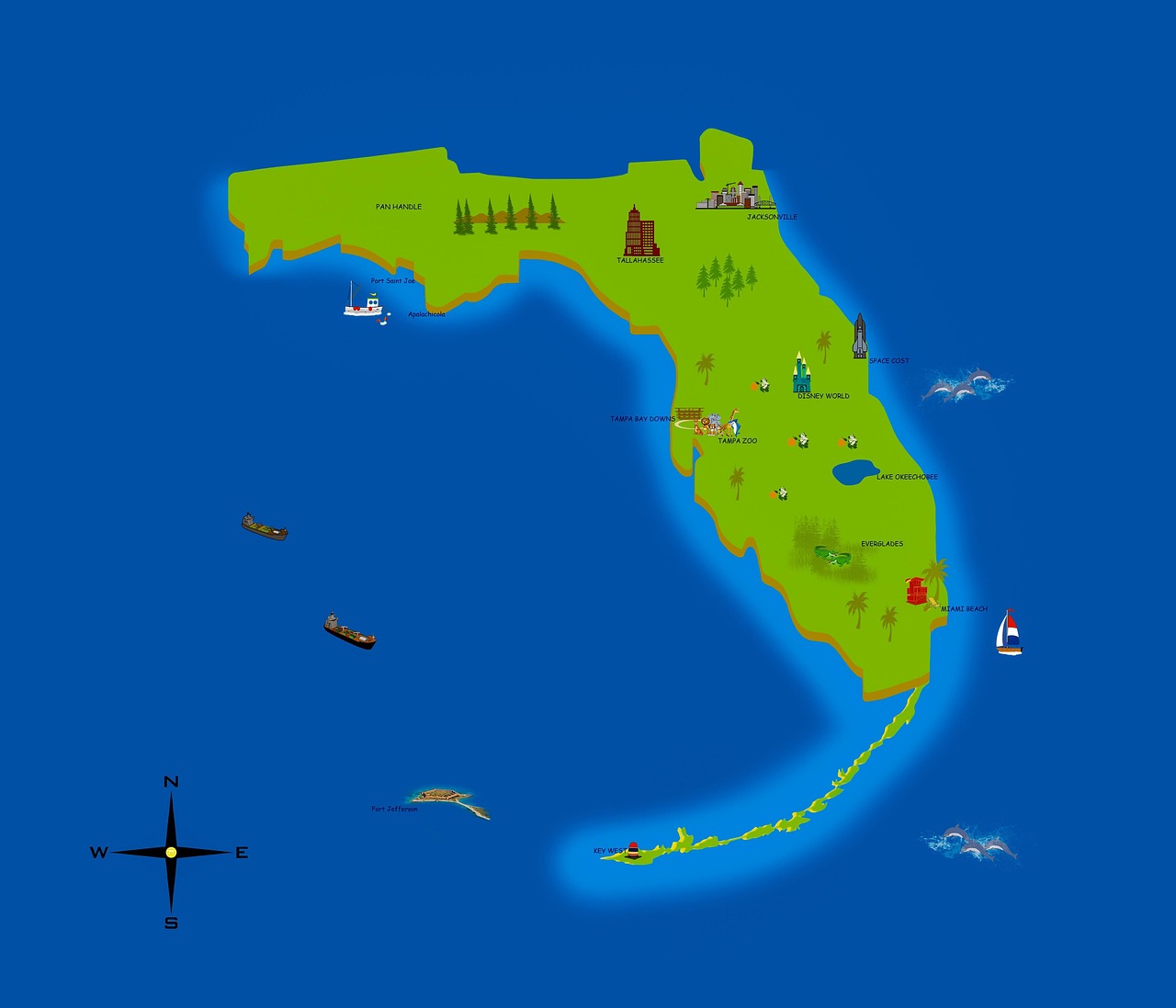
Florida Map
Shield of the Americas Security Summit Signals New U.S. Regional Strategy
Doral Summit Advances Regional Security Plan
Florida: The United States will host the inaugural Shield of the Americas Summit on March 7, 2026, in Doral, Florida, formally launching a new hemispheric security initiative designed to strengthen cooperation on border security, counter-narcotics efforts, migration management and resistance to foreign interference across the Western Hemisphere.
President Donald J. Trump will participate in the summit alongside Secretary of State Marco Rubio, according to the official announcement issued by the U.S. Department of State. The gathering will bring together leaders from Latin America and the Caribbean, described by Washington as like-minded partners committed to advancing regional stability, economic prosperity and coordinated action against transnational threats.
The initiative, presented as the Shield of the Americas framework, seeks to build structured cooperation among participating governments to confront criminal cartels, narco-terrorist networks and organised trafficking operations that operate across national borders. U.S. officials have said the summit will focus on enhanced intelligence sharing, joint enforcement strategies, maritime coordination and closer collaboration among law-enforcement and border agencies.
According to a statement released by the U.S. Department of Homeland Security’s Office of Public Affairs, President Trump has appointed former Secretary of Homeland Security Kristi Noem as Special Envoy for the Shield of the Americas – Western Hemisphere, asking her to continue her work in a new diplomatic capacity focused on regional security coordination.
The appointment follows a cabinet reshuffle announced on March 5 in which Trump removed Noem from the position of Secretary of Homeland Security and nominated U.S. Senator Markwayne Mullin of Oklahoma as her successor, with the transition expected later in March.
In the statement, the Department of Homeland Security described Noem’s tenure as the most successful period in the agency’s history and credited the administration with significant security initiatives undertaken during that period. In remarks released by the department, Noem thanked the president for the appointment and said she looked forward to working with Secretary of State Marco Rubio and other senior officials to dismantle criminal networks responsible for drug trafficking and other transnational threats affecting the region.
“The Western Hemisphere is absolutely critical for U.S. security,” Noem said in the statement, adding that the new role would allow her to build on partnerships and national security experience developed during her time at the Department of Homeland Security.
The department’s statement also outlined a broad series of initiatives carried out during her tenure, ranging from border enforcement and counter-narcotics operations to disaster response reform and transportation security programs. According to the department, enforcement agencies recorded historically low border crossing figures, expanded drug seizures, and carried out large-scale enforcement operations targeting criminal networks and trafficking organisations.
Department figures cited in the statement said more than three million undocumented migrants had left the United States during the period through deportations and voluntary departures, while immigration authorities carried out extensive operations targeting criminal groups, including transnational gangs. Federal agencies also reported locating more than 145,000 unaccompanied migrant children who had been previously unaccounted for during earlier immigration processing periods.
The Department of Homeland Security further pointed to changes across multiple agencies, including initiatives affecting the Transportation Security Administration, the United States Coast Guard, the Federal Emergency Management Agency, the Cybersecurity and Infrastructure Security Agency and the Secret Service. These programs, the statement said, involved efforts to modernise travel security procedures, strengthen maritime enforcement, reform federal disaster assistance, enhance cybersecurity coordination and expand law enforcement training programs.
Homeland security officials also highlighted expanded law-enforcement training initiatives at the Federal Law Enforcement Training Centres, intelligence coordination activities designed to counter transnational threats, and disaster recovery funding directed toward communities affected by severe storms, hurricanes and flooding across multiple states.
The administration’s homeland security agencies additionally pointed to preparations for large international events such as the 2026 FIFA World Cup, for which the Department of Homeland Security has established coordination structures intended to support security planning for the tournament’s matches and related events across the United States.
While the homeland security statement focused primarily on domestic security measures, the new envoy role links those initiatives to the broader Shield of the Americas effort aimed at strengthening cooperation among governments in the Western Hemisphere.
Beyond counter-crime measures, the discussions are expected to address irregular migration flows affecting multiple countries in the region. Washington has indicated that the framework may include improved coordination on information exchange, disruption of smuggling networks and mechanisms to support lawful migration management. Officials also describe the initiative as part of a broader effort to reinforce institutional capacity and promote regional stability.
Preliminary reports indicate that roughly a dozen governments from across Latin America and the Caribbean are expected to participate. The initiative appears to emphasise a coalition of aligned administrations rather than a universal regional gathering. Countries not expected to attend include several of the hemisphere’s largest economies, reflecting differing political orientations and policy approaches within the region.
The discussions come at a time when Washington is highlighting the role of homeland security cooperation in shaping its broader hemispheric strategy. The summit is expected to bring together leaders from roughly a dozen countries across Latin America and the Caribbean for discussions centred on “freedom, security and prosperity,” according to officials familiar with the planning of the meeting.
The event will take place in Doral in the Miami metropolitan area, with the venue hosting an invitation-only gathering of regional leaders, policy officials and business representatives ahead of the formal summit sessions.
The selection of Doral as the summit venue carries symbolic and practical significance. Located within the Miami metropolitan area, the city sits at the intersection of long-standing political, commercial and cultural links between the United States and Latin America. South Florida’s role as a gateway for diplomacy and trade underscores the administration’s emphasis on hemispheric engagement.
The summit’s selective participation has drawn attention within the region. Governments not included in the initial gathering include some of the hemisphere’s largest economies. Brazil, led by Luiz Inácio Lula da Silva; Mexico, led by Claudia Sheinbaum; and Colombia, led by Gustavo Petro, are not expected to take part in the meeting. Regional analysts interpret the composition as reflecting political alignment rather than geographic scope, potentially shaping the summit as a coalition of willing partners rather than a continent-wide forum.
At the same time, participating governments are expected to view the summit as an opportunity to deepen bilateral and multilateral ties with Washington. For many administrations, closer security coordination may offer enhanced tools to confront organised crime groups that operate transnationally and adapt rapidly to enforcement pressures. Joint initiatives could strengthen investigative capacity, expand intelligence exchanges and support regional task forces targeting illicit financial networks.
Analysts note that the composition of the summit may shape its influence and reception. While participating governments may view the meeting as an opportunity to deepen operational cooperation with Washington, the absence of major regional powers could limit the breadth of consensus on long-term institutional arrangements. Observers suggest that the initiative represents a more focused partnership model centred on security priorities rather than a fully inclusive hemispheric forum.
The summit also comes amid broader geopolitical competition affecting infrastructure, telecommunications networks, energy systems and critical mineral sectors in parts of Latin America and the Caribbean. U.S. officials have expressed concern about external influence in strategic industries and have signalled that secure investment frameworks and infrastructure protection may form part of the discussions. Supporters argue that closer coordination among aligned governments can strengthen resilience against economic coercion and illicit financial flows linked to criminal networks.
The Shield of the Americas initiative may also interact with existing regional mechanisms, including the Organization of American States. While not presented as a replacement for established multilateral institutions, the summit reflects a complementary approach that prioritises operational coordination among willing partners. Its long-term impact will likely depend on whether participating nations translate summit commitments into sustained technical cooperation and measurable outcomes.
Security cooperation is expected to be central to the agenda. Discussions may include proposals for joint task forces targeting transnational criminal organisations, expanded maritime patrol coordination and enhanced data sharing to disrupt trafficking routes. Officials have emphasised that collaboration will focus on practical enforcement tools and capacity-building efforts designed to address shared challenges.
The administration has framed the initiative as part of its broader second-term hemispheric strategy, emphasising stability, border integrity and regional economic growth. Supporters contend that a structured coalition can accelerate decision-making among partners facing common threats and strengthen deterrence against organised crime. They argue that the summit represents an opportunity to establish durable mechanisms for cooperation.
Critics in parts of the region, however, caution that selective participation could deepen political divisions and complicate broader consensus-building in the Americas. Some analysts suggest that while targeted coalitions can accelerate decision-making, long-term regional stability may require engagement across ideological lines. The balance between pragmatic security partnerships and inclusive diplomacy is likely to remain a central theme in discussions surrounding the initiative.
The extent of broader regional acceptance will likely depend on transparency, inclusivity and the tangible results of cooperation.
If the discussions lead to sustained agreements and institutional follow-through, the Shield of the Americas could become a defining feature of U.S. engagement with Latin America and the Caribbean. For now, the Doral summit marks the formal launch of a new hemispheric security initiative, signalling Washington’s intention to deepen partnerships with allied governments and coordinate responses to cross-border threats in the region.
– global bihari bureau