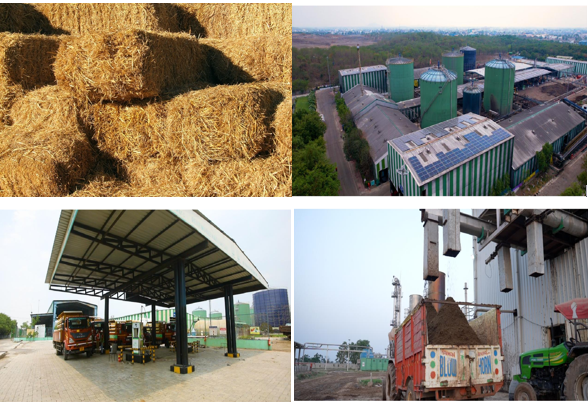
New Delhi: The Ministry of New and Renewable Energy (MNRE) has rolled out updated guidelines for its Waste-to-Energy (WtE) Programme, part of the National Bioenergy Programme, aiming to streamline operations and boost the sector’s efficiency.
Announced today, the revisions focus on simplifying processes, speeding up financial support, and tying aid to plant performance, creating a more transparent and business-friendly environment for both private and public sectors. The changes are designed to make it easier for industries, particularly micro, small, and medium enterprises (MSMEs), to produce compressed biogas (CBG), biogas, and power, while supporting India’s waste management efforts and its ambitious goal of achieving net-zero emissions by 2070.
A major overhaul in the guidelines centres on the disbursement of Central Financial Assistance (CFA). Previously, developers had to wait until their WtE projects reached 80% of rated capacity to receive funding, a hurdle that often delayed progress. Now, the CFA can be released in two stages: 50% after obtaining the Consent to Operate certificate from the State Pollution Control Board, backed by a bank guarantee, and the remaining amount after the plant achieves 80% capacity or the maximum eligible CFA capacity, whichever is lower. Even if a plant falls short of the 80% target, developers can still receive pro-rata funding based on output, provided the plant load factor (PLF) is at least 50%. No financial assistance will be provided for plants operating below this threshold. This flexibility acknowledges operational challenges and ensures financial viability for developers.
The inspection process has also been revamped to enhance credibility and reduce delays. Joint inspections, led by the National Institute of Bio-Energy (SSS-NIBE) alongside state nodal agencies, biogas technology development centres, or MNRE-empanelled agencies, will ensure greater accountability. For developers not seeking advanced CFA, only one performance inspection is required, cutting down on bureaucratic red tape. Additionally, developers now have up to 18 months from commissioning or in-principle CFA approval—whichever is later—to claim financial assistance, offering greater flexibility.
By aligning funding with actual performance and easing compliance, the MNRE is fostering a more supportive ecosystem for clean energy industries. According to the Ministry, these changes not only benefit private players in the WtE sector but also advance India’s sustainable waste management and renewable energy objectives, marking a significant step toward a greener future.
– global bihari bureau