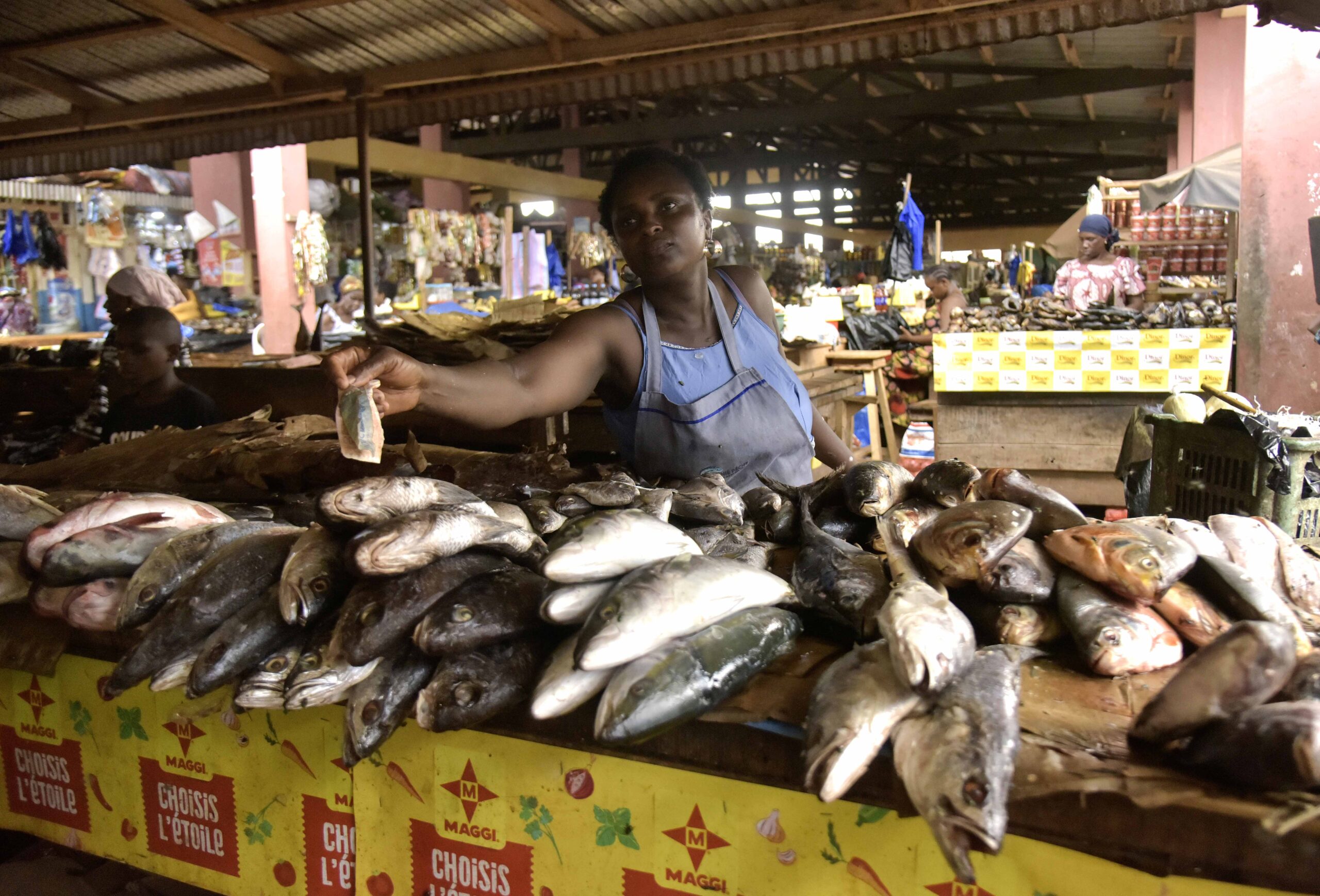
Salimata produces up to four tonnes of tilapia per year, selling it to women fishmongers who in turn sell it in local markets and villages. Increased aquaculture production is helping ensure food security for the country’s growing population and providing a quality source of protein. ©FAO/Celeste Diom
Salimata’s Ponds Power Ivorian Fish Revolution
Anbengourou, Côte d’Ivoire: In the lush Indénié-Djuablin region of Côte d’Ivoire, where cocoa and palm trees sway alongside ponds teeming with tilapia, 59-year-old Diakité Salimata is redefining aquaculture and nourishing a nation. With a defiant grin, she challenges the notion that fish farming is a man’s domain, her passion for raising tilapia fueling a family legacy that promises to bolster food security and reduce the country’s reliance on costly fish imports. “They say aquaculture is for men, but the more they say something is for men, the more I like that thing,” Salimata declares, her 31-year-old daughter by her side, learning the ropes of a trade that feeds both their family and their community.
Côte d’Ivoire’s love affair with fish is no secret. In 2023, Ivorians consumed a staggering 534,000 tonnes of fish, averaging 23.5 kilos per person, making it the nation’s top source of animal protein—far surpassing the 12 kilos of meat consumed per capita. Yet, domestic production lagged at just 92,000 tonnes, forcing the country to import nearly 80% of its fish to meet demand. To address this gap, the government has set an ambitious goal to scale aquaculture production from 8,467 tonnes in 2023 to 500,000 tonnes by 2030, a move to ensure food security and economic resilience for a growing population.
Salimata’s farm, nestled on land inherited from her father, is a beacon of this vision. Her four tilapia ponds, surrounded by chickens, sheep, cows, and cash crops, produce up to four tonnes of fish annually. She sells her harvest to women fishmongers who distribute the tilapia to local markets and villages, providing a vital protein source. But for Salimata, aquaculture is more than a livelihood—it’s a calling that demands skill, patience, and love. “You can feed yourself and your family with it, but if you don’t love it, you will not understand how to make it work,” she explains, detailing the intricacies of monitoring water levels, adjusting pipes, and maintaining dikes.
Her expertise was honed through capacity-building workshops provided by FISH4ACP, an initiative led by the Organisation of African, Caribbean and Pacific States, implemented by the Food and Agriculture Organization of the United Nations (FAO), and funded by the European Union and the German Federal Ministry for Economic Cooperation and Development. Selected as one of 10 pilot farms in a competitive process, Salimata’s operation serves as a model for sustainable aquaculture. Through FISH4ACP, she learned critical techniques: calculating stocking density, monitoring water temperature and pH, and timing fish sales to offset the high cost of aquafeed. “I learned you need to identify your market before stocking your pond,” she says, noting that fish must be sold at market size to avoid escalating costs.
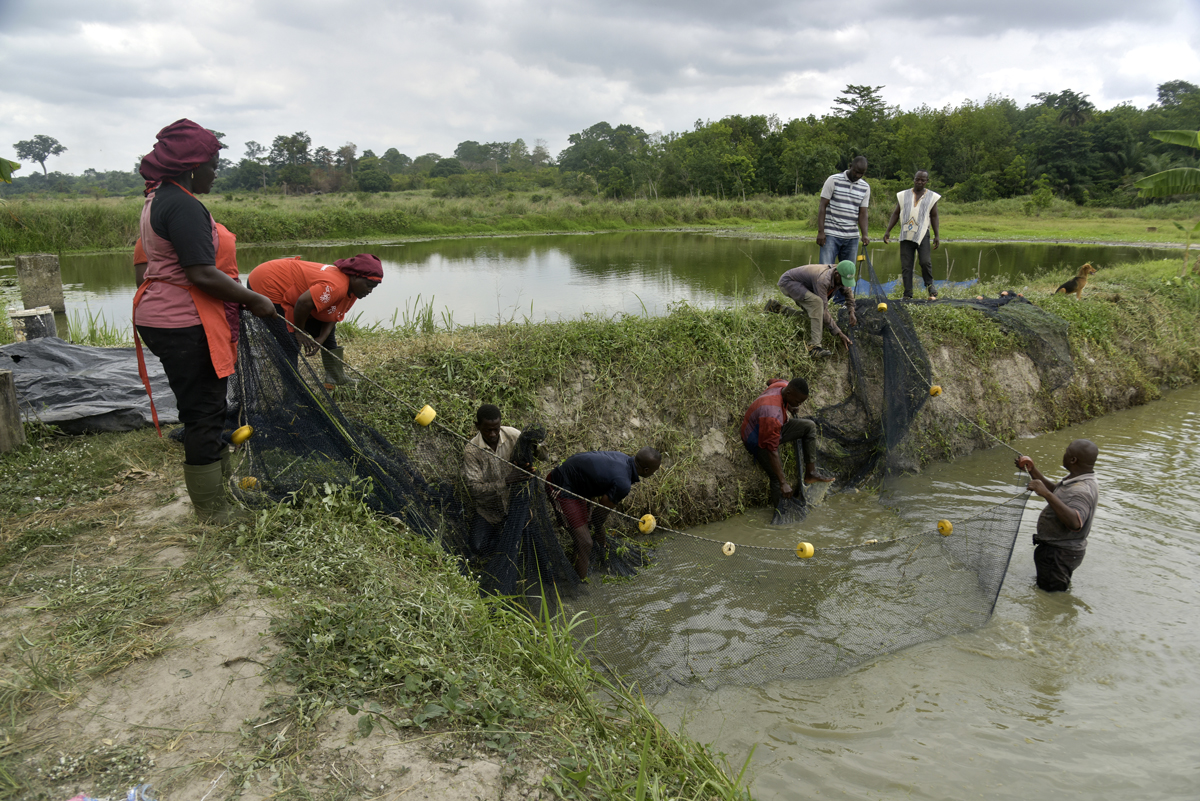
FISH4ACP’s technical support transformed her farm. Technicians cleaned her ponds, raised dike heights, and planted turf to prevent fissures and landslides during the rainy season. These improvements have made her operation more resilient and productive, aligning with the initiative’s goal to make Côte d’Ivoire’s aquaculture sector more sustainable and scalable. “The idea behind FISH4ACP is to showcase a new generation of fish farmers,” says Foungnigué Djire, FAO’s FISH4ACP project lead in Côte d’Ivoire. “Salimata and the others have will; they have vision. They are also aware of the needs of the country.”
For Salimata, the farm is a family affair. Her husband handles accounting, while her daughter takes on increasing responsibilities, ensuring the business endures for generations. “For us, this is a long-term activity,” Salimata says with pride. “My daughter will continue it, as will her children and so on.” Her farm’s success is a testament to the potential of aquaculture to meet national demand, with FISH4ACP’s pilot farms serving as replicable models for other farmers striving to achieve the government’s 2030 production target.
Salimata’s journey is not just about tilapia—it’s about empowerment, resilience, and community. “When I look at my work, I feel proud. It allows me to provide for my family,” she says, her voice carrying the weight of a woman who has turned tradition on its head and charted a path for others to follow. As Côte d’Ivoire invests in aquaculture, farmers like Salimata are proving that with passion and support, the nation can feed itself, one pond at a time.
Source: The FAO News And Media Office, Rome
– global bihari bureau