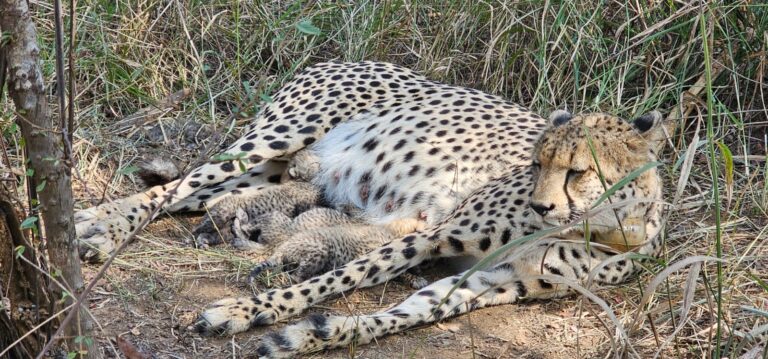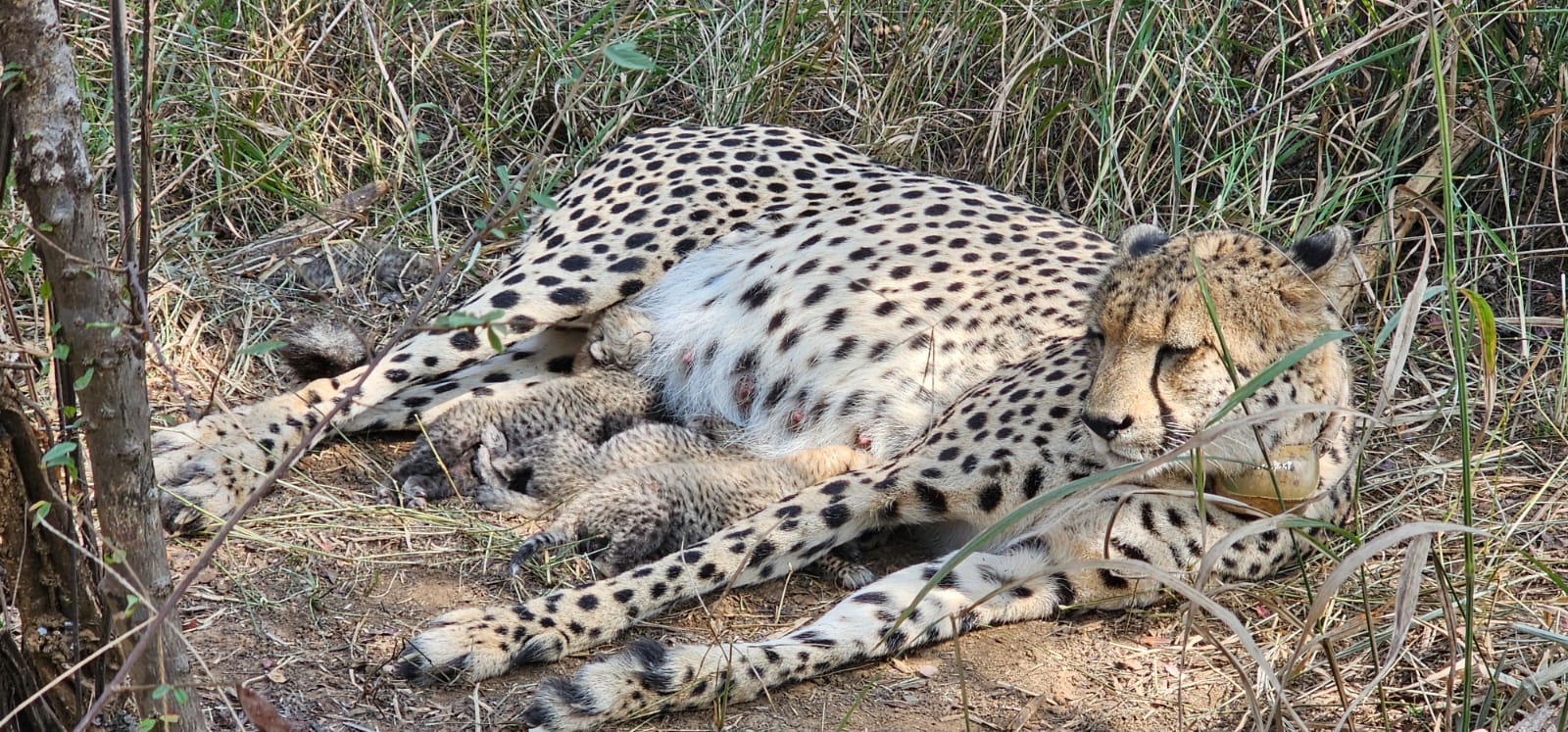
Cheetah with newly born cubs in Kuno National Park
Cheetah Revival Gains Pace with New Births in Madhya Pradesh
India Records Ninth Successful Cheetah Litter at Kuno
New Delhi: Kuno National Park has recorded the birth of three cheetah cubs, marking another milestone in India’s ambitious effort to reintroduce the species into the wild. The announcement was made today by Union Minister for Environment, Forest and Climate Change Bhupender Yadav, who shared the development through a post on the social media platform X.
Another good news from Kuno🐆🌿
Kuno welcomes three new cubs – A roaring new chapter at Kuno on the occasion of completion of 3 years of arrival of cheetahs from South Africa.
Celebrations echo through Kuno National Park as Gamini, the South African cheetah and second-time… pic.twitter.com/JpqnfXlpYl
— Bhupender Yadav (@byadavbjp) February 18, 2026
According to the minister, the cubs were born to Gamini, a cheetah brought from South Africa and now a second-time mother. The timing of the birth is being seen as symbolic, coinciding with the completion of three years since cheetahs were first relocated from Africa to India under the national conservation initiative. Officials said this is the ninth successful cheetah litter recorded on Indian soil since the programme began.
With the arrival of these three cubs, the number of surviving India-born cheetah cubs has risen to 27. The overall cheetah population at Kuno National Park now stands at 38, including adult cheetahs translocated from Africa and cubs born in India. Conservation authorities view this as a crucial indicator of the project’s ecological viability and the adaptability of the species to Indian conditions.
Describing the moment as one of national pride, Yadav said each successful birth reinforces confidence in Project Cheetah and reflects the sustained efforts of forest personnel, wildlife biologists and veterinary teams working on the ground. He praised their round-the-clock monitoring and care, noting that such outcomes are the result of years of scientific planning and field-level dedication.
In his message, the minister expressed optimism about the future of the programme, calling the cubs “little sprinters” who would carry forward India’s cheetah revival story with “speed and grace.” The statement underscored the broader significance of the births, not just for Kuno but for wildlife conservation efforts across the country.
Project Cheetah itself represents a landmark in global conservation history. It involved the world’s first intercontinental translocation of a large carnivore, with 20 cheetahs brought to India from Namibia and South Africa during 2022 and 2023. The initiative was launched to restore the cheetah to India’s grassland ecosystems after the species was declared extinct in the country more than seven decades ago.
Prime Minister Narendra Modi personally released the first batch of eight cheetahs into Kuno National Park on September 17, 2022, giving the project both symbolic and political prominence. Since then, the programme has faced challenges, including adaptation stress and losses among some animals, but successive births have steadily strengthened its conservation narrative.
Officials say the latest development will further encourage plans to expand cheetah habitats and consider additional sites for future translocations. The growing number of cubs born in India is being closely monitored as evidence that the species can establish a self-sustaining population under Indian ecological conditions.
As conservationists assess the long-term impact of these births, the arrival of Gamini’s three cubs is being seen as a hopeful chapter in India’s effort to revive one of its most iconic but long-lost predators.
– global bihari bureau