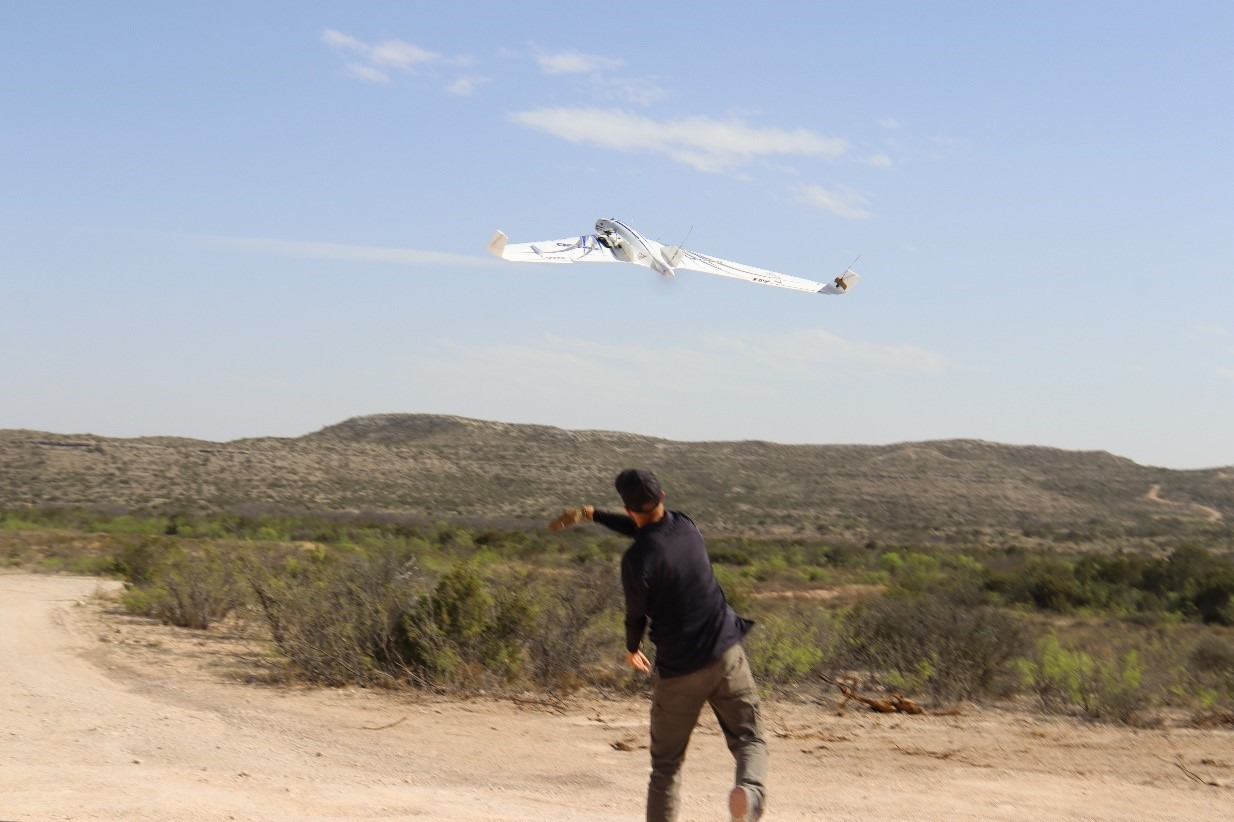
A U.S. Army C5ISR hand launches a small UAS at the 9 Mile Training Center in Sanderson, Texas, in early 2025. (U.S. Department of State photo)
America’s High-Stakes Test Against Rogue Drones
The Global Drone Threat Meets a Texas Response
Washington: The hum of drones has become the new soundtrack of modern conflict. From the deserts along India’s western border, where over 400 Pakistan-origin drones were intercepted during Operation Sindoor, to the trenches of eastern Ukraine, where cheap quadcopters now dictate the pace of artillery duels, unmanned aircraft have permanently rewritten the rules of war. In the Middle East, Iranian-origin drones — reverse-engineered, repurposed, or newly manufactured — have struck targets hundreds of kilometres away, expanding proxy conflicts across entire regions. And back in the United States, authorities along the southern border face a nightly duel with unmanned aircraft ferrying drugs, tracking law enforcement, or scouting blind spots in the terrain.
This is the world’s new reality: every sky is contested, every border vulnerable, and every nation forced to confront a threat that is cheap, fast, adaptable, and increasingly lethal.
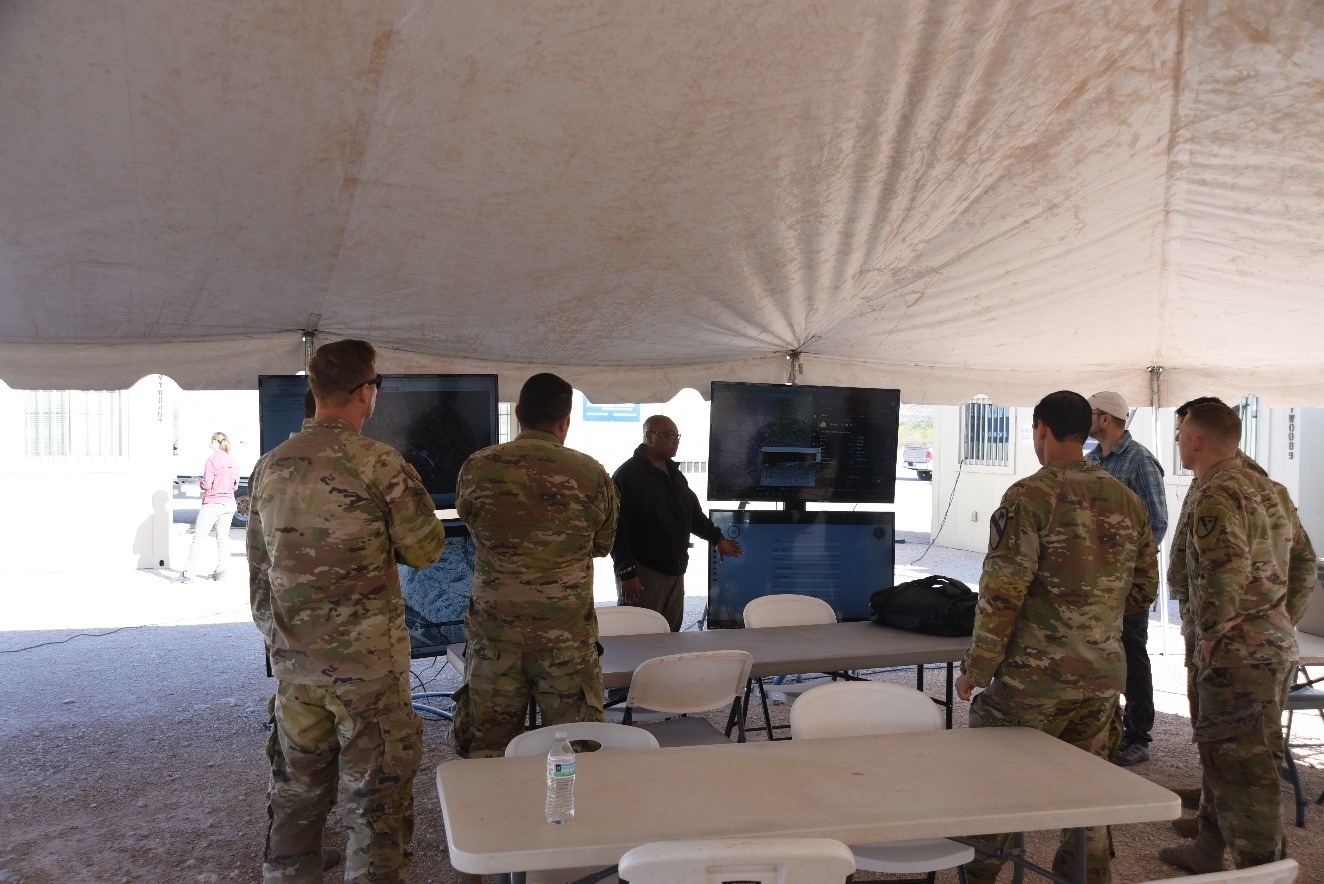
Against this backdrop, the U.S. Diplomatic Security Service (DSS) spent early 2025 building one of the most ambitious counter-drone testing environments attempted anywhere in the world. The choice of location — the rugged 400,000-acre expanse of the 9 Mile Training Center in Sanderson, Texas — was deliberate. Its isolation, harsh terrain, and airspace flexibility allowed for a level of experimentation that would be impossible in more controlled settings. Nearly 200 participants — drawn from local, state, federal, military, and private-sector teams — converged there, forming an unlikely coalition united by a singular, urgent mission: to confront the fastest-evolving airborne threat of the 21st century.
From the first day, the mood was clear. This was not a demonstration. It was a stress test for a country preparing for what the rest of the world is already experiencing.
Over four weeks, the range became a laboratory of live conflict. Teams executed 446 UAS flights, evaluated 25 C-UAS systems, and ran 830 tightly structured test scenarios, each designed to push operators and machines into the uncomfortable edges where technology either reveals its promise or its breaking point. The data produced during this marathon of testing did more than record success and failure. It exposed system limitations, revealed unseen vulnerabilities, and generated the insights needed for future system improvements. According to DSS officials, this dataset is already shaping operational readiness standards, influencing acquisition decisions, and accelerating C-UAS innovation across the federal ecosystem.
What set this exercise apart was not its scale but its realism. Threat simulation teams deployed first-person-view (FPV) drones — the same kind used in Ukraine for precision strikes — alongside radio-frequency-dark platforms equipped with spoofing devices and mirroring tactics designed to evade or mislead detection systems. These were the kinds of tricks adversaries are now using in warzones, criminal networks, and proxy theatres. Every scenario was built to reflect a world in which drones no longer behave like consumer toys but like adaptable weapons with evolving tactics.
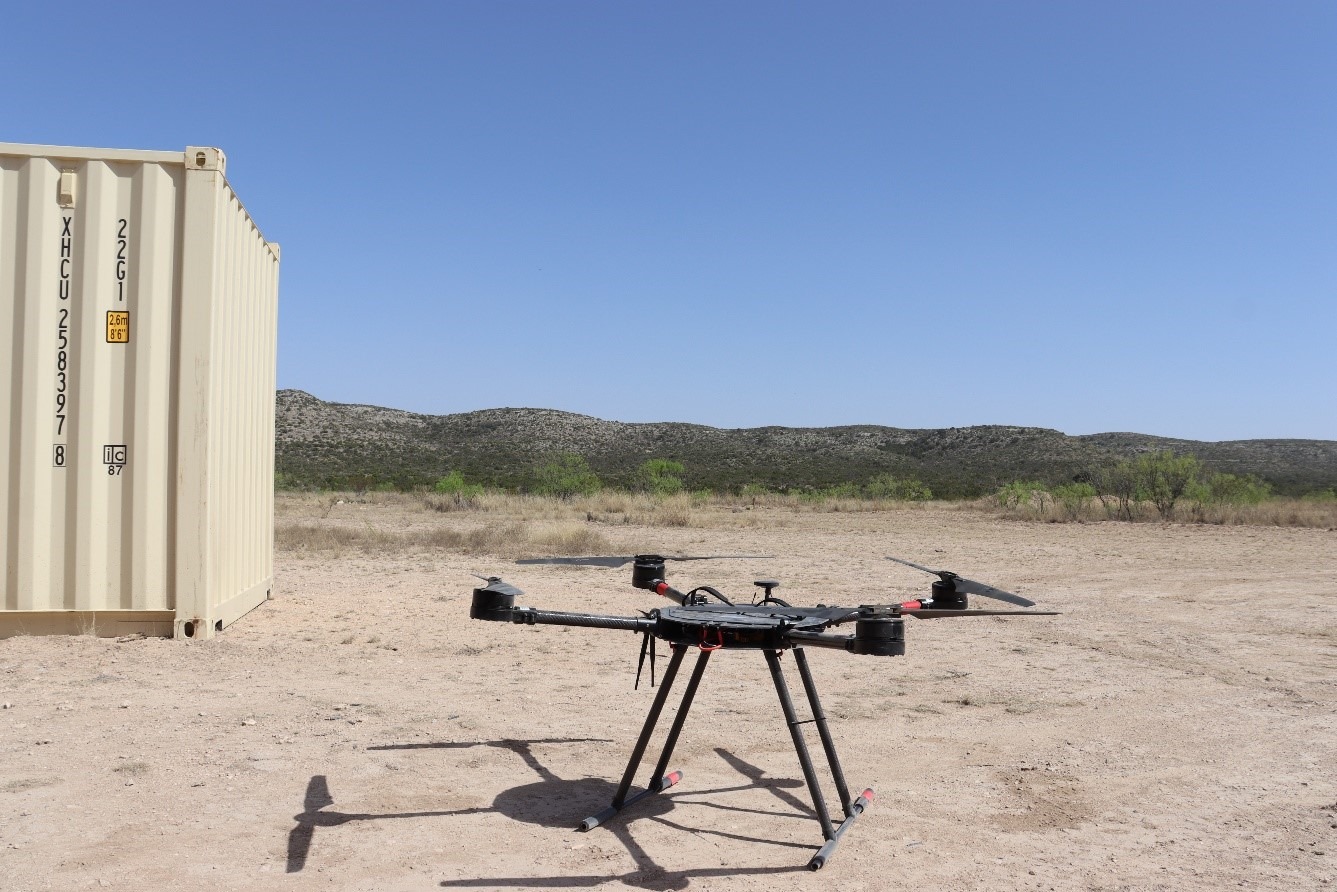
DSS did not act alone. The exercise drew in deep partnerships across the U.S. federal security architecture. Specialists from the Department of Homeland Security, U.S. Special Operations Command, and the U.S. Army’s C5ISR Center brought operational experience, manpower, and classified testing insights. Their contributions allowed for testing of cutting-edge platforms, including UAS rocket-assisted takeoff models and AeroGuard’s Autonomous Drone Interdiction System, a specialised capability intended to capture and dispose of rogue drones mid-flight. As one operator noted on the sidelines, the environment felt less like a controlled test range and more like a rehearsal for the next iteration of hybrid conflict.
The scale of interest extended beyond the teams on the ground. Over the four-week campaign, the range hosted visiting officials from DHS, SOCOM, the Drug Enforcement Administration, Customs and Border Protection, and the Texas Department of Public Safety. Their presence highlighted the urgency of the counter-drone issue. Whether tracking smugglers, defending diplomatic sites, protecting military bases, or monitoring border airspace, each agency has already felt the consequences of drones exploiting their operational gaps.
Bede “BJ” Lopez, the programme lead at 9 Mile, framed it bluntly. As threats evolve, he said, the need to align innovation with mission-critical requirements becomes non-negotiable. The objective is not merely to field new tools but to strengthen the entire U.S. defence posture against unmanned threats. The implication was clear: nations that cannot keep pace with drone technology will eventually be outmanoeuvred by those who can.
That sentiment resonates far beyond Texas. India’s security forces, having faced coordinated cross-border UAV incursions, have publicly acknowledged that drone warfare has now become the frontline challenge in sub-conventional conflict. In Ukraine, soldiers strap makeshift explosives to $500 quadcopters that can disable multimillion-dollar armour assets — a cost-asymmetry nightmare for planners everywhere. In the Middle East, Iranian-designed drones have already shifted regional security calculations. Even non-state actors, some with little more than online tutorials and improvised workshops, now wield aerial capabilities that once belonged solely to nation-states.
It is in this global context that the DSS effort gains significance. The United States is not only attempting to secure its own airspace but is indirectly shaping standards for what effective counter-drone defence looks like worldwide. The innovations tested in the Texas desert — from multi-sensor detection suites to advanced interdiction systems — contribute to a broader international conversation about how modern societies should respond to unmanned threats that are cheap enough to proliferate and sophisticated enough to evade legacy defences.
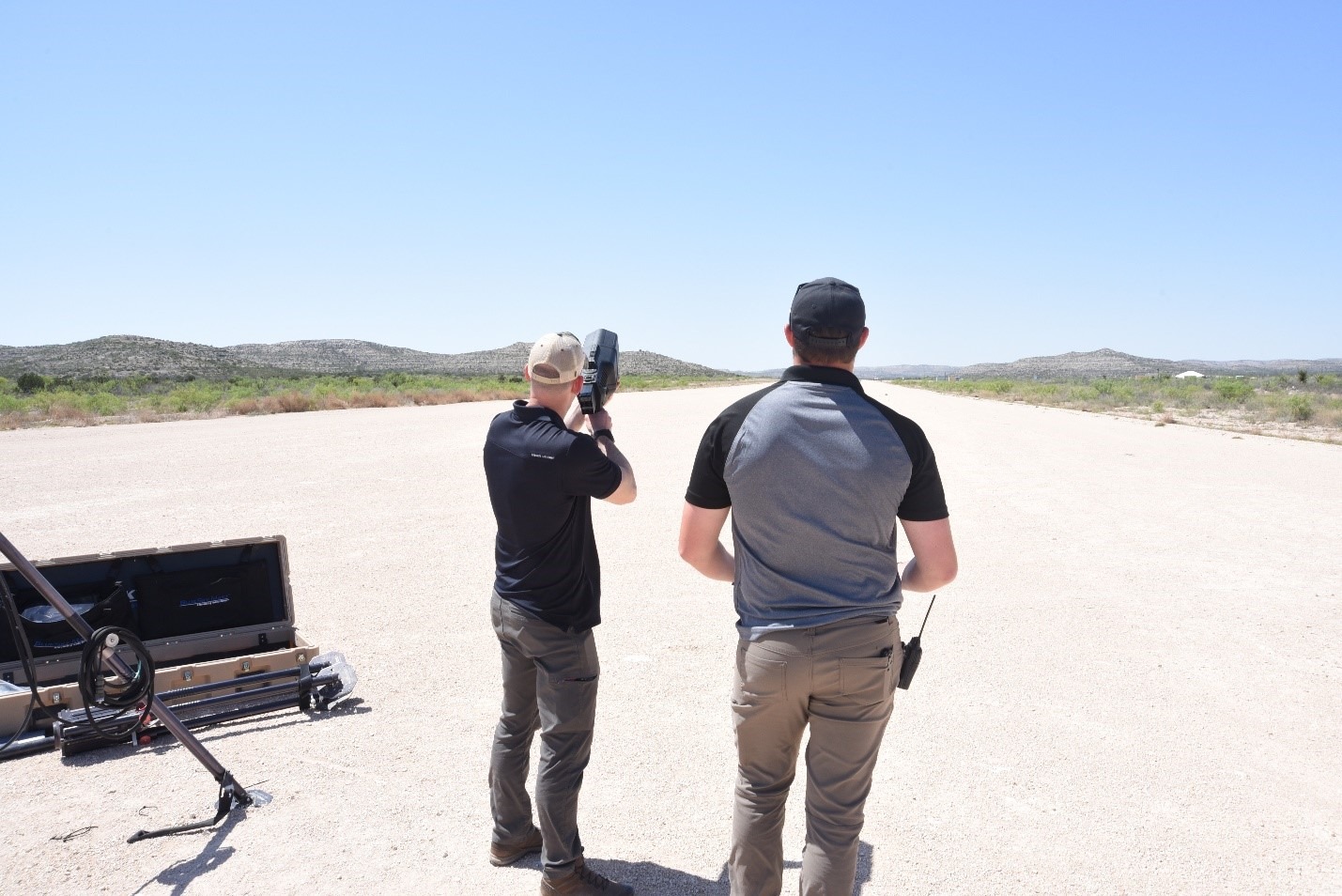
The 9 Mile campaign did not promise victory over the drone problem. No credible official would claim that. Instead, it acknowledged a more sober reality: drones are now embedded in the architecture of global conflict. The best any nation can do is to adapt faster than the threat evolves.
By the end of the four-week experiment, one conclusion became inescapable. The U.S. was not simply testing equipment. It was rehearsing for the world that already exists — a world where the sky above every conflict zone, border, and critical facility is a battlefield unto itself.
Through its collaboration with federal partners, DSS is positioning the United States at the forefront of counter-drone innovation. And like the countries confronting similar threats from South Asia to Eastern Europe to the Middle East, it is preparing for a future in which the contest for airspace dominance will no longer be waged by aircraft the size of jets, but by machines small enough to fit inside a backpack.
– global bihari bureau