 By Pankaj Deka
At the Edge of India: The Holy Tree of Khinzemane
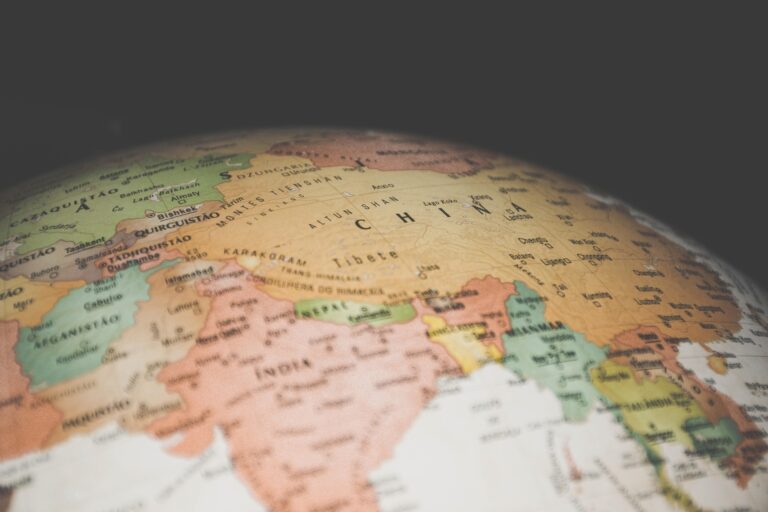
Tawang: A few hours’ drive from Tawang, the road narrows into a ribbon of mountain gravel, curling past pine forests and plunging valleys toward Zemithang, one of the easternmost inhabited pockets of Arunachal Pradesh. Beyond it lies Khinzemane, a quiet frontier point near the boundary between India and Tibet. The mountains here rise like sentinels. Wind moves unhindered across the ridges. Silence feels elemental.
It was through this sector that the 14th Dalai Lama entered India on March 31, 1959, after fleeing Lhasa in the wake of the Tibetan uprising. Historical records confirm that he crossed into Indian territory in what was then the North-East Frontier Agency before proceeding to Tawang and later onward to the Indian plains. The Government of India granted him asylum soon after — a decision that would carry enduring diplomatic consequences.
At Khinzemane today stands a tree locals revere as the “Holy Tree.” According to oral tradition, the Dalai Lama paused here and placed his walking staff in the earth before continuing his journey; villagers say that the staff later took root. There is no documentary record substantiating this detail. Yet in borderlands shaped as much by memory as by maps, legend and history are not adversaries. The crossing itself is a fact. The tree has become its living metaphor.
The journey to Khinzemane underscores how geography shapes history. Arunachal Pradesh, administered by India as a full-fledged state, is claimed by China as “South Tibet.” The boundary here forms part of the Line of Actual Control — an undemarcated frontier that has seen periodic military tensions. Travel requires permits under India’s Inner Line Permit system, and the presence of the Indian Army is visible along the route. Checkpoints punctuate the ascent; soldiers examine documents with quiet efficiency before waving vehicles onward.
Yet beyond the procedural formalities lies a landscape steeped in Buddhist culture. The Monpa communities of Tawang district have long shared religious and cultural ties with Tibet. Tawang Monastery, founded in the 17th century, remains one of the largest Buddhist monasteries in the world and an important centre of the Gelug tradition to which the Dalai Lama belongs. When he entered India in 1959, he first halted at Tawang before travelling further south.
Khinzemane itself is unassuming. There are no ticket booths, no large plaques, no curated exhibits. The tree rises modestly from the mountain soil, its branches layered with prayer flags in red, blue, yellow, green and white. Pilgrims and visitors tie them with quiet intention. Printed mantras fade under sun and snow, but the cloth remains, frayed at the edges, bearing witness to decades of remembrance.
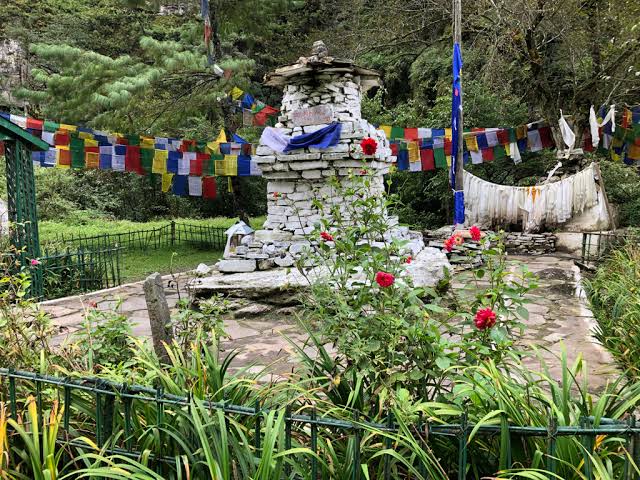
Beside the tree stands a small shrine maintained by local devotees. Butter lamps flicker inside; incense smoke curls upward in thin threads that dissipate quickly in the thin Himalayan air. Visitors offer khatas — ceremonial scarves — or stand in silence. The setting is intimate rather than monumental. Its power derives from restraint.
The events that brought the Dalai Lama here are among the most consequential in modern Himalayan history. In March 1959, amid escalating tensions in Lhasa, he left the Tibetan capital disguised as a soldier and undertook a dangerous journey across rugged terrain, accompanied by close aides. After days of travel through high passes and uncertain conditions, he crossed into India through this region. India’s decision to grant asylum signalled a humanitarian gesture that reshaped bilateral ties with China. Relations deteriorated in subsequent years, culminating in the 1962 border war — a conflict rooted in competing territorial claims and differing perceptions of the boundary.
More than six decades later, the Tibetan exile community in India remains one of the world’s most visible refugee diasporas. Dharamsala in Himachal Pradesh serves as the principal centre of the Tibetan administration-in-exile. Settlements across Indian states host schools, monasteries and cultural institutions dedicated to preserving language and heritage. The 14th Dalai Lama, who turned ninety in 2025, has spent the majority of his life in India, advocating nonviolence and interfaith dialogue on a global stage.
In that broader narrative, Khinzemane marks a beginning. It is the geographic threshold where exile formally entered Indian soil. For many Tibetan pilgrims, the site represents not only escape from political upheaval but the continuity of spiritual leadership in a new land. For Indian visitors, it recalls a chapter of post-independence history defined by asylum, diplomacy and border complexity.
The tree’s symbolism rests in its simplicity. It is neither botanically extraordinary nor architecturally framed. Its meaning arises from association. The legend of a staff taking root endures because it expresses something emotionally resonant: displacement followed by continuity. While historians rely on archives and official records, communities often preserve turning points through story. At Khinzemane, the documented crossing and the oral tradition coexist, each reinforcing the other’s presence.
Geopolitically, the site occupies a delicate landscape. Arunachal Pradesh continues to feature prominently in India–China boundary discussions, and military infrastructure in the region reflects its strategic value. Yet the dominant visual at Khinzemane is not fortification but cloth — prayer flags stirred by wind. They soften the frontier without erasing its reality.
Reaching the site requires planning and patience. Weather can shift rapidly at altitude; winter snowfall and monsoon rains affect accessibility. Accommodation is limited to nearby towns such as Tawang, and travellers must secure the necessary permits in advance. The remoteness, however, protects the atmosphere. There is space to stand without crowding, to listen without interruption.
As wind gathers strength in the valley, the prayer flags lift in coordinated motion, their colours momentarily bright against muted stone and sky. The effect is neither theatrical nor staged. It is elemental. In that movement, visitors often perceive the layered meanings of the place: a spiritual crossing, a political decision, a border that remains contested, and a community that rebuilt itself in exile.
The story of Khinzemane does not rely on spectacle. Its significance lies in convergence. Here, geography meets history; diplomacy intersects with devotion; a documented moment of 1959 continues to shape identities in 2026 and beyond. The tree stands not as proof of legend, but as a focal point for memory — a quiet reminder that even in landscapes marked by strategic tension, gestures of refuge leave enduring roots.
At the edge of India’s eastern Himalayas, where maps narrow, and wind carries whispered prayers across ridgelines, Khinzemane remains what it became in March 1959: a frontier of transition. A crossing is completed. A journey begun anew.