Grain Elevators
EU–CDP–FAO Launch TERRA to Expand Agrifood Credit Access
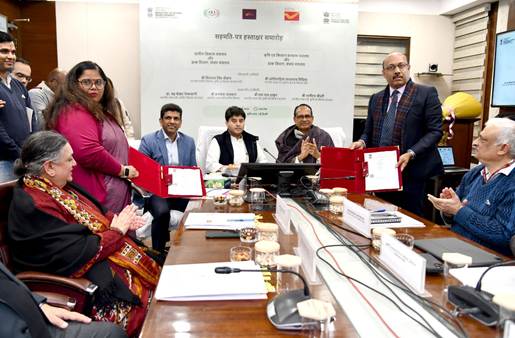
Rome: A new financing programme titled ‘Transforming and Empowering Resilient and Responsible Agribusiness’, known by its acronym TERRA, was launched today to widen credit access for micro, small and medium agrifood enterprises in sub-Saharan Africa, North Africa and Türkiye. The initiative is a joint effort of the European Union, Cassa Depositi e Prestiti, Italy’s national promotional institution, and the Food and Agriculture Organization of the United Nations (FAO). Together, the three partners intend to address a persistent financing gap that has limited the ability of agrifood enterprises to invest, expand and withstand the pressures of economic volatility and climate impacts.
Across low- and middle-income countries, small and medium agrifood businesses frequently struggle to secure loans from local financial institutions. Agriculture is often assessed by lenders as a sector marked by variable returns, exposure to climate shocks, fluctuating input costs and price swings in commodity markets. Many enterprises operate in informal or semi-formal environments where land records, revenue documentation or credit histories are inconsistent. The outcome is a cautious lending landscape even in regions where agrifood systems form the economic backbone. In sub-Saharan Africa, agriculture, forestry and fisheries are estimated to contribute around seventeen per cent of gross domestic product, and the sector sustains a large share of household incomes and local employment. Yet, limited access to credit remains a central constraint to scaling production, strengthening value chains and improving resilience to global market shifts.
TERRA attempts to shift this dynamic by combining risk-sharing financial instruments with technical advisory support. The European Union has issued a guarantee of up to 109.5 million euros through the European Fund for Sustainable Development Plus, a financing tool within the Global Gateway framework designed to mobilise investment in partner countries. Backed by this guarantee, Cassa Depositi e Prestiti will extend dedicated credit lines and portfolio guarantees to selected banks and financial intermediaries in Africa and Türkiye. The structure is intended to lower perceived lending risk and open room for financial institutions to approve agrifood sector loans that might previously have been considered too uncertain.
FAO Investment Centre will work with these financial institutions to strengthen their capacity to evaluate and support agrifood businesses. This advisory role may include guidance on designing agricultural lending portfolios, assessing value chain structure and cash-flow patterns, examining sector-specific risk exposure, and refining credit appraisal methods. The approach seeks to build lending capabilities that persist beyond the programme period, enabling financial institutions to develop their own informed, sector-aligned strategies rather than rely solely on external risk cushions.
Funds channelled through the programme may be used for short-term working capital such as input purchases or aggregation costs, or for long-term investment in areas like storage, processing equipment, cold-chain logistics, mechanisation, irrigation systems and transportation infrastructure. Small cooperatives may secure credit to improve market linkage and collection systems, while processors and distributors may invest in facility upgrades or expansion to meet commercial demand. The programme’s design recognises the different pacing of financial needs across the agrifood value chain.
FAO Director-General QU Dongyu described knowledge as “the best de-risking instrument,” emphasising that technical understanding of agrifood systems can reduce uncertainty and enable more confident lending decisions. The Chief Executive Officer of Cassa Depositi e Prestiti, Dario Scannapieco, said the programme aligns with the institution’s capacity to catalyse development finance and that, combined with the European Union’s guarantee structure, it could expand the flow of investment across agrifood systems in the participating regions.
The European Fund for Sustainable Development Plus, under which the guarantee is issued, seeks to mobilise public and private finance to support the Sustainable Development Goals. Its portfolio includes risk-sharing tools aimed at enabling investment in sectors and regions that have historically struggled to attract sufficient capital. The involvement of Cassa Depositi e Prestiti, established in 1850 to support Italy’s development priorities and now active in international cooperation initiatives, reflects the institution’s dual role in domestic and global development financing. FAO’s Investment Centre brings experience from more than 120 countries in shaping agrifood investment strategies, developing policy frameworks and building institutional capacity.
How financial institutions respond to the programme will be central to its outcomes. The practical test will be whether banks and intermediaries use the guarantee and advisory inputs to reshape their assessment of agrifood lending risk and expand financing to enterprises previously excluded from formal credit systems. Monitoring will focus not only on credit volumes and repayment performance but also on whether institutional lending models evolve to better reflect the operational realities of rural and agrifood economies.
TERRA’s architects view credit access as a foundational component of stable, adaptive agrifood systems. If local lenders adopt longer-term, more informed financial strategies as a result of the programme, the effects may extend beyond immediate loan disbursement, supporting broader resilience, employment and productivity in regions where agriculture remains a central economic pillar.
– global bihari bureau