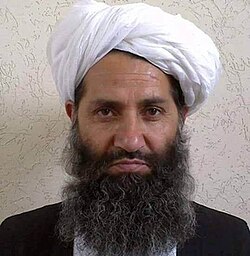
Supreme Leader of Taliban Hibatullah Akhundzada. Photo source: Wikipedia
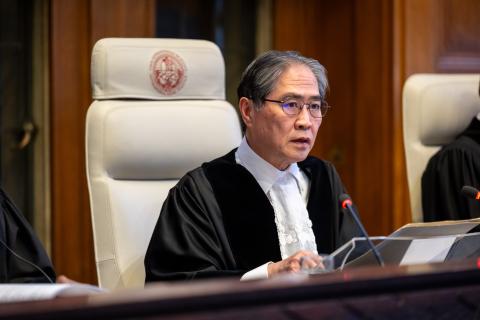
The Hague: In a significant development, the International Criminal Court’s Pre-Trial Chamber II today issued warrants of arrest for Haibatullah Akhundzada, Supreme Leader of the Taliban, and Abdul Hakim Haqqani, Chief Justice of the Taliban, in the context of the Situation of Afghanistan. These two individuals, who have exercised de facto authority in Afghanistan at least from 15 August 2021, are now wanted by the ICC for their alleged roles in serious human rights violations.
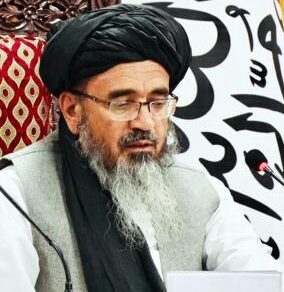
The Chamber has found that there are reasonable grounds to believe that Haibatullah Akhundzada and Abdul Hakim Haqqani have committed by ordering, inducing or soliciting the crime against humanity of persecution, under article 7(1)(h) of the Rome Statute, on gender grounds against girls, women and other persons non-conforming with the Taliban’s policy on gender, gender identity or expression; and on political grounds against persons perceived as “allies of girls and women”. These crimes are believed to have been committed on the territory of Afghanistan since the Taliban seized power on 15 August 2021, and have continued until at least 20 January 2025.
The ICC’s Pre-Trial Chamber II considered that the Taliban have implemented a governmental policy that resulted in severe violations of fundamental rights and freedoms of the civilian population of Afghanistan, in connection with conducts of murder, imprisonment, torture, rape and enforced disappearance. While the Taliban have imposed certain rules and prohibitions on the population as a whole, they have specifically targeted girls and women by reason of their gender, depriving them of fundamental rights and freedoms. Specifically, the Taliban severely deprived, through decrees and edicts, girls and women of the rights to education, privacy and family life and the freedoms of movement, expression, thought, conscience and religion. In addition, other persons were targeted because certain expressions of sexuality and/or gender identity were regarded as inconsistent with the Taliban’s policy on gender.
In assessing the evidence before it, the Chamber has taken into account the object and purpose of Article 7(1)(h) of the Rome Statute. This provision reflects the Statute’s broader aim to protect civilian populations from serious and systemic violations of fundamental rights, particularly those targeting vulnerable groups. In this context, the Chamber considered that the protection of victims of such crimes – especially women and girls who are often disproportionately affected by gender-based persecution – is central to the provision’s purpose. The Chamber found that gender persecution encompasses not only direct acts of violence, but also systemic and institutionalised forms of harm, including the imposition of discriminatory societal norms.
Furthermore, the Chamber found that individuals perceived as opposing these policies, even passively or through omission, were also targeted by the Taliban. This included those described as “allies of girls and women”, who were viewed as political opponents. The scope of persecution extended beyond direct gender-based targeting to include those who, by their actions or perceived stance, challenged the Taliban’s oppressive framework.
The Chamber has decided that the warrants will remain under seal at this stage, in order to protect victims and witnesses and safeguard the proceedings. Nevertheless, the Chamber considered that the conduct addressed is ongoing and that public awareness of the warrants may contribute to the prevention of the further commission of these crimes. Accordingly, the Chamber found that it is in the interests of justice to publicly disclose the existence of these warrants. This decision underscores the ICC’s commitment to addressing ongoing violations and ensuring that the international community remains informed about the gravity of the situation in Afghanistan.
The issuance of these warrants marks a critical moment in the pursuit of accountability for human rights abuses in Afghanistan. The Taliban’s policies, as outlined by the ICC, have created a climate of fear and oppression, particularly for girls and women, who face systemic exclusion from public life. The targeting of individuals based on gender identity or expression, as well as those seen as political adversaries for supporting gender equality, highlights the multifaceted nature of the persecution. The ICC’s focus on both direct violence and institutionalised harm reflects a broader understanding of persecution as a crime against humanity, encompassing not just physical acts but also the erosion of fundamental freedoms through discriminatory norms.
As the international community processes this development, the public disclosure of the warrants’ existence serves as a call to action. By shining a light on these alleged crimes, the ICC aims to deter further violations and protect vulnerable populations. The situation in Afghanistan remains dire, with the Taliban’s policies continuing to impact millions. This move by the ICC, reported by the Global Bihari Bureau, reinforces the importance of global mechanisms in addressing human rights crises and holding those in power accountable.
– global bihari bureau