Pax Silica and the Quiet Rewiring of AI Power
The Unspoken China Factor in America’s Pax Silica Plan
Washington: On the surface, the U.S. State Department’s virtual briefing today looked routine: a senior official explaining a newly launched multilateral initiative, fielding technical questions about supply chains, and reiterating familiar phrases about economic security. Yet beneath the formal cadence and carefully chosen language, the briefing revealed something far more consequential — a recalibration of how Washington and its closest partners are preparing for a world where artificial intelligence, not oil or steel, defines strategic power.
The immediate news peg was not the launch of Pax Silica itself — that groundwork had already been laid. What gave the briefing fresh urgency was a pointed question from Taiwan and the unusually detailed explanation that followed. Why, journalists asked, was the world’s most critical semiconductor producer not a founding member of an initiative ostensibly designed to secure AI supply chains?
Jacob Helberg, the US Under Secretary of State for Economic Affairs, did not deflect the question. Instead, his answer offered a window into the strategic logic underpinning Pax Silica — and the delicate geopolitical terrain it is meant to navigate.
Pax Silica, Helberg said, is the first coordinated effort by countries to treat compute, silica, critical minerals and energy as shared strategic assets. If the 20th century ran on oil and steel, he argued, the 21st century will run on data centres, chips, minerals and power grids. The initiative brings together the United States, Japan, South Korea, Australia, the United Kingdom, Singapore and Israel — an unconventional grouping bound less by geography than by complementary roles in the AI ecosystem.
Japan’s inclusion is particularly telling. Long a leader in advanced manufacturing, materials science and precision equipment, Tokyo has emerged as a linchpin in U.S. efforts to rebuild trusted technology supply chains. Japan’s strengths in chipmaking equipment, rare-earth processing and industrial robotics give Pax Silica both technical depth and political ballast. Its experience navigating economic coercion while maintaining ties with China also makes it a template for the kind of resilience without rupture that Washington appears keen to institutionalise.
Throughout the briefing, Helberg returned to the idea of “first principles” — high-level commitments designed to anchor future coordination. The declaration signed by the founding members is nonbinding, but deliberately so. Its purpose is not to dictate quotas or mandates, but to align policy thinking before moving into joint investments, co-financing and infrastructure buildouts. Implementation, Helberg stressed, is now the priority, with announcements expected early next year.
Yet the most revealing exchanges came when the discussion turned to who was not formally inside the tent — starting with Taiwan.
Helberg pushed back against the suggestion that Taiwan had been excluded. Taiwanese representatives, he said, were present at key sessions on manufacturing and semiconductors and made “essential contributions.” The decision not to list Taiwan as a founding signatory was not a downgrade, but a sequencing choice. Washington and Taipei are already engaged in a deep bilateral Economic and Prosperity Dialogue, and the U.S. did not want to duplicate or dilute that process by folding Taiwan prematurely into a multilateral framework.
Any discussion of investment competition or supply-chain coordination inevitably circles back to Taiwan Semiconductor Manufacturing Company (TSMC), the single most consequential actor in the global semiconductor ecosystem. Unlike integrated chipmakers, TSMC operates as a pure-play foundry, manufacturing chips designed by others rather than producing its own branded products. This model has made it the backbone of modern computing, supplying advanced processors to companies such as Apple, NVIDIA, AMD and Qualcomm — firms whose products underpin artificial intelligence, cloud computing, advanced weapons systems and consumer electronics alike.
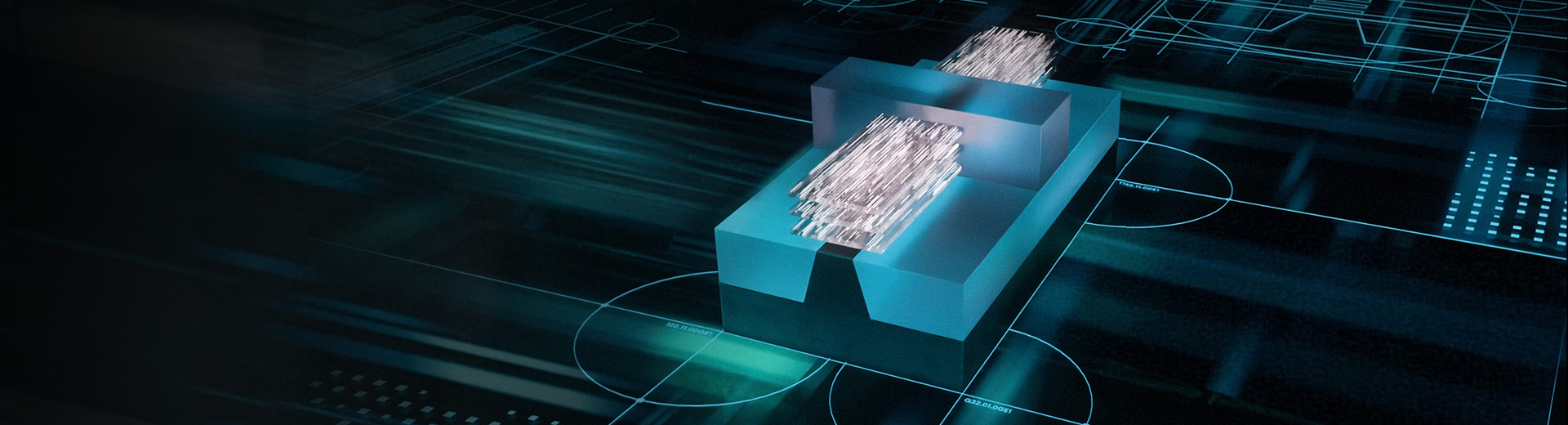
TSMC’s strategic importance lies not merely in scale but in technological depth. The company manufactures the world’s most advanced logic chips, including 5-nanometre and 3-nanometre nodes, with next-generation processes already in development. These chips are essential for training and deploying large AI models, running hyperscale data centres and enabling high-performance military and industrial applications. At present, no other manufacturer can reliably match TSMC’s combination of yield, precision and volume at the cutting edge.
This dominance has produced a concentration risk that now sits at the heart of global economic security debates. More than 90 per cent of the world’s most advanced semiconductors are manufactured in Taiwan, primarily by TSMC. That geographic concentration has elevated the company from an industrial champion to a strategic linchpin, binding Taiwan’s security directly to the stability of global technology markets — a dynamic often described as a “silicon shield.”
For the United States and its allies, reliance on TSMC is both unavoidable and uncomfortable. Washington has sought to mitigate this vulnerability by encouraging TSMC to invest in manufacturing capacity outside Taiwan, including through what is now the largest foreign direct investment project in U.S. history: advanced fabrication plants in Arizona. Yet even as production footprints diversify, the core technical expertise and ecosystem remain deeply rooted in Taiwan.
It is against this backdrop that Pax Silica’s approach to Taiwan — and to TSMC specifically — must be understood. The initiative’s architects appear determined to integrate Taiwan’s expertise without making the company or the island a visible fulcrum of a multilateral bloc. Folding TSMC too prominently into a formal alliance could sharpen geopolitical fault lines and invite countermeasures, even as excluding it entirely would be strategically untenable.
By keeping engagement with Taiwan Semiconductor Manufacturing Company anchored primarily in bilateral channels while building parallel capacity among trusted partners such as Japan, the United States and South Korea, Pax Silica seeks to reduce systemic risk without forcing a sudden decoupling. In doing so, it acknowledges a central paradox of the AI age: the world cannot function without TSMC, yet cannot afford for so much of its technological future to hinge on a single, geopolitically exposed node.
Strategic risk: managing China without naming it
The restraint with which China featured in the briefing was itself strategic. Pax Silica is being constructed in a context where overt confrontation carries risks of escalation, retaliation and premature decoupling. Yet the initiative’s architecture — and Helberg’s language — makes clear that it is designed with China’s current position in global supply chains very much in mind.
The central risk Washington appears to be managing is not disruption alone, but leverage. China’s dominance across several layers of the AI supply chain — particularly rare earth mining, processing and downstream refining — gives it coercive potential even without overt action. Pax Silica’s emphasis on diversification, capacity expansion and allied coordination reflects a calculation that future crises may not resemble traditional trade disputes but could instead take the form of selective slowdowns, regulatory bottlenecks or informal pressure applied at chokepoints.
Helberg’s repeated references to concentration were telling. By framing the problem as structural rather than adversarial, the United States avoids casting Pax Silica as an explicitly anti-China bloc while still signalling that existing dependencies are unacceptable. This rhetorical choice lowers the temperature for partners who seek resilience without confrontation — particularly in Southeast Asia and parts of the Global South — while preserving the initiative’s strategic intent.
At the same time, Pax Silica carries its own risks. One is temporal. China’s supply-chain dominance was built over decades through state-backed investment, scale and policy continuity. Replicating even parts of that ecosystem among allies will take years, not quarters. During this transition period, Washington and its partners remain exposed to precisely the vulnerabilities Pax Silica seeks to address. The risk is not only disruption, but miscalculation — a scenario in which resilience is assumed before it is fully realised.
Another risk lies in retaliation through market mechanisms rather than overt sanctions. China retains the ability to influence global pricing, licensing regimes and investment flows in ways that could test allied cohesion. Pax Silica’s success, therefore, depends not just on building alternative capacity but on sustaining political alignment when costs rise and timelines stretch.
Taiwan sits at the centre of this risk calculus. Its semiconductor dominance makes it indispensable to the AI ecosystem, but its geopolitical exposure makes it uniquely sensitive. By engaging Taiwan first through bilateral channels, Washington appears to be insulating Pax Silica from becoming an accelerant in cross-strait tensions. Folding Taiwan too visibly into a multilateral industrial bloc could invite countermeasures or force Taipei into sharper choices than it prefers to make.
Japan’s role, again, is critical here. As a country that has experienced economic coercion from China while maintaining deep trade ties, Japan embodies the balancing act Pax Silica is attempting to institutionalise. Its presence provides both technical capacity and political precedent — proof that resilience can be built without total rupture.
The strategic calculations of Pax Silica have already drawn public acknowledgement from Beijing. A spokesperson for the Chinese Foreign Ministry, Guo Jiakun, said that China “has noted the report that the U.S. signed an agreement with Japan, South Korea, Australia and others on securing supply chains of rare earths to ensure that countries are not dependent on China for developing AI technologies.” He emphasized that parties “need to follow the principles of market economy and fair competition, and jointly keep the global industrial and supply chains stable.” While restrained, the statement underscores that China is closely monitoring the initiative, framing the issue through the language of market principles and supply-chain stability rather than confrontation — a careful signalling consistent with Beijing’s preference for managing strategic competition via norms and market leverage.
Also read: Japan, US Set Stage for Global Pax Silica Order
Finally, there is the question of perception. Pax Silica is being framed as open-ended and expandable, but its criteria are unmistakable: trust, alignment and security convergence. How China interprets this — as exclusion, containment or inevitable adjustment — will shape the initiative’s external environment. Much will depend on whether Pax Silica remains focused on capacity-building or evolves into a gatekeeping mechanism for advanced technologies.
For now, the United States appears intent on keeping that line deliberately blurred. Pax Silica is presented not as a wall, but as scaffolding — a structure allies can build together. Whether that ambiguity proves stabilising or merely temporary will depend on how quickly the physical infrastructure catches up with the strategic ambition.
What comes next
Pax Silica is now entering its implementation phase. Helberg repeatedly signalled urgency, pointing to policy coordination, project identification and co-investment discussions already underway. He said new members and concrete project announcements were expected in the first quarter of next year.
That timeline matters. It suggests that the questions raised by Taiwan’s status, Japan’s centrality and the initiative’s broader reach will soon move from design to execution. Pax Silica, as Helberg presented it, is not an endpoint but an evolving structure — one that reflects how power itself is being re-engineered around AI.
For now, the initiative remains a framework. But the briefing made clear that Washington sees it as foundational — a way of laying the industrial and infrastructural rails on which the next phase of global competition will run.
– global bihari bureau