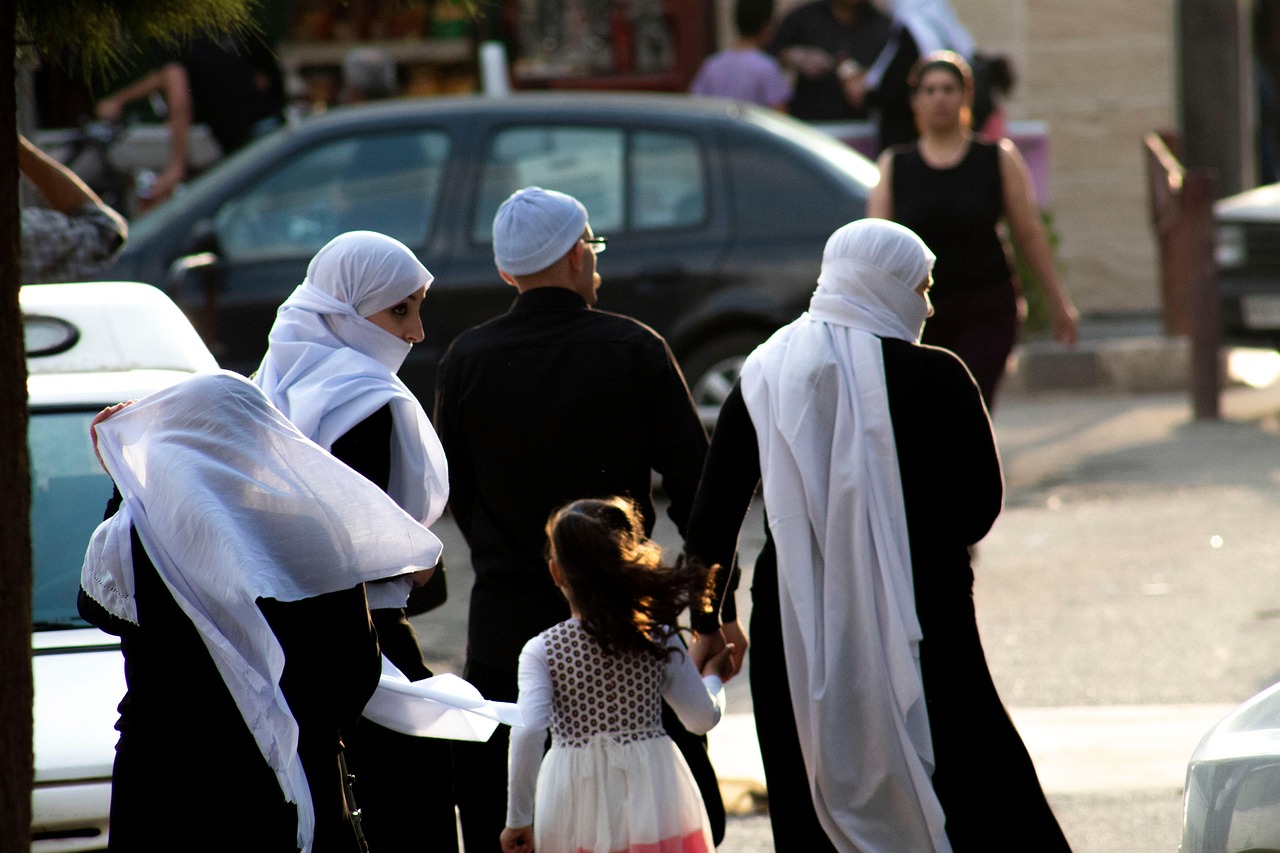
A Syrian Druze family
Washington/Geneva: The United States-led diplomacy, with Türkiye and Jordan, has secured a fragile ceasefire in Syria’s Suweida province, halting Druze-Bedouin clashes sparked by a checkpoint robbery on July 12, 2025, which escalated with Syrian government intervention and Israeli airstrikes.
The United Nations, briefing reporters in Geneva on July 18, 2025, reported “grave human rights abuses and rising humanitarian needs” in Suweida, with the Office of the United Nations High Commissioner for Human Rights (OHCHR) spokesperson Ravina Shamdasani citing “credible” reports of “widespread violations and abuses, including summary executions and arbitrary killings, kidnappings, destruction of private property and looting of homes” by security forces, interim authorities, and armed Druze and Bedouin groups. A notable incident on July 15 saw 13 people killed when armed individuals affiliated with the interim authorities fired on a family gathering.
The United States State Department Spokesperson Tammy Bruce, on July 17, 2025, condemned all violence, stating, “All parties must step back and engage in meaningful dialogue that leads to a lasting ceasefire.” Secretary of State Marco Rubio described the Israeli strike on Damascus’s defence ministry as a “misunderstanding” tied to a “400-year-old tribal conflict between the Druze and Bedouins.” Special Envoy to Syria Tom Barrack, also U.S. Ambassador to Türkiye, alongside Turkish and Jordanian officials, secured Syrian force withdrawal by July 17, with Druze factions maintaining security. The UN’s Khaled Khiari, briefing the Security Council on July 17, reported “hundreds of casualties among soldiers and civilians—including women, children, and the elderly—alongside extrajudicial executions and humiliating and degrading treatment,” urging protection of civilians and infrastructure.
The United Nations Office for the Coordination of Humanitarian Affairs (OCHA) reported nearly 2,000 families displaced from Suweida by July 17, with many fleeing to the city or nearby towns, unable to return due to looted or destroyed homes. Hospitals are overwhelmed, with the WHO’s trauma kits for 1,750 interventions undelivered due to access constraints, and a Syrian Arab Red Crescent warehouse was damaged by shelling on July 15. At the office of the United Nations High Commissioner for Refugees, William Spindler noted “considerable” humanitarian needs, with shortages of essentials like blankets, jerry cans, and solar lamps, and water scarcity due to electricity outages. “We have this in stock and we are ready to deliver them as soon as security allows it,” Spindler said, calling for respect for humanitarian assets under international law.
Israeli airstrikes on Suweida, Dara’a, and Damascus, launched to protect the Druze community, drew OHCHR concern for civilian casualties, with Shamdasani warning, “Attacks such as the one on Damascus on Wednesday pose great risks to civilians and civilian objects,” and calling for their cessation. The Syrian Health Ministry reported 260 dead and 1,698 injured in Suweida, with 425 critical cases, and Israeli strikes blocked aid convoys. Despite a 70% reduction in hostilities by July 16, 2025, clashes resumed on July 18, with tribal forces entering Suweida city centre, per unverified social media reports. U.S. opposition to the strikes was clear, with Bruce noting, “We are engaging diplomatically with Israel and Syria at the highest levels,” but avoiding comment on talks with Israeli Prime Minister Benjamin Netanyahu, deferring to Israel’s investigation despite concerns linked to U.S. Ambassador Mike Huckabee’s critiques of Israeli prosecutors. On governance, Bruce stated, “I’m not going to comment further than just the theory of trying to get some stability here,” dismissing federalism and jihadist ties.
The ceasefire aligns with stabilisation efforts by the U.S., Türkiye, and Jordan. Barrack’s Ankara talks with Druze, Bedouin, and Sunni leaders seek a unified Syrian identity. U.S.-funded programs worth $300 million support 1.2 million displaced Syrians, alongside Jordan’s hosting of 650,000 Syrians. The Syrian government’s 60% public support for centralised governance faces Druze demands, with 30% of Suweida’s 700,000 residents favouring autonomy. Iran’s concerns about Western influence and ISIS’s 5,000 fighters in Syria highlight intelligence gaps. Social media posts noted ongoing tensions, with 15% of Syria’s territory under non-state control.
Analytically, the ceasefire addresses Syria’s complex dynamics, with 6.8 million internally displaced. The “misunderstanding” narrative risks future tensions, with 12 Israeli strikes in 2024. Syrian distrust (40% in Suweida) and Iran’s opposition challenge progress. Khiari emphasised, “Security and stability in Suweida…can only be achieved through genuine reconciliation,” urging dialogue per Resolution 2254. U.S. aid of $1 billion since 2020 supports stability, but sustained diplomacy with regional partners is essential to maintain peace and enable humanitarian gains.
– global bihari bureau